
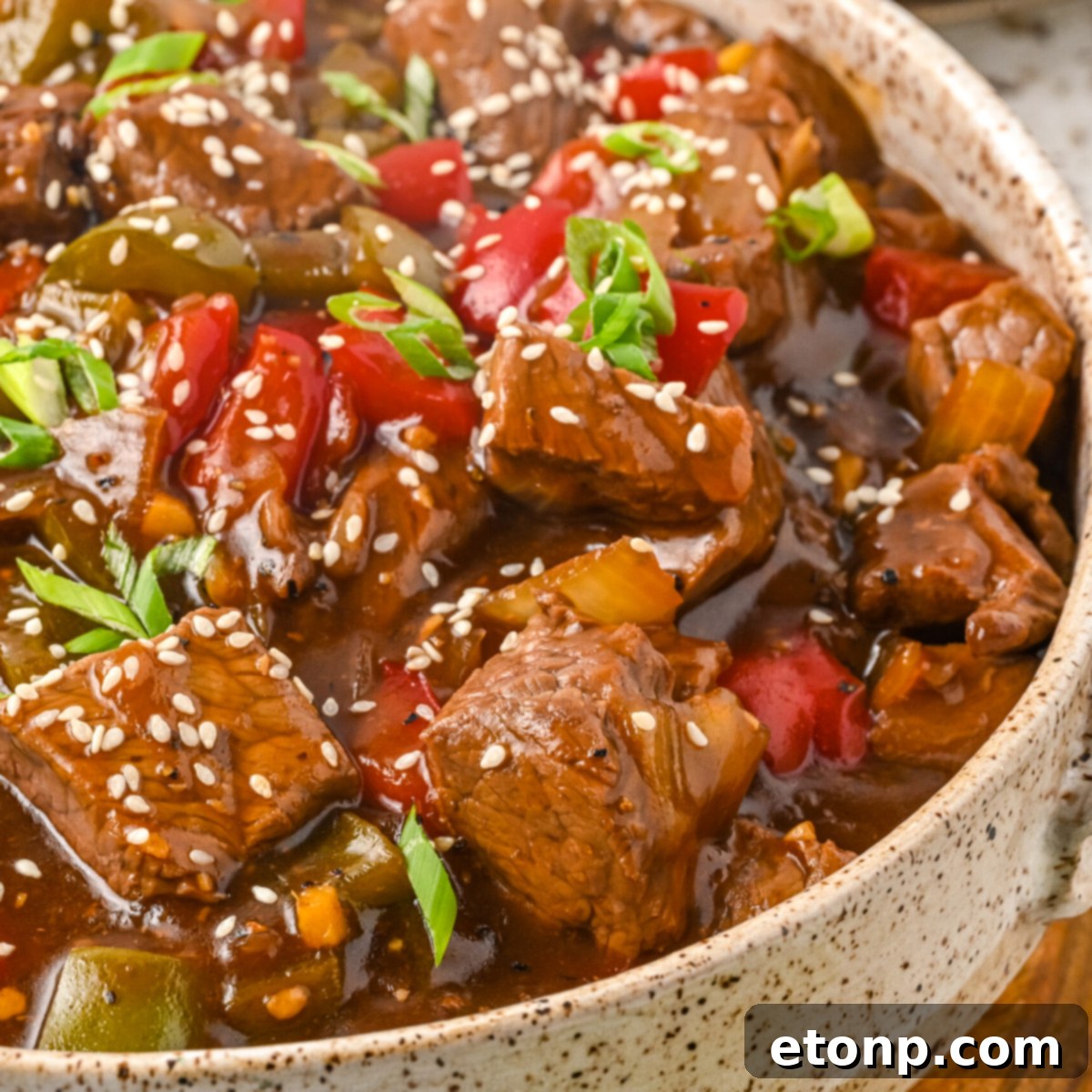
Chinese Pepper Steak: A Culinary Journey of Savory Flavors and Tender Textures – Embark on a delightful culinary adventure with Chinese Pepper Steak, a vibrant and exquisitely balanced dish that has captivated palates for generations. If you’re yearning for a meal that perfectly marries tender, succulent beef with crisp, colorful vegetables, all bathed in an irresistible, umami-rich sauce, then this classic stir-fry is your answer. More than just a quick weeknight dinner, this recipe transforms simple ingredients into a restaurant-quality masterpiece, promising a flavor explosion that’s genuinely better than any takeout.
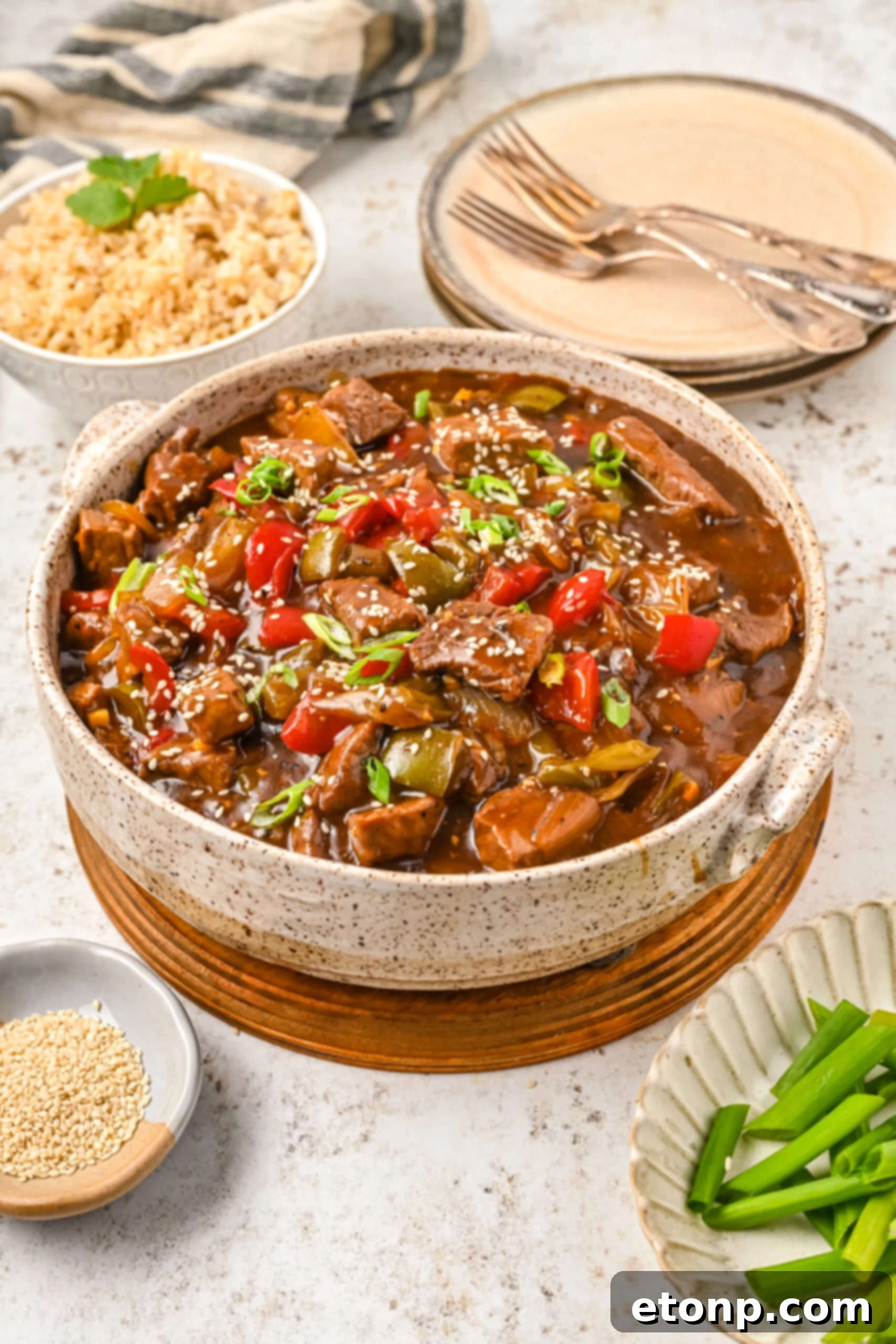
Chinese Pepper Steak stands as a testament to the art of stir-frying, a traditional cooking method that allows ingredients to retain their freshness and distinct flavors while blending harmoniously. This iconic dish, with its roots deeply embedded in Chinese-American cuisine, masterfully combines the robust taste of beef with the subtle sweetness of bell peppers, the pungent warmth of onions and garlic, and a complex sauce that delivers a perfect symphony of salty, sweet, and savory notes. Whether you’re a seasoned chef or a home cook looking to impress, this beef and pepper stir-fry recipe is remarkably straightforward, offering a gourmet experience without the fuss. It’s a fantastic option for a satisfying family meal or an elegant centerpiece for a dinner party, proving that delicious and impressive dishes can also be incredibly accessible.
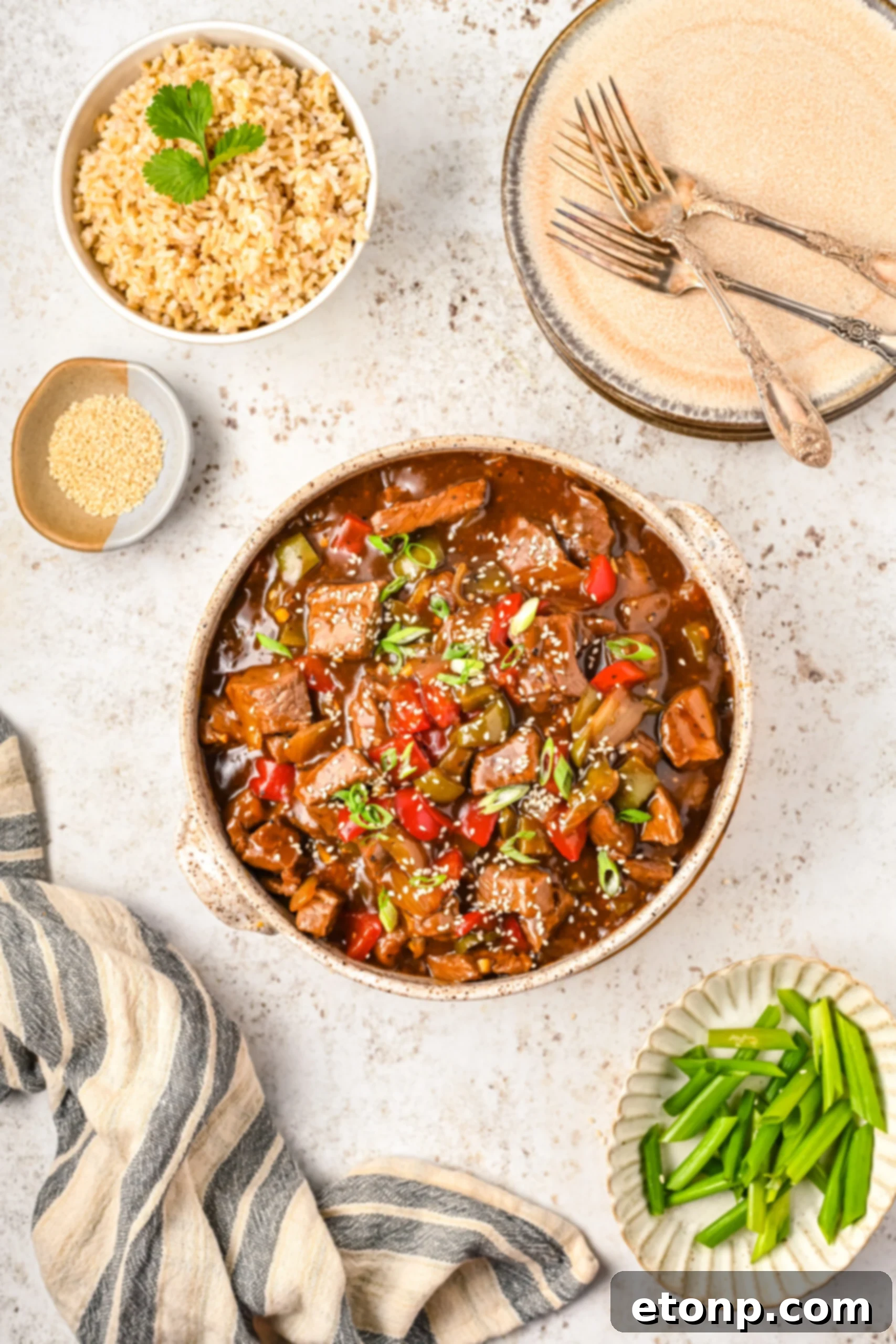
Why You’ll Love This Chinese Pepper Steak Recipe
- An Exciting Culinary Journey: Break free from your routine with a dish that offers a unique blend of Asian-inspired flavors, making every meal feel like a special occasion. This Chinese Pepper Steak isn’t just another dinner; it’s an experience that awakens your taste buds with its aromatic richness and satisfying textures.
- Harmonious Flavor Profile: Experience the perfect balance of savory beef, sweet bell peppers, and a robust sauce. The seasoning is meticulously crafted to ensure every bite is bursting with flavor, without any single element overpowering the others. It’s truly a perfectly peppery and savory delight.
- Nutrient-Rich and Colorful: Loaded with vibrant red and green bell peppers and crisp onions, this beef and peppers stir-fry is an excellent way to boost your daily vegetable intake. The colorful array not only makes the dish visually appealing but also adds essential vitamins and a delightful crunch.
- Lightning-Fast Preparation: Despite its sophisticated taste, this Chinese Pepper Steak comes together in a flash. Ideal for busy weeknights, it allows you to prepare a wholesome, home-cooked meal in less time than it takes to order takeout.
- Better Than Takeout Quality: Achieve authentic, restaurant-quality results right in your own kitchen. The freshness of ingredients and the control over seasoning mean a superior flavor and texture that often surpasses what you find at your local Chinese restaurant.
- Highly Versatile: This recipe is incredibly adaptable to your preferences. Easily adjust spice levels, swap out vegetables, or experiment with different cuts of beef to tailor the dish perfectly to your liking.
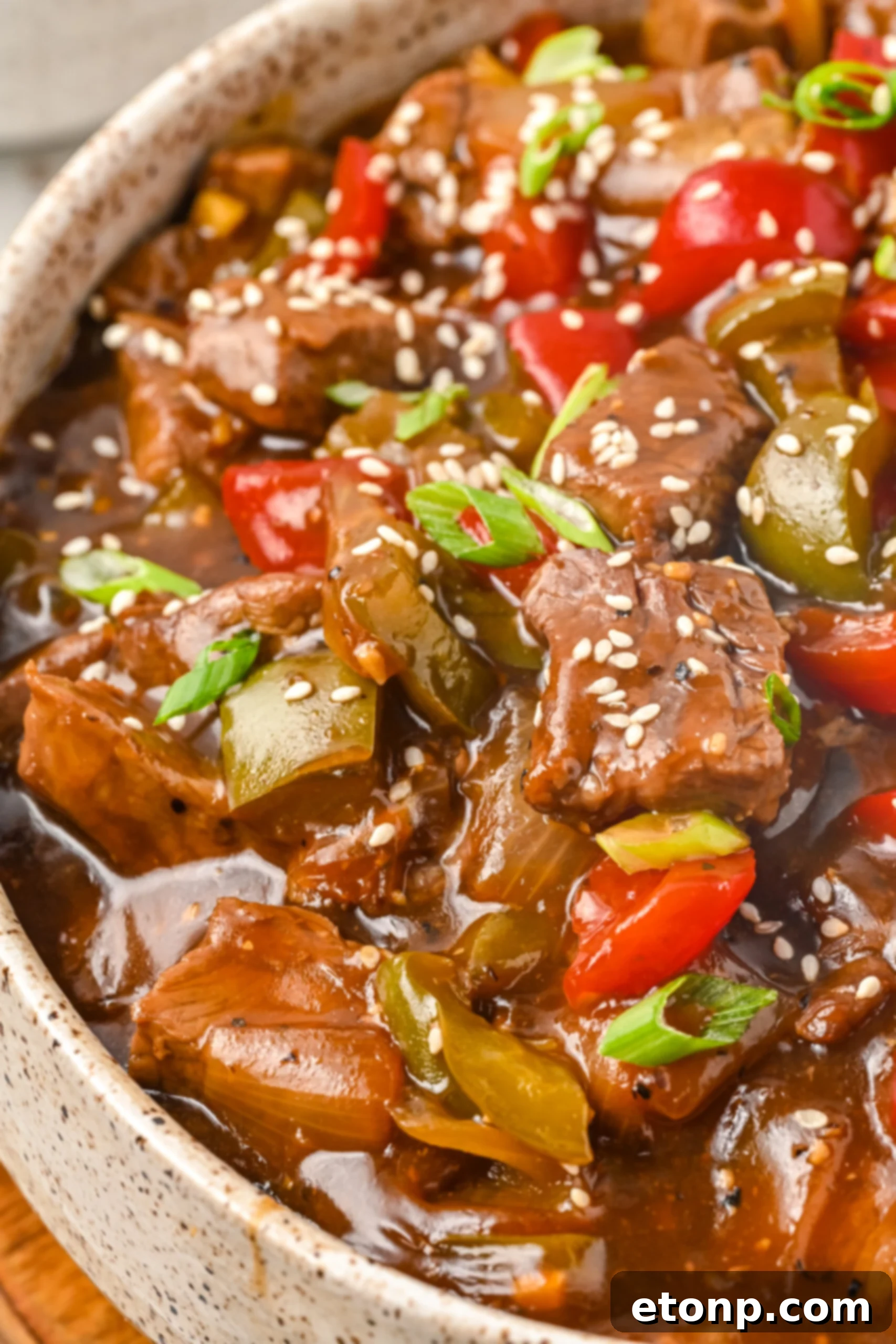
Key Ingredients for an Authentic Chinese Pepper Steak Recipe
Crafting the perfect Chinese Pepper Steak begins with selecting high-quality ingredients. Each component plays a crucial role in building the dish’s signature flavor and texture. Here’s a closer look at what you’ll need and why:
- Ribeye Steak: The star of this stir-fry, ribeye is prized for its marbling, which translates to incredible juiciness and tenderness when cooked quickly at high heat. For the best results, slice it against the grain into thin, bite-sized pieces. If ribeye isn’t available, flank steak, sirloin steak, or even skirt steak make excellent substitutes, though they may require a bit more attention to avoid toughness.
- Onion (White or Yellow): Onions provide a foundational aromatic sweetness and a pleasant crisp-tender texture. Yellow onions offer a slightly sweeter profile once cooked, while white onions are sharper but mellow nicely in the stir-fry. Cut them into thick wedges or slices to match the size of your bell peppers and beef.
- Red Bell Pepper: These vibrant peppers bring a beautiful pop of color and a distinct sweetness to the dish. They soften slightly during cooking while retaining a desirable crunch.
- Green Bell Pepper: With a slightly more bitter and earthy flavor compared to red bell peppers, green peppers offer a wonderful contrast. Their crisp texture holds up well to stir-frying. You can use all red, all green, or a mix of colors for visual appeal and balanced flavor.
- Olive Oil: Used for searing the beef and sautéing the vegetables, olive oil provides a mild flavor base. For high-heat stir-frying, you can also opt for other oils with high smoke points like vegetable oil, canola oil, or avocado oil.
- Beef Broth: This liquid forms the base of the savory sauce, infusing it with deep, rich beef flavor. Using a low-sodium beef broth allows you to control the overall saltiness of the dish, which is important given the soy sauce content.
- Soy Sauce: A cornerstone of Asian cuisine, soy sauce delivers a fundamental umami punch and essential saltiness. It also contributes to the sauce’s characteristic dark, rich color. Opt for low-sodium soy sauce if you’re mindful of salt intake.
- Cornstarch: An indispensable thickening agent for stir-fry sauces. When whisked into cold liquid (like beef broth or water) before adding to the hot pan, cornstarch creates a glossy, velvety texture that coats the beef and vegetables beautifully, binding all the flavors together.
- Oyster Sauce: This sweet and savory condiment adds a distinct depth of flavor and a beautiful sheen to Chinese dishes. It’s crucial for achieving that authentic, complex taste in your Chinese Pepper Steak.
- Brown Sugar: A touch of brown sugar balances the savory and tangy elements of the sauce, adding a subtle sweetness and a hint of molasses flavor without making the dish overly sweet. It also aids in caramelization.
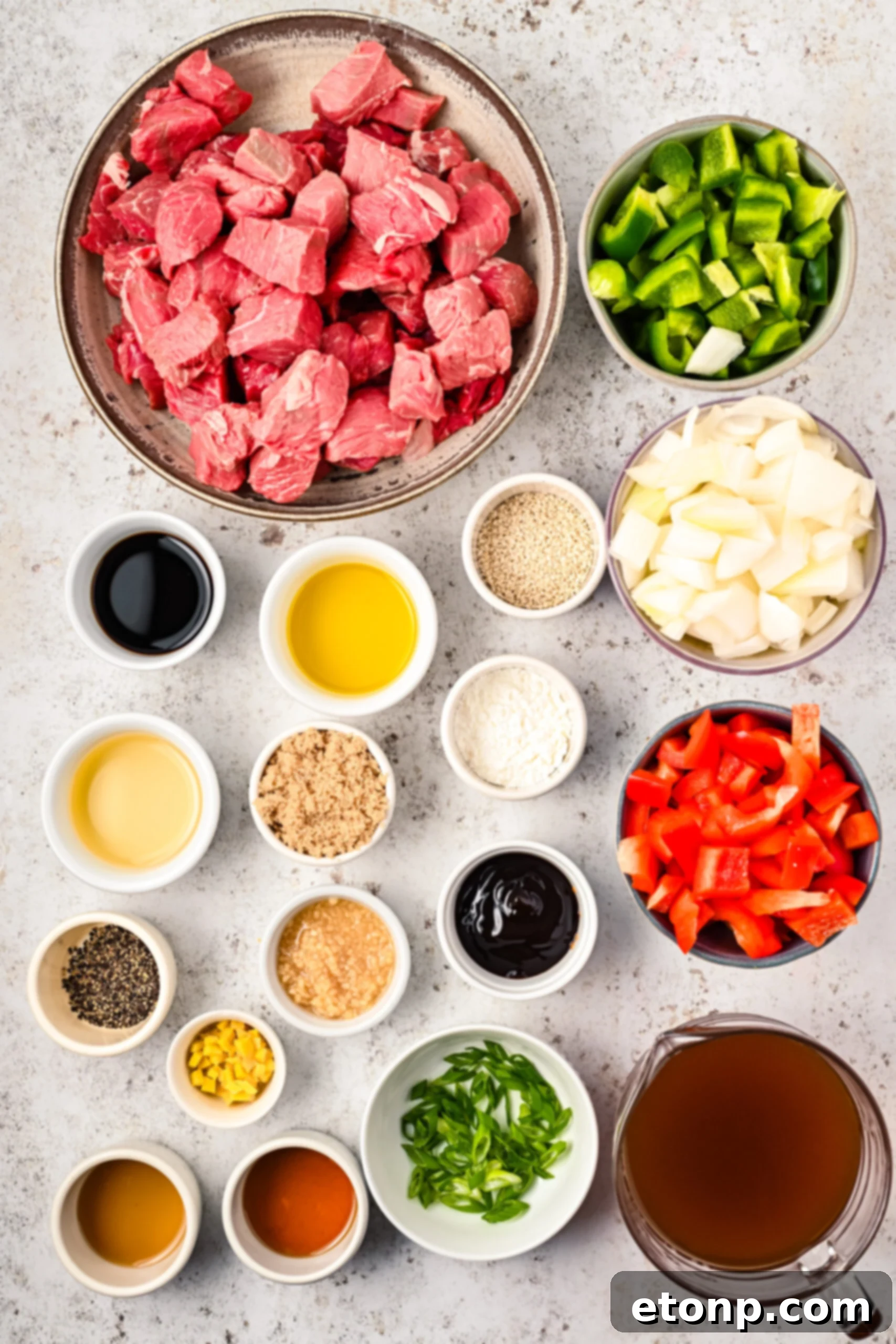
- Rice Vinegar: Lending a mild, pleasant tartness and acidity, rice vinegar brightens the entire dish, making the other flavors truly pop. If you don’t have rice vinegar, apple cider vinegar can be used as a suitable alternative.
- Garlic & Ginger: These aromatic powerhouses are fundamental to most Asian stir-fries. Freshly minced garlic and ginger provide a fragrant, warm foundation that enhances all other flavors. Avoid powdered versions if possible for the best taste.
- Fish Sauce: Though used in a small amount, fish sauce is a game-changer for umami. Its pungent smell dissipates during cooking, leaving behind a deep, savory richness that elevates the sauce without making it taste fishy. It’s a secret ingredient for many Southeast Asian dishes.
- Pepper (Black or Red Pepper Flakes): Freshly ground black pepper adds a classic warmth, while red pepper flakes can be incorporated if you desire a kick of heat. Adjust the amount to match your preferred spice level.
- Sesame Oil: Toasted sesame oil is known for its intense, nutty aroma and flavor. A drizzle at the very end of cooking adds a layer of fragrant complexity that is quintessential to Chinese stir-fries. Use sparingly, as its flavor is potent.
- Green Onion (Garnish): Sliced green onions provide a fresh, mild oniony bite and a beautiful green garnish, adding both flavor and visual appeal when sprinkled over the finished dish.
- Sesame Seeds (Garnish): Toasted white or black sesame seeds offer a nutty crunch and a final touch of elegance, complementing the flavors of the stir-fry.
- Rice or Noodles: Essential for serving, fluffy steamed white rice or hearty lo mein noodles are perfect for soaking up every drop of that incredible sauce, making the meal complete and satisfying.
The Irresistible Flavor Profile of Chinese Pepper Steak
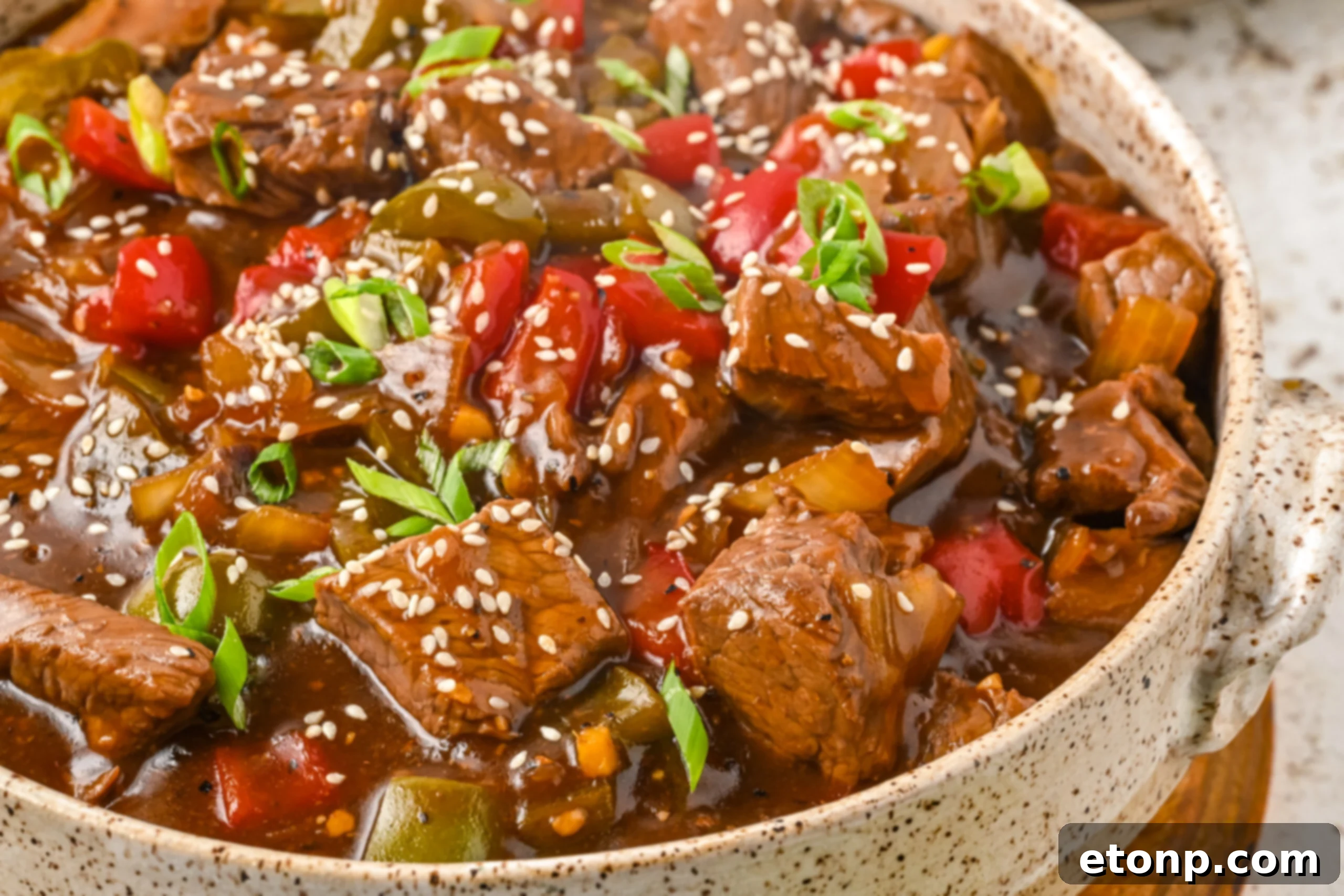
What truly sets Chinese Pepper Steak apart is its remarkable balance of tastes and textures. The journey begins with the star of the show: perfectly seared ribeye steak. Cut into convenient bite-sized cubes, the beef is quickly cooked to achieve a tender, juicy interior with a beautifully browned exterior, locking in all its savory goodness. This succulent beef forms the hearty core of the dish, providing a rich foundation for the layers of flavor to come.
But the real magic happens with the sauce – a complex and harmonious blend designed to tantalize every part of your palate. It starts with a base of robust beef broth, then gets an umami boost from soy sauce and the unique, savory-sweet depth of oyster sauce. Brown sugar introduces a touch of natural sweetness, perfectly countering the tangy brightness of rice vinegar. Freshly minced garlic and ginger provide an aromatic warmth, while a hint of fish sauce deepens the savory notes without any “fishy” taste, adding a subtle complexity that makes the sauce truly addictive. A final touch of nutty sesame oil rounds out this incredible concoction, ensuring every strand of beef and every piece of vegetable is coated in a luscious, flavorful glaze that’s absolutely irresistible.
Adding to this exquisite profile is the generous inclusion of colorful vegetables. Crisp red and green bell peppers, along with tender white onions, contribute not only a beautiful visual appeal but also essential crunch and freshness. These vegetables offer a delightful textural contrast to the tender beef and a natural sweetness that complements the rich, savory sauce, creating a meal that is both satisfying and incredibly well-rounded. The collective result is a dish where sweet, savory, tangy, and aromatic elements dance together in perfect harmony, making Chinese Pepper Steak a beloved classic.
Storage and Reheating Tips for Chinese Pepper Steak
One of the many benefits of Chinese Pepper Steak is how well it stores, making it an excellent option for meal prep or enjoying delicious leftovers. To ensure your dish remains fresh and flavorful, transfer any leftover Chinese pepper steak into an airtight container. Properly stored in the refrigerator, it will stay delicious for up to 3 to 5 days. For optimal freshness, try to consume it within three days.
When it comes to reheating, you have a couple of convenient options:
- Microwave Method: For a quick reheat, transfer your desired portion onto a microwave-safe plate or bowl. Heat in 30-second intervals, stirring gently between each interval, until the steak and vegetables are heated through to your desired temperature. Be careful not to overheat, as this can make the beef tough.
- Stovetop Method: For best results and to help retain the texture of the vegetables and beef, reheat your pepper steak in a skillet or wok over medium heat. Add a splash of beef broth or water to loosen the sauce if it has thickened too much in the refrigerator. Stir frequently until the dish is thoroughly warmed. This method helps maintain that fresh, stir-fried quality.
No matter the method, ensuring your leftovers are piping hot before serving is key to both taste and safety. Enjoying Chinese Pepper Steak the next day is almost as good as the first!
Frequently Asked Questions (FAQ) about Chinese Pepper Steak
What type of meat should I use for Chinese Pepper Steak?
For the absolute best texture, especially tender and juicy results, ribeye steak is highly recommended due to its excellent marbling. It sears beautifully and remains tender even with quick cooking. However, other cuts like flank steak, sirloin steak, or skirt steak are also fantastic alternatives. If using these leaner cuts, ensure you slice them thinly against the grain to maximize tenderness and consider a quick marinade or a velveting technique (coating in cornstarch and soy sauce) before cooking to achieve a silkier texture.
Does fish sauce make the dish taste fishy?
Surprisingly, no! While fish sauce has a strong, pungent aroma straight from the bottle, when used in small quantities and cooked into a dish like Chinese Pepper Steak, its flavor transforms. It doesn’t impart a “fishy” taste. Instead, it adds an incredible depth of savory, umami richness that is crucial for a truly authentic Asian flavor profile. It amplifies the other ingredients and rounds out the sauce beautifully, making the dish more complex and satisfying without being discernible as fish.
Why is my pepper steak tough?
Several factors can contribute to tough pepper steak, but the most common culprits are:
- Overcooking: Beef for stir-fries should be cooked quickly at high heat until just browned on all sides, usually no more than 1-2 minutes per side, depending on thickness. Overcooking will dry out the meat and make it chewy.
- Incorrect Cut: Using a cut of beef that isn’t ideal for stir-frying or isn’t properly prepared (e.g., tough, lean cuts not sliced thinly enough or not tenderized).
- Improper Slicing: Always slice beef against the grain. This shortens the muscle fibers, making the meat much more tender and easier to chew.
- Lack of Tenderization: For leaner cuts, a simple marinade or velveting technique (tossing thinly sliced beef with a small amount of cornstarch, soy sauce, and sometimes oil or egg white) can make a huge difference in tenderizing the meat and keeping it moist during cooking.
Paying attention to these details will ensure your beef is tender and melt-in-your-mouth every time.
Can I make Chinese Pepper Steak ahead of time?
While fresh stir-fries are always best, you can certainly prepare components ahead of time. You can slice your beef and vegetables, and even whisk together your sauce ingredients, storing them separately in airtight containers in the refrigerator. This prep work can be done a day in advance, significantly cutting down on cooking time when you’re ready to make the dish. Cooking the entire dish and then reheating is also an option, as detailed in our storage section above.
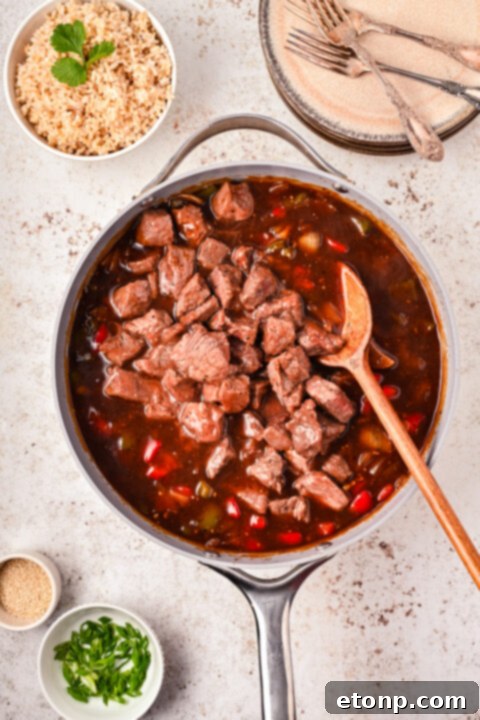
How to Make Chinese Pepper Steak: A Step-by-Step Guide
Creating this delicious Chinese Pepper Steak is a straightforward process, built around efficient stir-frying techniques. Follow these steps for a perfect result:
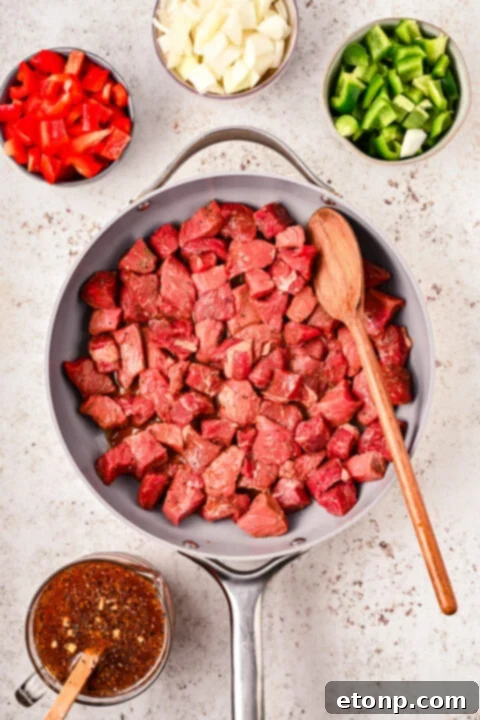
- Prepare the Beef: Begin by thinly slicing your ribeye steak against the grain into bite-sized pieces. In a large bowl, combine 1 tablespoon of soy sauce and 1 tablespoon of cornstarch with the sliced beef. Toss well to coat evenly. This is a simple velveting technique that helps tenderize the meat and create a silky texture. Season the beef with ½ teaspoon of black pepper.
- Sear the Beef: Heat 2 tablespoons of olive oil in a large sauté pan or wok over high heat until shimmering. Add the marinated beef in a single layer, ensuring not to overcrowd the pan. Cook for 4 to 5 minutes, turning occasionally to brown all sides. The goal is a quick sear to lock in juices and develop flavor without overcooking. Once beautifully seared, remove the beef from the pan and set it aside.
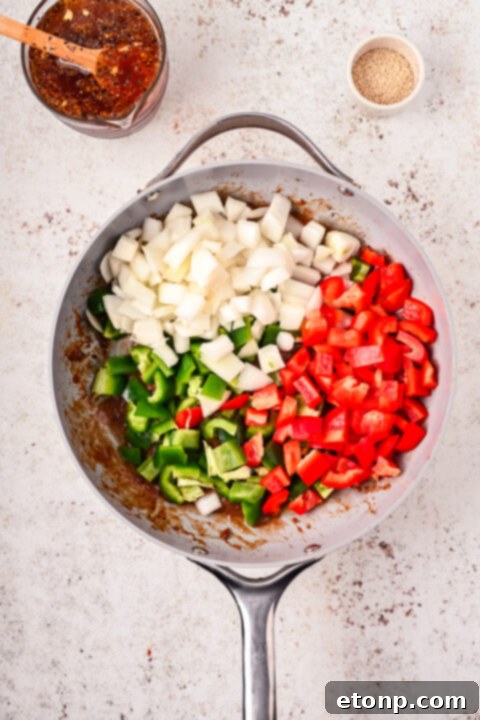
- Sauté the Vegetables: In the same pan, add the sliced white onion, red bell pepper, and green bell pepper. Sauté for about 4 minutes, or until the vegetables are crisp-tender. They should still have a slight bite and vibrant color.
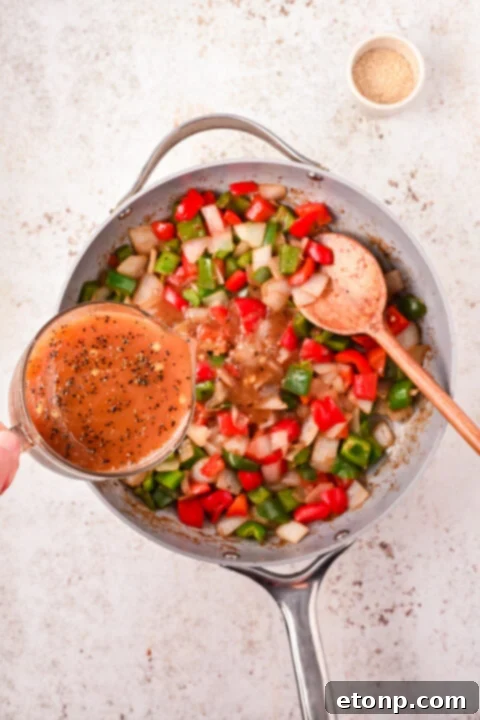
- Prepare the Sauce: While the vegetables cook, whisk together all the sauce ingredients in a separate bowl: beef broth, 1/3 cup soy sauce, 2 tablespoons cornstarch, oyster sauce, brown sugar, rice vinegar, minced garlic, minced ginger, fish sauce, 1 teaspoon black pepper, and sesame oil. Ensure the cornstarch is fully dissolved to prevent lumps.
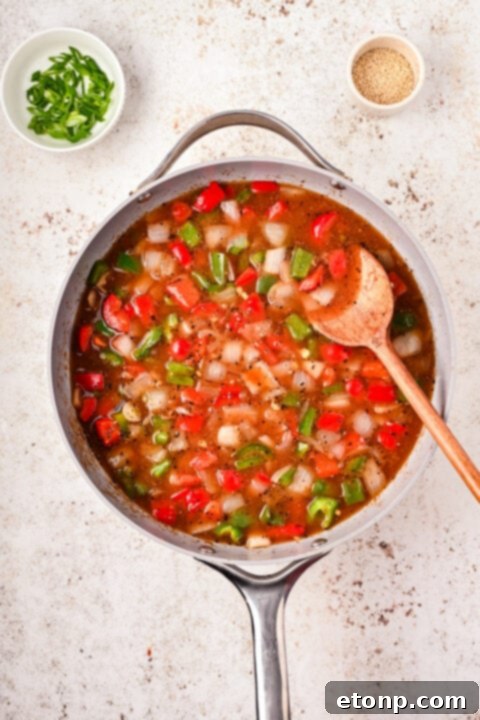
- Combine and Thicken: Pour the prepared sauce over the sautéed peppers and onions in the pan. Bring the mixture to a simmer, stirring constantly, for 3 to 4 minutes. The sauce will begin to thicken and become glossy.
- Add Beef Back: Return the seared beef to the pan, tossing it gently to coat with the thickened sauce. Continue to simmer for another 3 to 4 minutes, allowing the flavors to meld and the beef to warm through.
- Serve and Garnish: Remove the Chinese Pepper Steak from the heat. Serve immediately over a bed of fluffy steamed white rice or hearty lo mein noodles. Garnish generously with freshly sliced green onions and a sprinkle of sesame seeds for added flavor and visual appeal.
Enjoy your homemade Chinese Pepper Steak – a dish that’s easy to prepare and absolutely packed with incredible flavor!
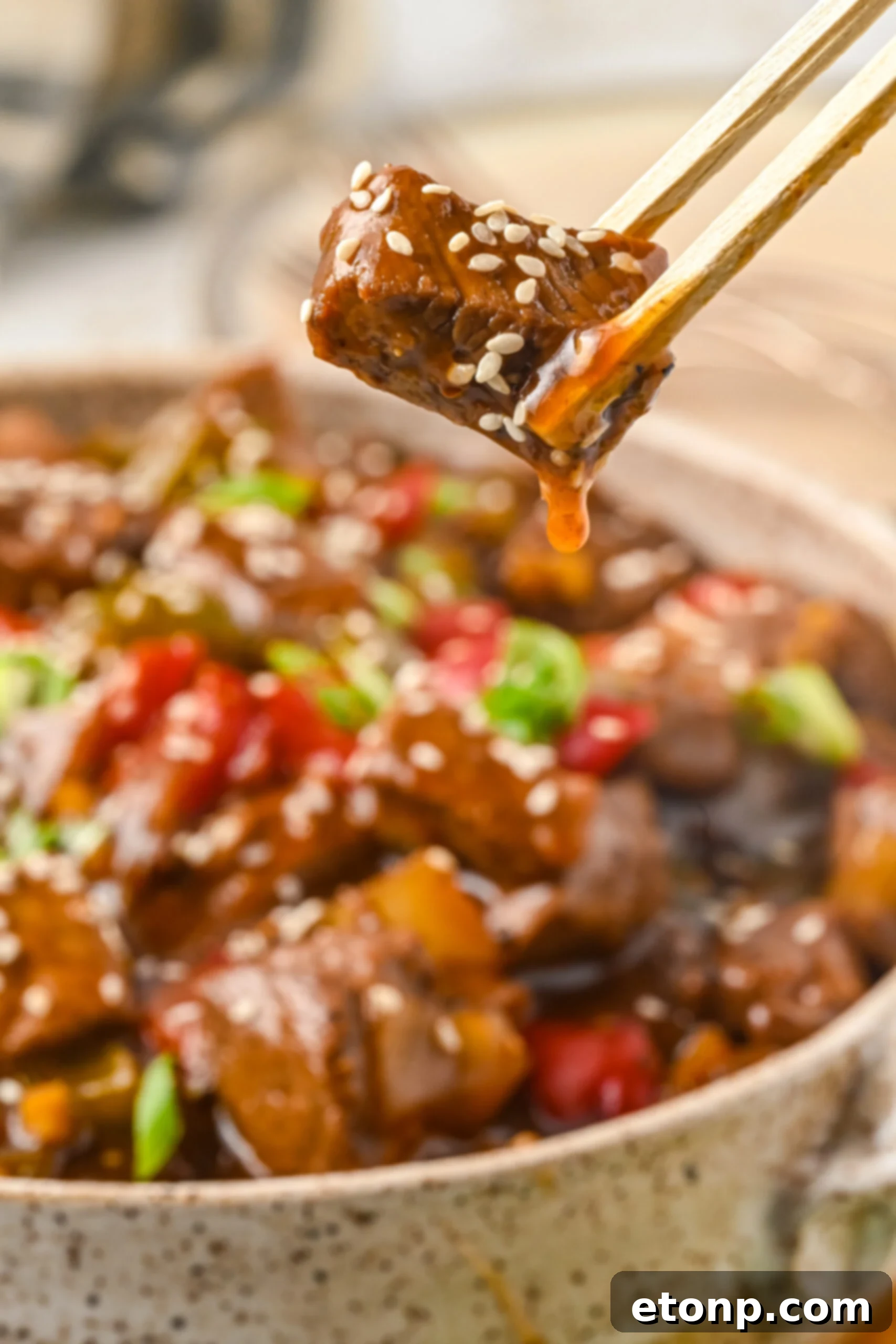
Tips for the Best Chinese Pepper Steak
Achieving a truly exceptional Chinese Pepper Steak is all about technique and a few key considerations:
- High Heat is Key: For stir-frying, always use high heat. This allows the ingredients to cook quickly, retaining their crispness and preventing the beef from steaming. A hot pan is crucial for developing that desirable “wok hei” or smoky aroma.
- Don’t Overcrowd the Pan: When searing the beef, work in batches if necessary. Overcrowding the pan will lower the temperature, causing the beef to steam rather than sear, resulting in a less flavorful and tougher texture.
- Slice Against the Grain: As mentioned, this is paramount for tender beef. Look at the muscle fibers; slice perpendicularly to them.
- Prepare Everything Ahead: Stir-frying is a rapid cooking method. Have all your ingredients (sliced beef, chopped vegetables, whisked sauce) prepped and ready before you start cooking. This is often referred to as “mise en place.”
- Adjust Sweetness and Spice: Taste your sauce before adding it to the pan. If you prefer it sweeter, add a little more brown sugar. For more heat, a pinch of red pepper flakes or a dash of chili garlic sauce can be stirred into the sauce or added at the end.
- Fresh Aromatics Make a Difference: While powdered garlic and ginger can work in a pinch, fresh minced garlic and ginger will provide a far superior aroma and flavor to your stir-fry.
- Cornstarch Slurry for Perfect Thickening: Always dissolve cornstarch in a cold liquid (water or broth) before adding it to the hot pan. Adding dry cornstarch directly will result in lumps.
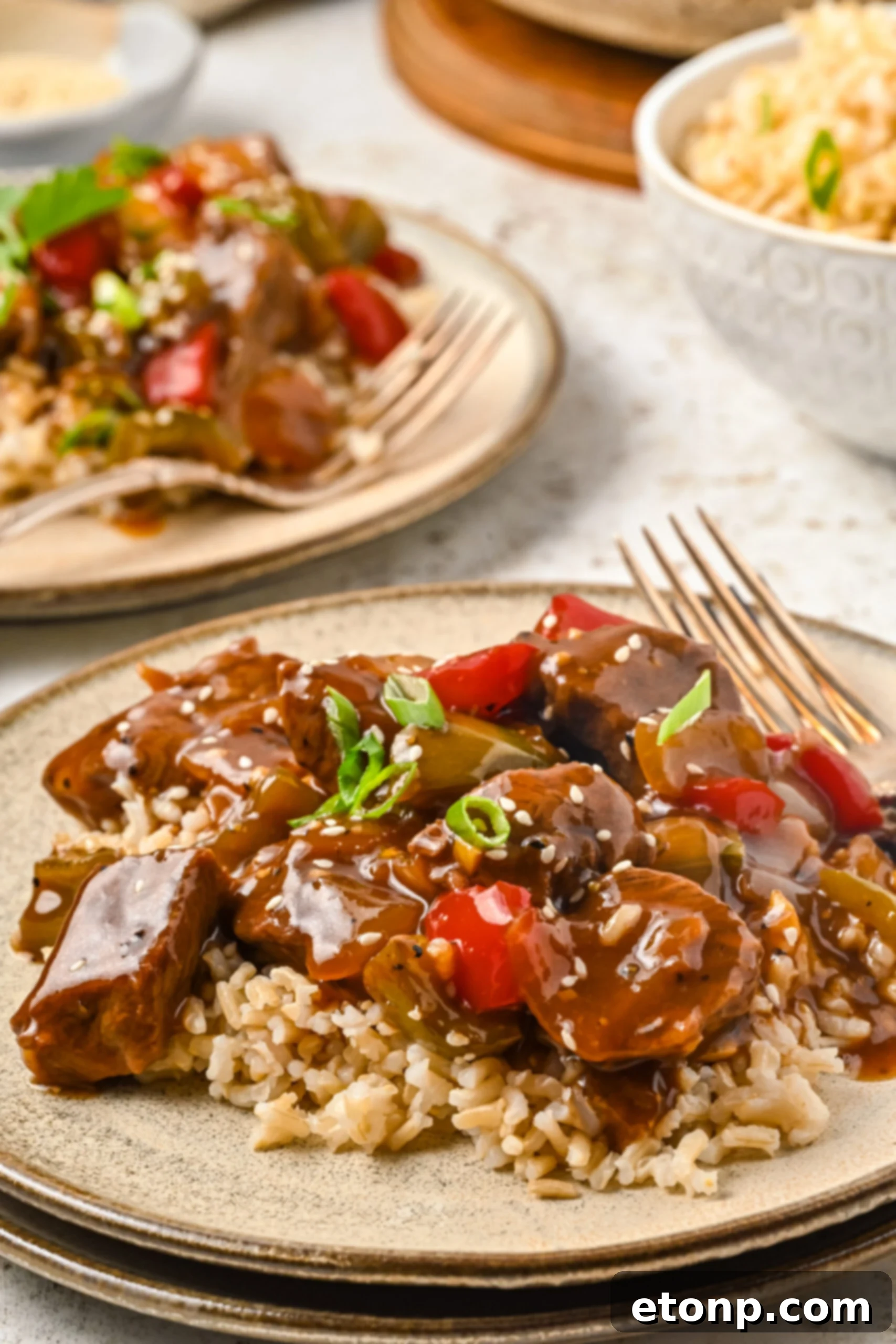
Serving Suggestions & Pairings
Chinese Pepper Steak is a complete meal in itself, but the way you serve it can elevate the experience. The most classic pairing is with:
- Steamed White Rice: Fluffy, long-grain white rice is the perfect canvas for soaking up every drop of that incredible savory sauce. It provides a neutral base that lets the rich flavors of the stir-fry shine.
- Lo Mein Noodles: For a heartier meal, serve your pepper steak over stir-fried lo mein noodles. The noodles add another layer of texture and absorb the sauce beautifully, making it a truly satisfying dish.
Beyond these traditional choices, consider these delightful additions:
- Broccoli or Green Beans: Lightly steamed or stir-fried broccoli florets or blanched green beans can be added to the side for extra greens and crunch.
- Edamame or Spring Rolls: For appetizers, edamame (steamed soybeans) or crispy vegetable spring rolls make excellent complements.
- Asian Cucumber Salad: A refreshing, tangy cucumber salad can cut through the richness of the steak, providing a lovely contrast.
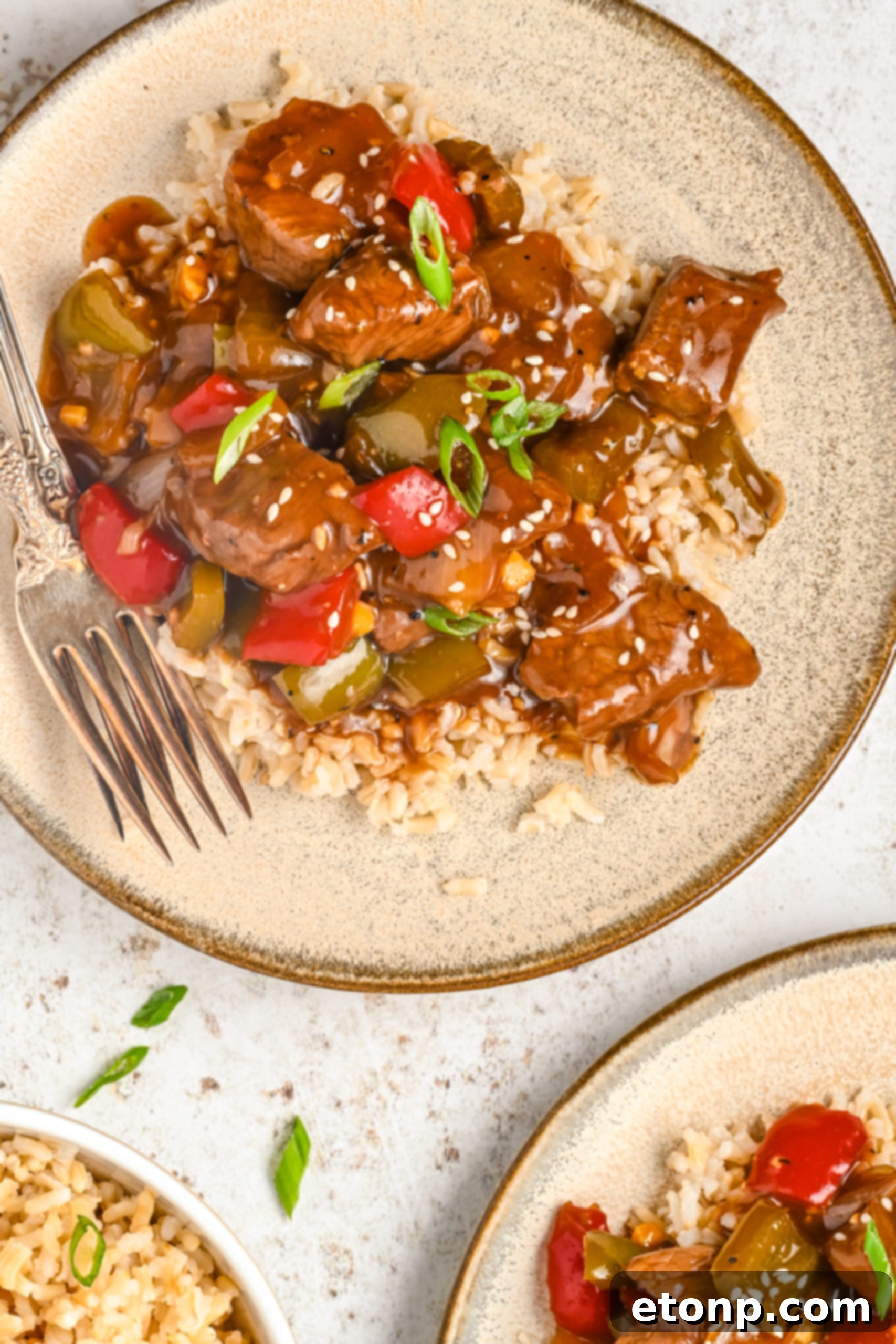
Customizing Your Chinese Pepper Steak: Variations and Dietary Adaptations
The beauty of Chinese Pepper Steak lies in its adaptability. This recipe is a fantastic starting point, but don’t hesitate to make it your own based on taste preferences or dietary needs:
- Protein Swaps: Not a fan of beef? This stir-fry works wonderfully with other proteins. Try sliced chicken breast or thighs for Chinese Pepper Chicken, pork loin for a leaner option, or even shrimp for a seafood twist. For a vegetarian version, extra-firm tofu or tempeh, pressed and cubed, makes an excellent substitute.
- Vegetable Variations: While bell peppers and onions are classic, feel free to add or swap in your favorite stir-fry vegetables. Snap peas, snow peas, sliced mushrooms (shiitake or cremini), baby corn, water chestnuts, bamboo shoots, or even thinly sliced carrots would all be delicious additions. Just be mindful of their cooking times – add denser vegetables earlier.
- Spice Level Adjustment: If you enjoy a bit of heat, increase the amount of black pepper or red pepper flakes. A dash of chili garlic sauce or sriracha added to the sauce can also give it a spicy kick. For a milder flavor, simply omit the red pepper flakes.
- Gluten-Free Option: To make this dish gluten-free, ensure you use a certified gluten-free soy sauce (tamari is a popular choice) and check that your beef broth and oyster sauce are also gluten-free. Most cornstarch is naturally gluten-free.
- Lower Sodium: Opt for low-sodium soy sauce and low-sodium beef broth. You can always add salt to taste at the end if needed.
- Nut-Free: The sesame oil and sesame seeds are key for flavor. If you have a nut allergy and wish to avoid sesame, you can omit them, though the flavor profile will be slightly different. Use another high-smoke-point oil for cooking.
The flexibility of this Chinese Pepper Steak recipe makes it an ideal choice for any occasion, ensuring it’s a crowd-pleaser every time. Its perfect balance of rich, savory, and subtly sweet flavors, combined with the satisfying crunch of fresh vegetables, makes it an absolute favorite.
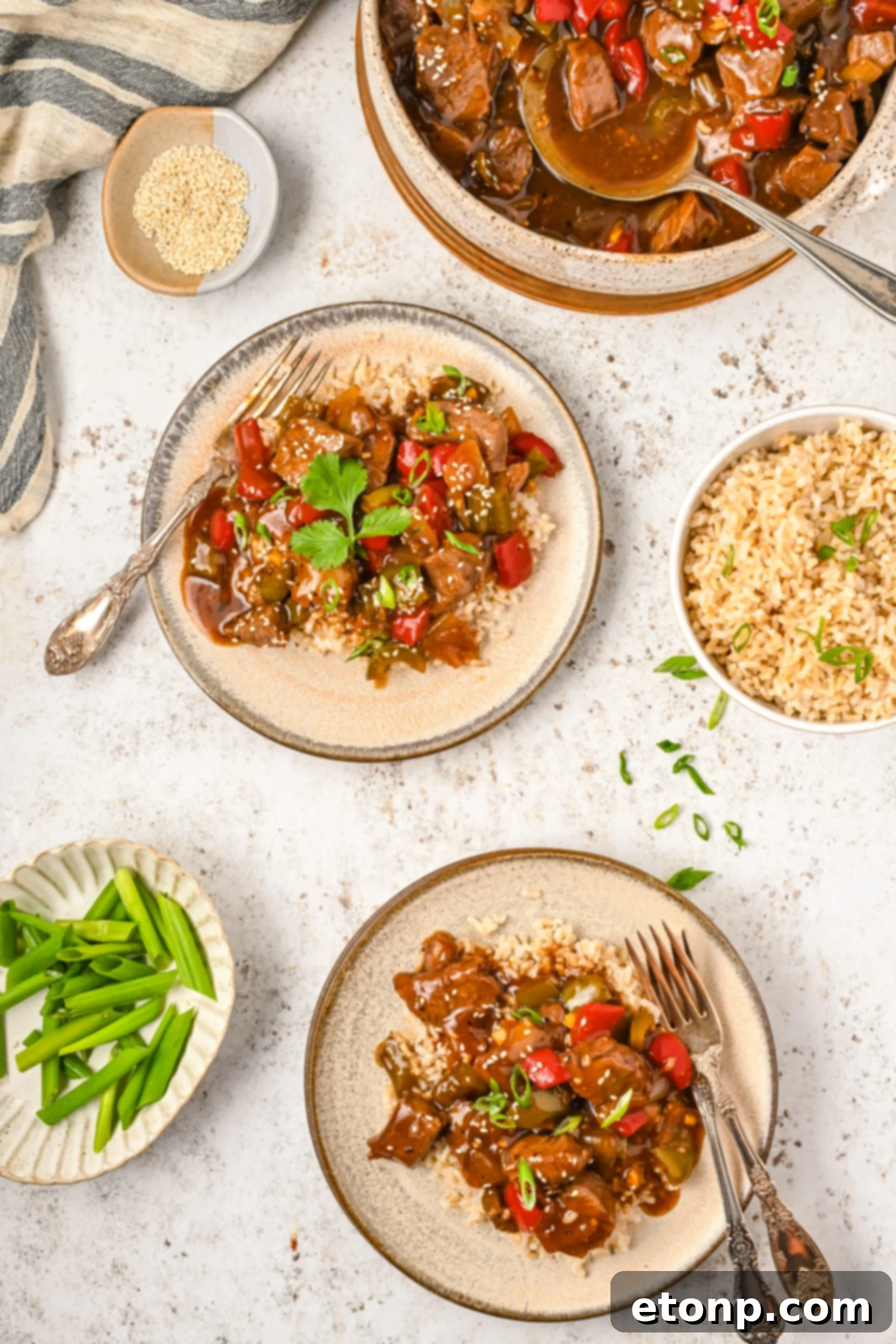
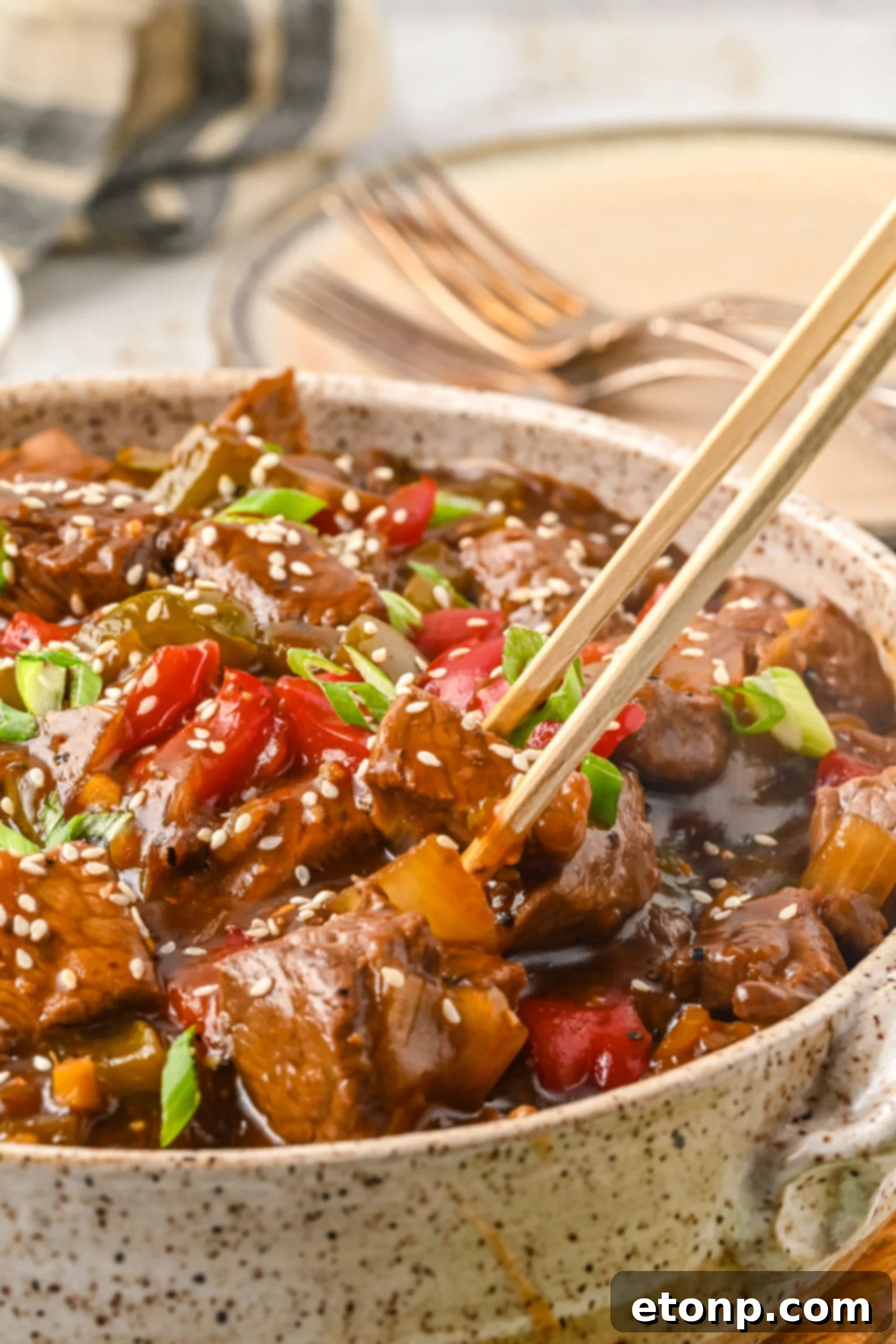
This Chinese Pepper Steak recipe truly embodies the essence of a perfect homemade meal: it’s flavorful, satisfying, and comes together with surprising ease. From the first sizzling sear of the tender ribeye to the final glossy sheen of the rich, savory sauce, every step is designed to deliver a dish that rivals your favorite takeout. It’s a testament to how simple ingredients, combined with thoughtful technique, can create an unforgettable culinary experience. So, if you’re eager to transform your dinner routine with something both comforting and exciting, look no further. Gather your ingredients, prepare your wok, and get ready to indulge in every savory, peppery, and utterly delicious bite of this classic Chinese Pepper Steak.
More Recipes You Will Love!
Juicy Garlic Butter Steak Bites
Mom’s Asian Steak Peppers & Onions
Cajun Garlic Butter Steak Bites
Chinese Pepper Steak
Ingredients
- 2 tablespoons olive oil
- 2 pounds ribeye steak cut into bite sized cubes
- 1 tablespoon soy sauce
- 1 tablespoon cornstarch
- 1/2 teaspoon black pepper
- 1 medium white onion cut into bite-sized pieces
- 1 red bell pepper cut into bite-sized pieces
- 1 green pepper cut into bite-sized pieces
Sauce:
- 1 1/4 cup beef broth
- 1/3 cup soy sauce
- 2 tablespoons cornstarch
- 2 tablespoons oyster sauce
- 2 tablespoons brown sugar
- 2 tablespoons rice vinegar
- 1 tablespoon minced garlic
- 1 teaspoon minced ginger
- 1 teaspoon fish sauce
- 1 teaspoon black pepper
- 1 teaspoon sesame oil
Garnishes:
- Sliced green onion
- Sesame seeds
- Serve with rice or noodles
Instructions
-
Heat the olive oil in a large saute pan.
-
Place the meat in a large bowl and combine the soy sauce and cornstarch, then pour over the meat and toss. Sprinkle it with pepper and add to the hot oil. Cook for 4 to 5 minutes, turning to brown all sides.
-
Remove the meat and add the onion and peppers and cook for 4 minutes.
-
Combine all the sauce ingredients together in a bowl and pour over the peppers. Simmer for 3 to 4 minutes until the sauce begins to thicken, then add the meat back into the pan.
-
Simmer for another 3 to 4 minutes.
-
Remove and serve over rice or noodles. Add a sprinkle of green onions and sesame seeds.
Did you make this recipe?
Make sure to follow on Pinterest for more recipes!
Pin Recipe
Share on Facebook