

The Ultimate Pineapple Baked Ham: A Juicy, Flavorful Centerpiece for Any Celebration
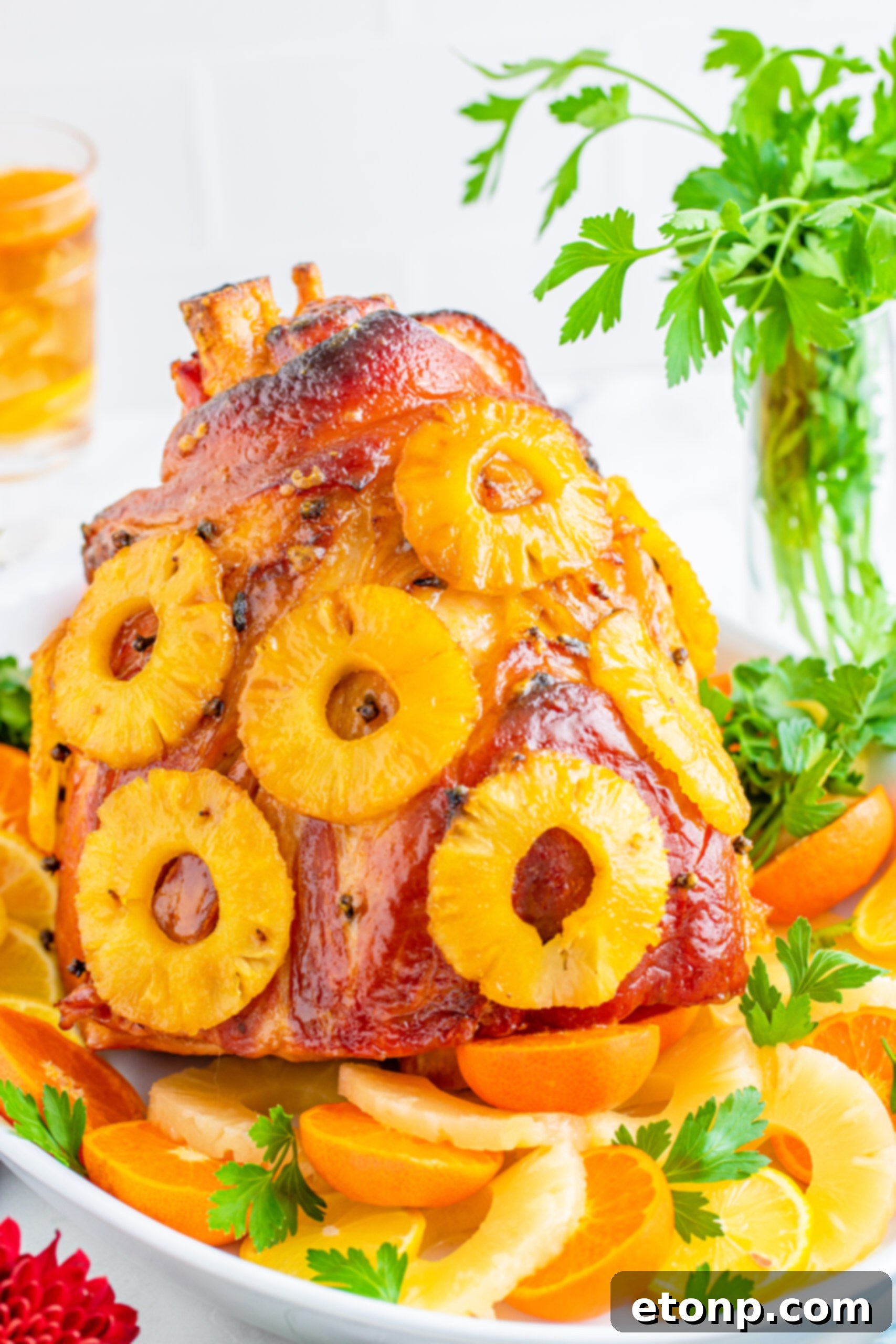
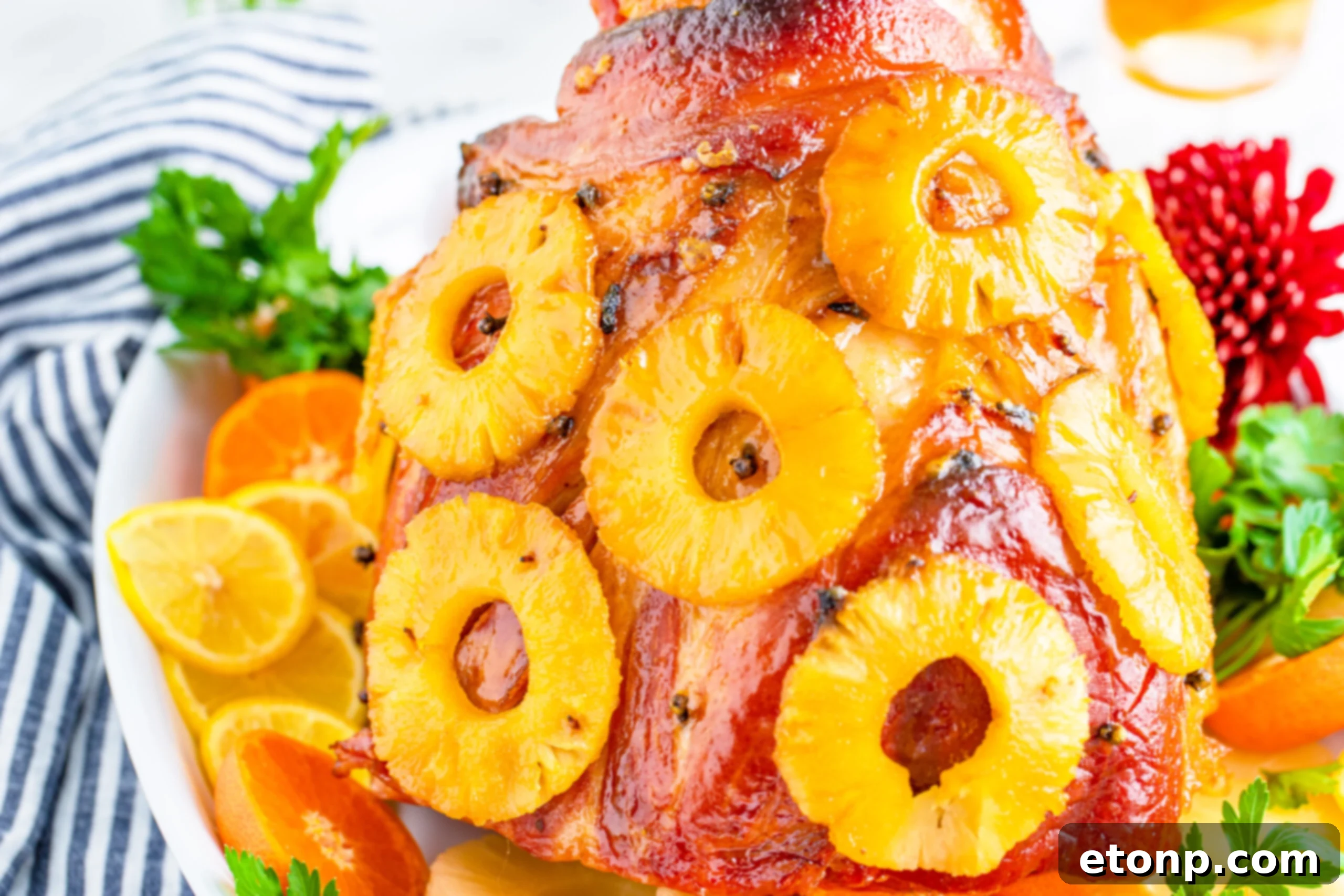
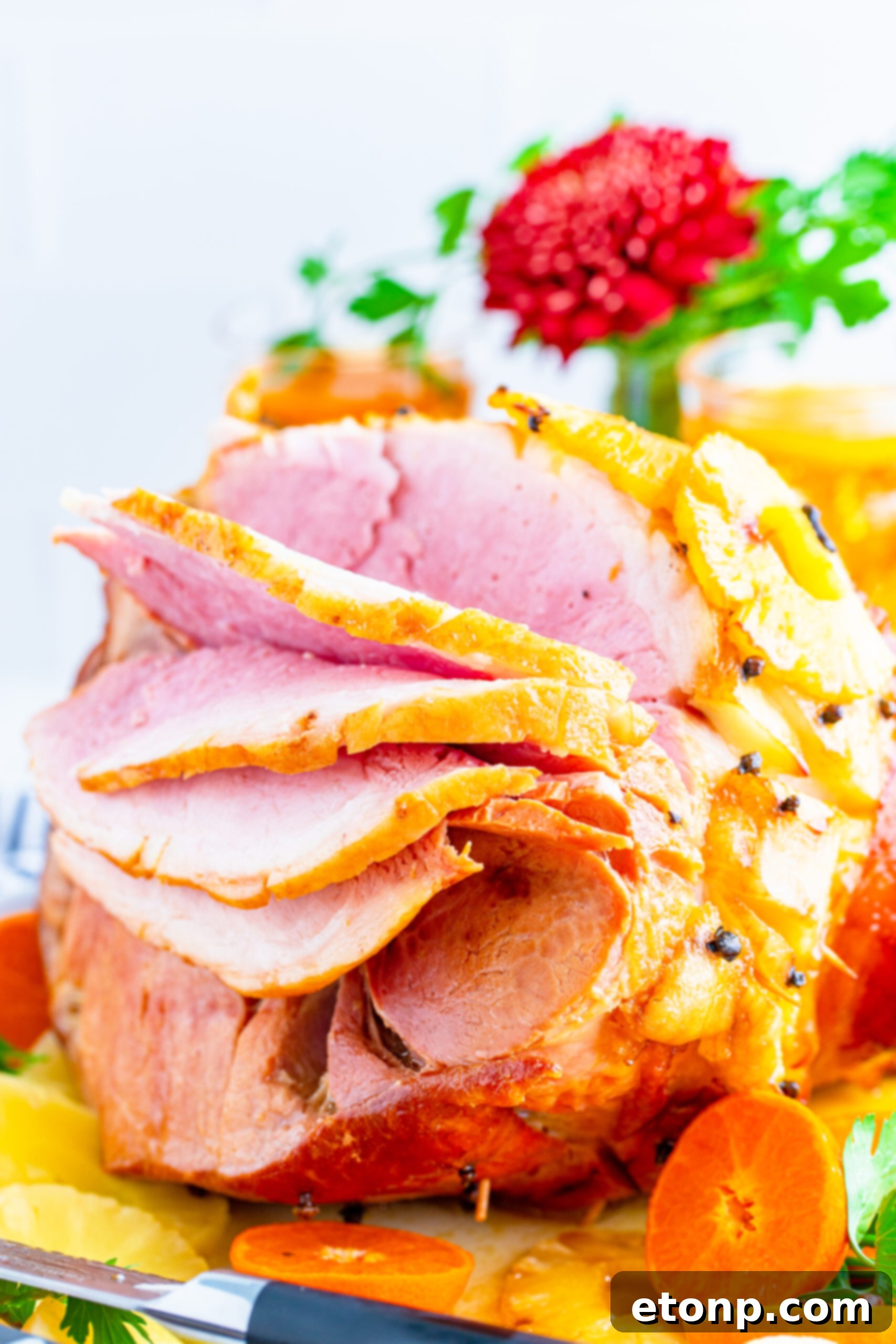
Prepare to impress your guests with this classic, show-stopping Pineapple Baked Ham. Renowned for its unparalleled moistness, incredible depth of flavor, and eye-catching presentation, this ham is destined to be the star of your dinner table. Adorned with fragrant cloves and sweet pineapple rings, and generously coated in a decadent brown sugar glaze, this recipe promises a culinary experience that is truly unforgettable. Perfect for holidays, family gatherings, or any special occasion, this baked ham will become a cherished tradition in your home.
The Secret to Succulent Ham: A Touch of Pineapple Science
Ever wondered why pineapple and ham are such a classic pairing? It’s more than just a delightful flavor combination; there’s a fascinating scientific reason! Pineapple contains a natural enzyme called bromelain. This powerful enzyme acts as a natural tenderizer, breaking down the tough protein fibers in meat. This is precisely why you’ll often find pineapple featured in various meat marinades and recipes, particularly with pork. The bromelain in the pineapple works its magic during the baking process, ensuring that every slice of your baked ham is incredibly tender and juicy, enhancing the overall eating experience. Pretty neat, right?
Crafting Culinary Perfection: Our Approach to Baked Ham
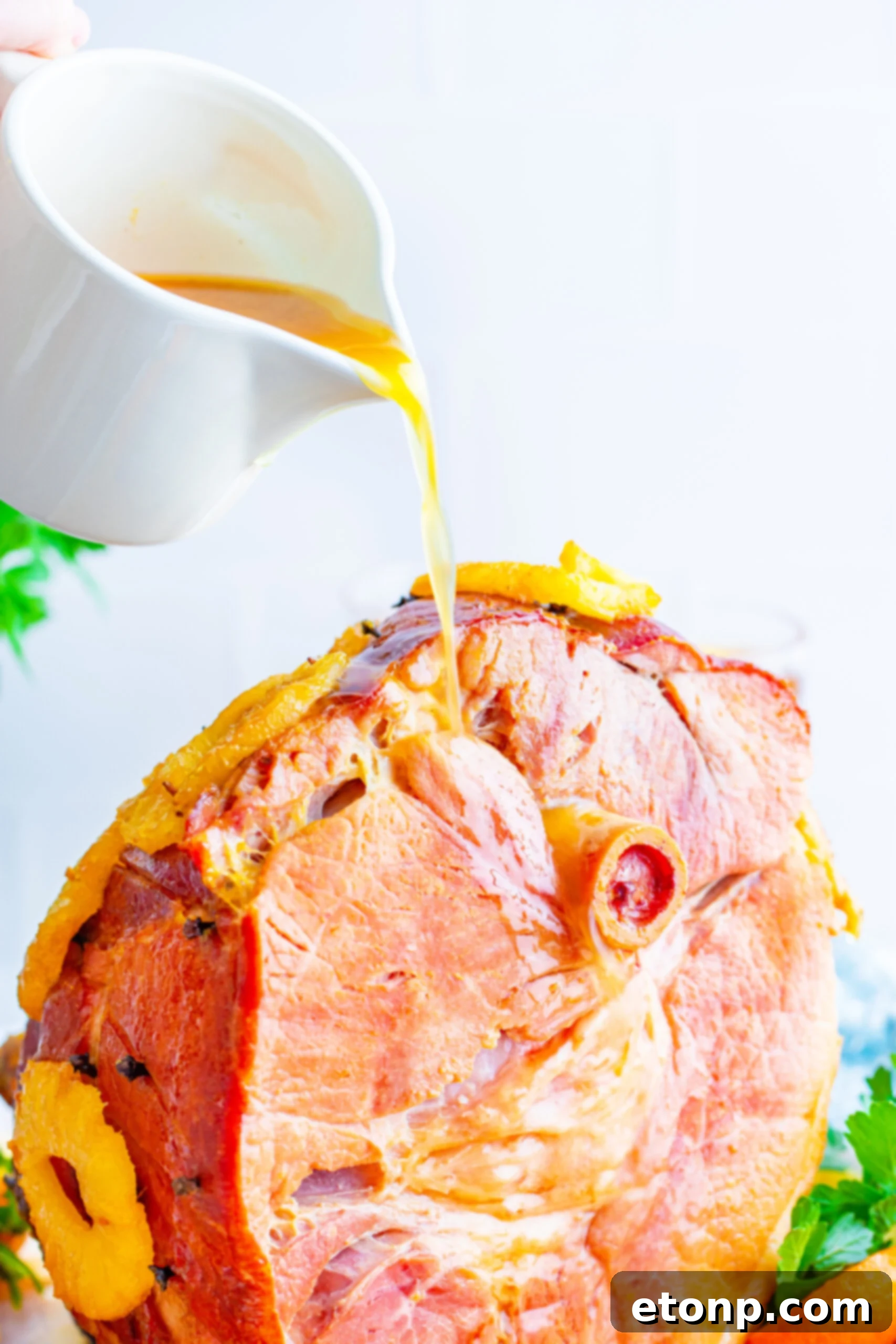
While this recipe for Pineapple Baked Ham is surprisingly straightforward and requires only a handful of common ingredients, patience is truly a virtue here. The cornerstone of achieving an exceptional, non-dry ham lies in a specific cooking philosophy: “low and slow.” Baking your ham at a lower temperature for an extended period allows the meat to gradually tenderize and reabsorb its juices, preventing the all-too-common pitfall of a dry, tough ham. Beyond the cooking method, the homemade brown sugar glaze plays an equally critical role. It’s not just an accompaniment; it’s arguably the star of the show, caramelizing beautifully to form a sweet, tangy, and irresistible crust that locks in moisture and infuses the ham with incredible flavor. Remember, for the perfect baked ham: low and slow, with plenty of glorious glaze, is the ultimate way to go!
Why This Pineapple Baked Ham Will Become Your Go-To Recipe
This Pineapple Baked Ham isn’t just a meal; it’s an experience. Here’s why it’s guaranteed to be a hit at your next special gathering:
Incredibly Flavorful – Every bite of this ham is a symphony of sweet, savory, and aromatic notes. The combination of the rich ham, sweet pineapple, pungent cloves, and the tangy brown sugar glaze creates a complex flavor profile that will have your guests asking for your secret. Despite its gourmet taste, the recipe is straightforward, allowing you to achieve professional-level results with minimal effort.
Perfectly Juicy Every Time – We all know the disappointment of a dry ham, especially after spending hours in the kitchen. With our “low and slow” baking method and strategic use of moisture-retaining ingredients, dry ham will be a distant memory. This recipe ensures that your ham remains incredibly moist and tender from the first slice to the last, making every serving a delight.
Remarkably Simple to Prepare – Don’t let the impressive outcome intimidate you. While baking a ham does require some dedicated time in the oven, the hands-on preparation for this recipe is truly minimal. Once you’ve completed the initial assembly – scoring, cloaking, and adorning with pineapple – the oven does most of the heavy lifting. Your main task will be intermittently brushing on that glorious glaze during the final stages, a small effort for such a grand reward.
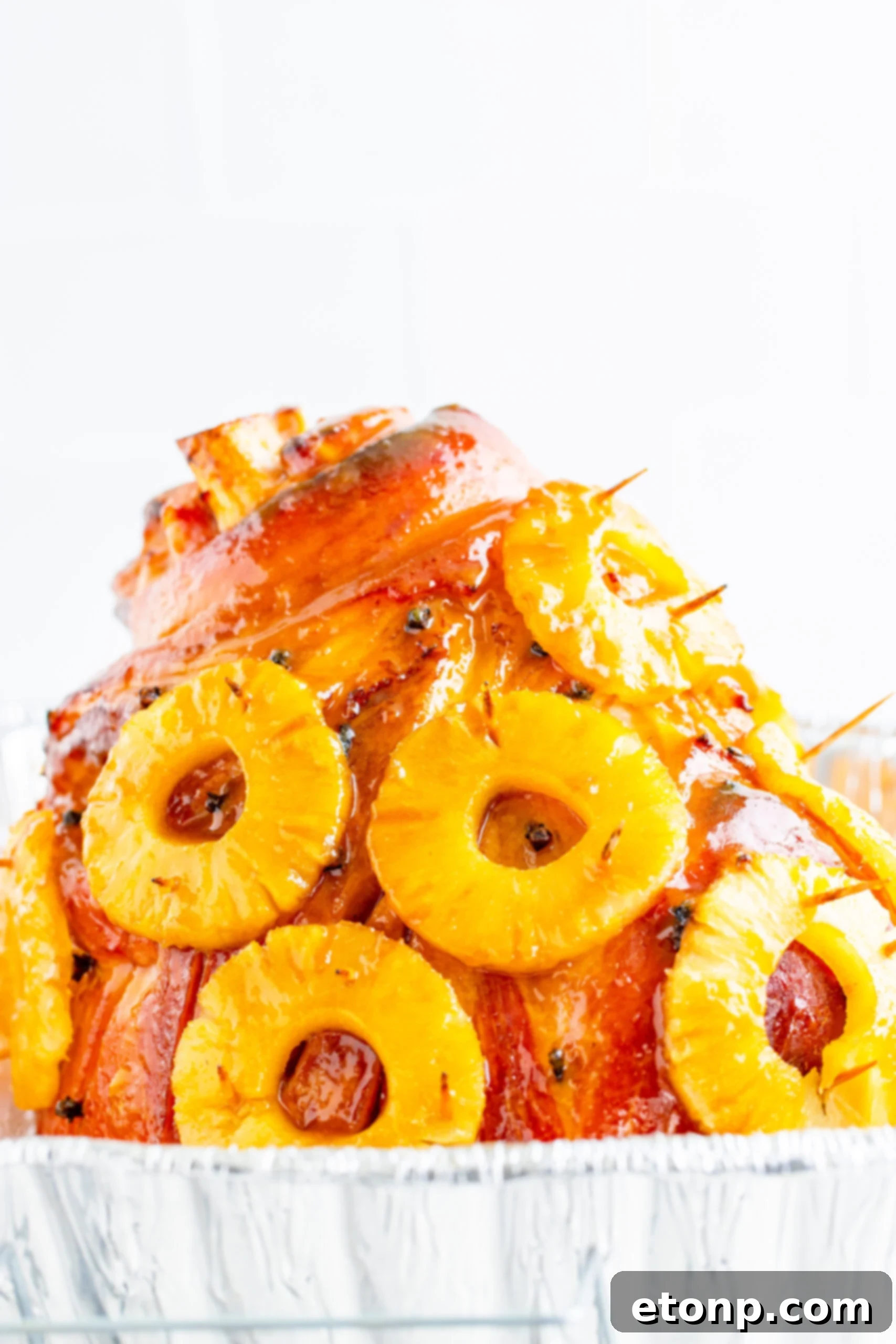
An Unforgettable Centerpiece – Beyond taste, the visual appeal of this ham is undeniable. The golden-brown crust, dotted with cloves and pineapple rings, makes for an absolutely stunning presentation. It’s not just a dish; it’s a conversation starter, perfect for making holiday dinners or special occasions truly memorable.
Essential Ingredients for Your Perfect Baked Ham
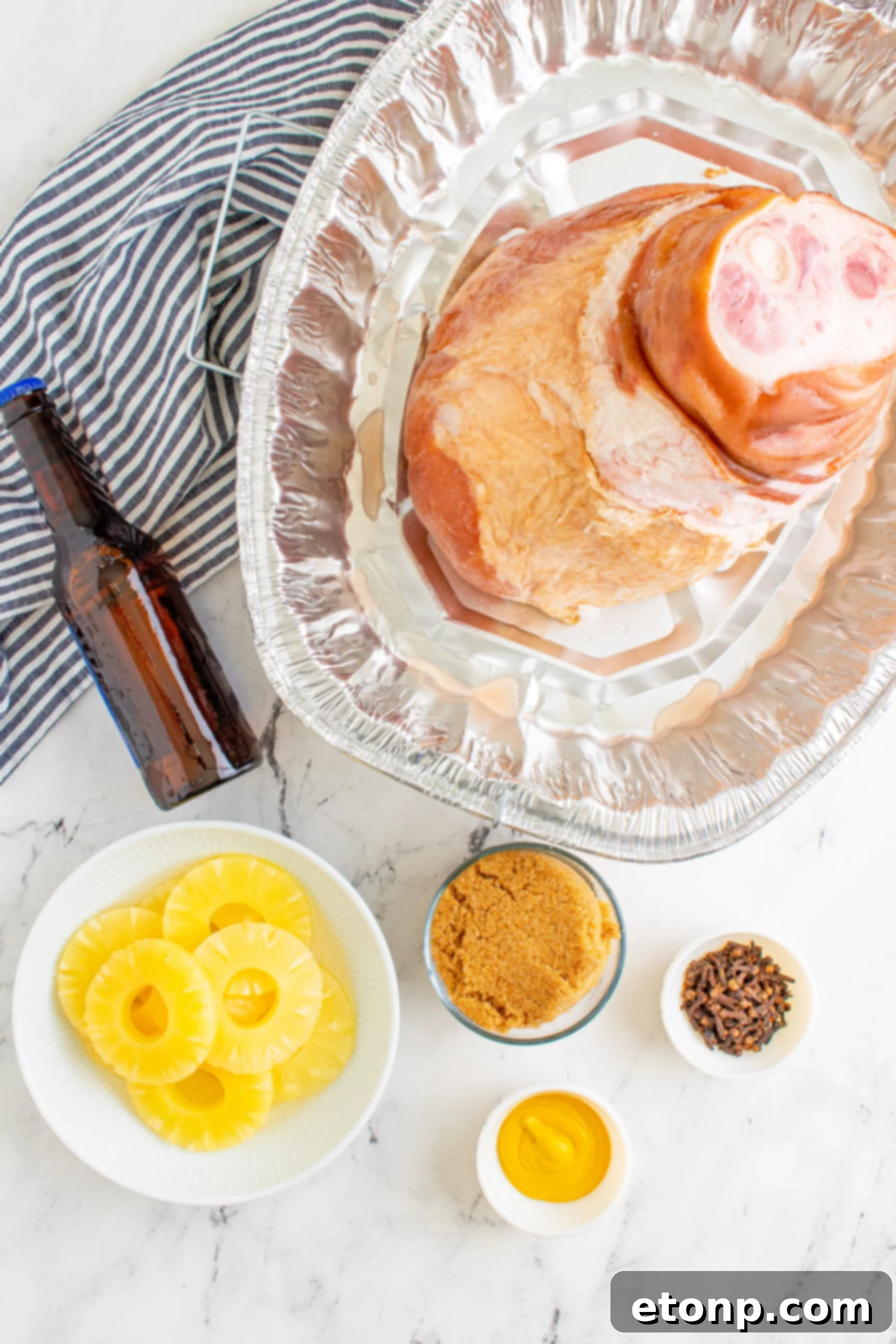
The magic of this Pineapple Baked Ham lies in the thoughtful combination of a few key ingredients, each playing a crucial role in developing its signature flavor and texture:
Whole Cloves – For years, I’ve incorporated whole cloves into my ham recipes, and it’s a practice I enthusiastically recommend. Their distinct, warm, and spicy aroma penetrates the ham as it bakes, infusing it with an extraordinary depth of flavor that elevates the entire dish. Cloves are potent, so while you want their unique essence, be mindful not to overdo it if you prefer a more subtle spice.
Pineapple Rings – As previously discussed, pineapple is not just for decoration! Its bromelain enzyme actively tenderizes the meat, ensuring a wonderfully soft texture. While rings offer a classic presentation and are easy to attach, feel free to use cubed or crushed pineapple if that’s what you have on hand or prefer. The tenderizing effect will be just as effective, regardless of the cut.
Beer – Cooking with alcohol, especially in baked goods and savory dishes, is one of my favorite tricks for adding incredible moisture and complex flavor. In this ham recipe, beer contributes significantly to the juiciness of the meat, and rest assured, all the alcohol evaporates during the long baking process, leaving behind only its rich, malty notes. If you prefer to skip the beer, suitable alternatives include dry white wine, or even soft drinks like Coke or Dr. Pepper, which can provide similar moisture and a touch of sweetness.
Brown Sugar – The cornerstone of our phenomenal glaze, brown sugar brings a deep molasses flavor and a beautiful caramelization to the ham’s exterior. Packed brown sugar is ideal for ensuring the right consistency and sweetness for the glaze.
Yellow Mustard – Don’t underestimate the role of humble yellow mustard in this glaze. It provides a delightful tang that perfectly balances the sweetness of the brown sugar and pineapple, cutting through the richness of the ham. It also acts as an emulsifier, helping to bind the glaze ingredients together and allowing it to adhere beautifully to the ham.
Expert Tips for Crafting the Best Baked Ham Ever!
Achieving a truly spectacular baked ham is all about a few key techniques and considerations. Follow these tips to ensure your ham is nothing short of perfection:
- Select the Right Ham – Your choice of ham lays the foundation for the entire dish. While personal preference plays a role, I strongly recommend a pre-cooked, bone-in ham. Bone-in hams tend to have more flavor and remain juicier throughout the cooking process. I typically avoid spiral-sliced hams unless absolutely necessary, as they can dry out much quicker due to the pre-cut surfaces. A shank-end ham is often a great choice for its rich flavor and ease of carving. Look for one that feels substantial and has a good fat cap, which will render down and add moisture.
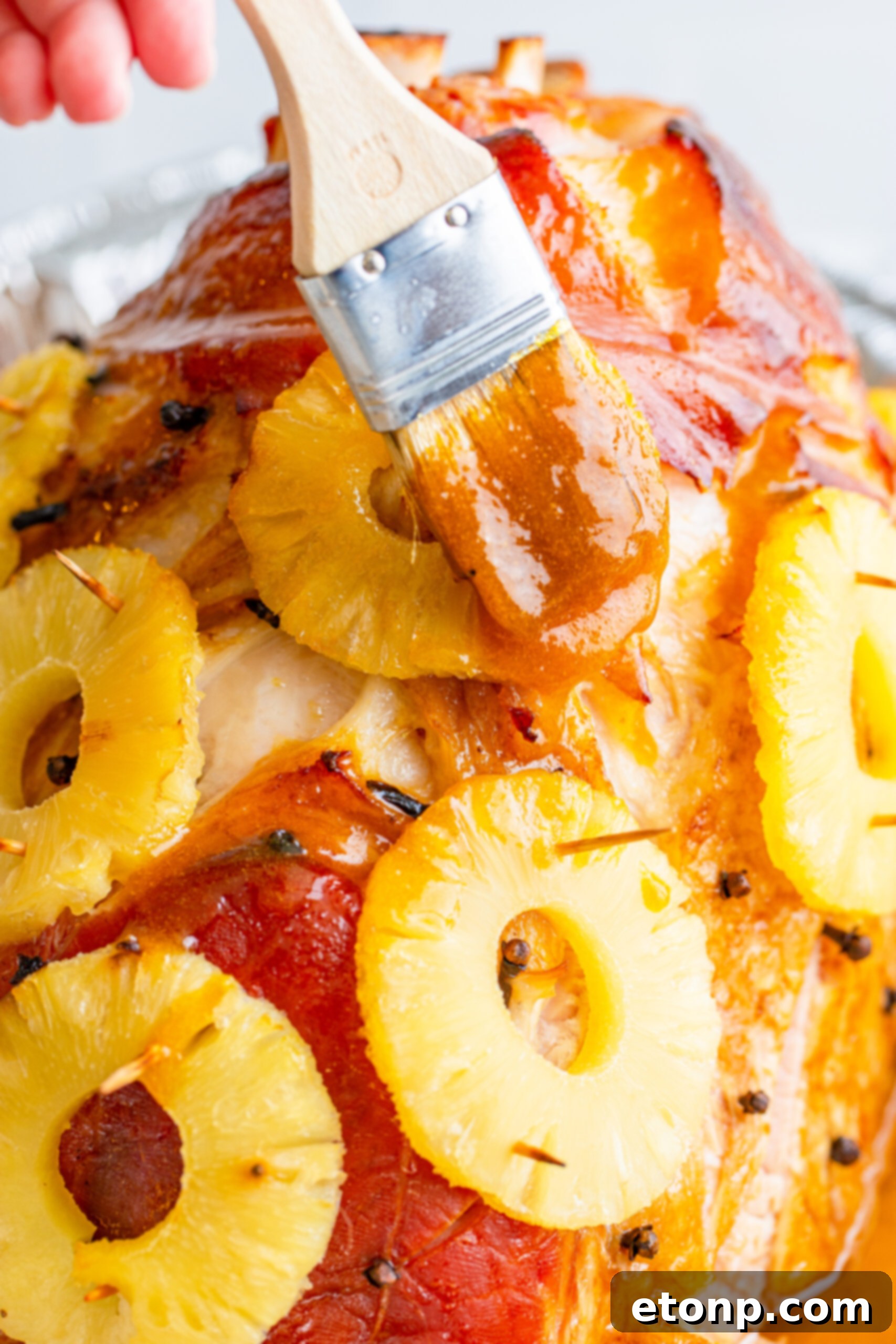
- GLAZE, GLAZE, GLAZE! – This cannot be emphasized enough. The glaze is not merely an afterthought; it’s integral to both flavor and moisture. Apply multiple layers of your brown sugar glaze, especially during the last hour of baking. Each layer caramelizes, creating a magnificent crust that locks in juices and builds incredible depth of flavor. Don’t be shy; aim for a thick, glistening coating!
- Embrace the “Low and Slow” Method – Resist the temptation to crank up the oven temperature to speed things along. Cooking your ham at a lower temperature (around 325°F / 160°C) for a longer duration is paramount for a tender and juicy result. This gentle heat allows the ham to warm through evenly without drying out the exterior, preserving those delectable juices within.
- Ensure Complete Defrosting – If you’re starting with a frozen ham, ensure it is *completely* defrosted before you even begin the cooking process. A partially frozen ham will cook unevenly, leading to dry spots and undercooked sections. Allow ample time for thawing in the refrigerator – typically 4-7 hours per pound.
- Cover with Aluminum Foil – For the majority of the baking time, keep your ham securely covered with heavy-duty aluminum foil. This creates a moist, steamy environment around the ham, trapping in precious moisture and preventing the surface from drying out prematurely. Remove the foil only for the last 30-45 minutes to allow the glaze to caramelize and the ham to develop a beautiful golden-brown crust.
- Utilize a Reliable Meat Thermometer – A good quality meat thermometer is your best friend when baking ham. For a pre-cooked ham, aim for an internal temperature of 140°F (60°C). For a raw ham, the target is 145°F (63°C). Begin checking the temperature about halfway through the estimated cooking time and continue to monitor it frequently. Remember, you can always cook it a little longer if needed, but once a ham is overcooked, there’s no turning back!
- Allow for Resting Time – Once your ham reaches the desired internal temperature, remove it from the oven, tent it loosely with foil, and let it rest for at least 20-30 minutes before carving. This crucial resting period allows the juices to redistribute throughout the meat, ensuring maximum tenderness and flavor. Slicing too soon will result in juices running out, leaving you with a drier ham.
Frequently Asked Questions (FAQs) About Baked Ham
Here are answers to some common questions you might have when preparing your Pineapple Baked Ham:
How long should you cook a ham in the oven?
The general rule of thumb for a pre-cooked ham is to bake it for approximately 15-20 minutes per pound at 325°F (160°C). For example, a 12-pound ham, as used in this recipe, will typically require about 3 hours of baking time. Remember, the “low and slow” approach often yields the best results, so you can even choose to cook it at a slightly lower temperature for an even longer duration if you have the time, aiming for an internal temperature of 140°F (60°C). Always rely on your meat thermometer to confirm doneness, as oven temperatures can vary.
What is the difference between bone-in and boneless ham? Which is better?
Bone-in hams generally offer superior flavor and moisture. The bone contributes to a richer taste and helps to insulate the meat, preventing it from drying out during cooking. Boneless hams, while convenient for carving, can sometimes be drier and lack the depth of flavor found in their bone-in counterparts. For special occasions where flavor and juiciness are paramount, bone-in is usually the preferred choice.
Can I use a spiral-sliced ham with this recipe?
While this recipe is designed for a whole bone-in ham to maximize juiciness, you can adapt it for a spiral-sliced ham. However, be aware that spiral-sliced hams are more prone to drying out. To combat this, ensure you keep the ham tightly covered with foil for almost the entire baking process, only uncovering for the very last 15-20 minutes to apply the glaze and allow it to caramelize. You might also want to reduce the total cooking time slightly, as they tend to cook faster. Monitor the internal temperature closely.
Can I freeze leftover ham?
Absolutely! Ham freezes exceptionally well, allowing you to enjoy leftovers for months to come. To freeze, ensure the ham has cooled completely, then slice or dice it as desired. Store it in an airtight, freezer-safe container or heavy-duty freezer bags, removing as much air as possible. Properly stored, frozen ham can maintain its quality for up to 3-4 months. Thaw overnight in the refrigerator before reheating.

What to Serve with Your Decadent Pineapple Baked Ham
A grand main course like this Pineapple Baked Ham deserves equally delicious side dishes to complete the feast. Here are some fantastic pairings that complement its rich flavors beautifully:
- Slow Cooker Buttery Bacon Green Beans
- Creamy Funeral Potatoes
- Creamy Crock Pot Macaroni and Cheese
- Parmesan Crusted Roasted Potatoes
- Instant Pot Sweet Potato Casserole
- Classic mashed potatoes with a dollop of butter.
- Steamed asparagus or roasted Brussels sprouts for a touch of green.
- Warm dinner rolls with honey butter.

Pineapple Baked Ham
Course
Main Course
Prep Time
15
mins
Cook Time
3
hrs
30
mins
Total Time
3
hrs
45
mins
Servings
16
Servings
Ingredients
- 12 pound smoked cooked ham (shank end preferred)
- 2 tablespoons whole cloves
- 1 can (20 ounce) pineapple rings (do not drain)
- 20 ounces beer (or wine, Coke, Dr. Pepper)
- 1 cup light brown sugar (packed)
- 2 tablespoons yellow mustard
Instructions
-
Preheat your oven to 325°F (160°C). If your ham has a rind, you may choose to remove it for a less chewy texture. Use a sharp paring knife to carefully cut around the shank end of the ham, through the rind but not too deep into the meat. Gently peel or cut away the rind. Place the prepared ham into a large baking dish with deep sides.
-
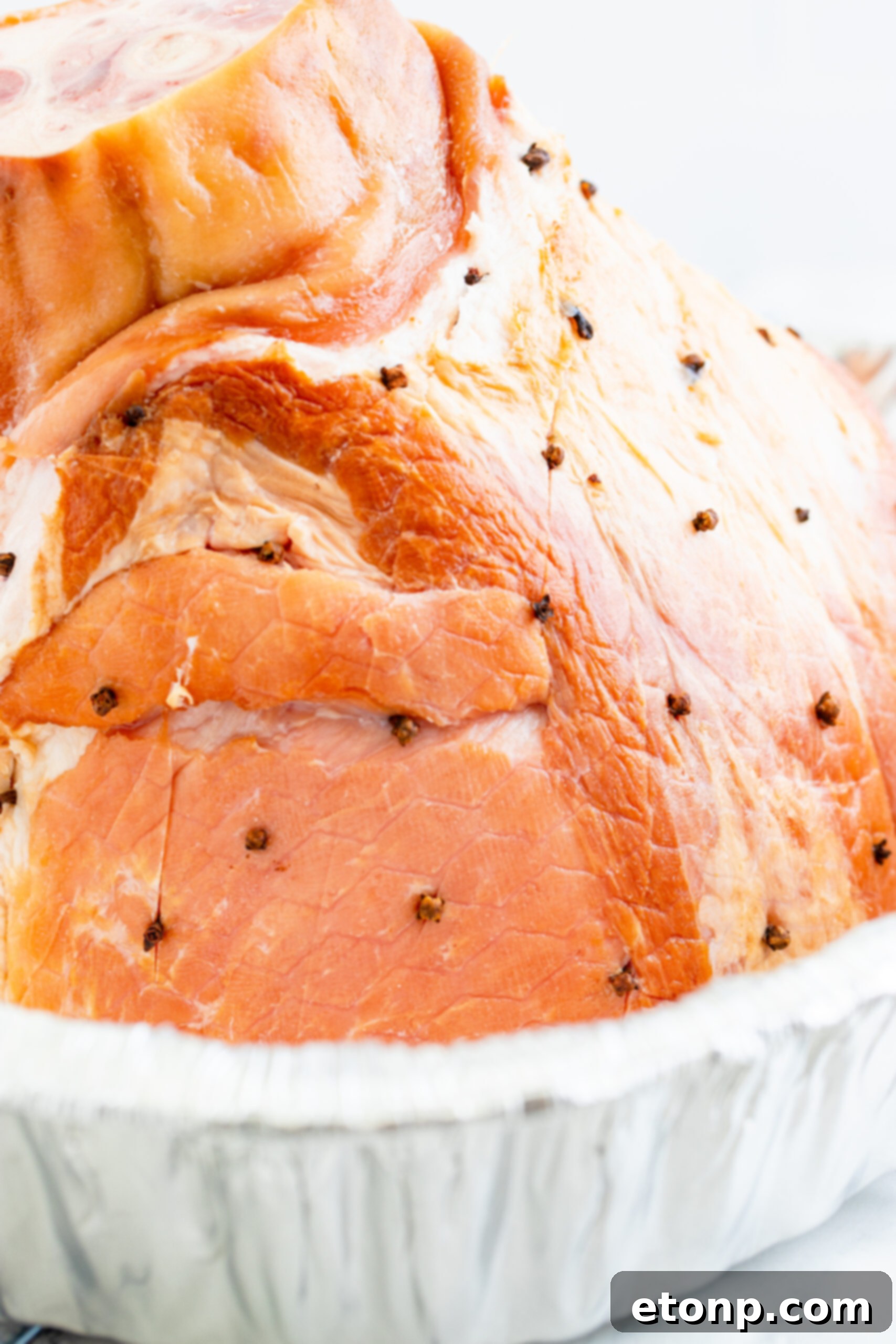
Next, score the outside of the ham in a diamond pattern using your paring knife. Cut through the fat layer. A slight cut into the meat is acceptable, but try to minimize it to prevent those areas from drying out. This scoring will allow the glaze to penetrate better and create crispy edges during baking.
-
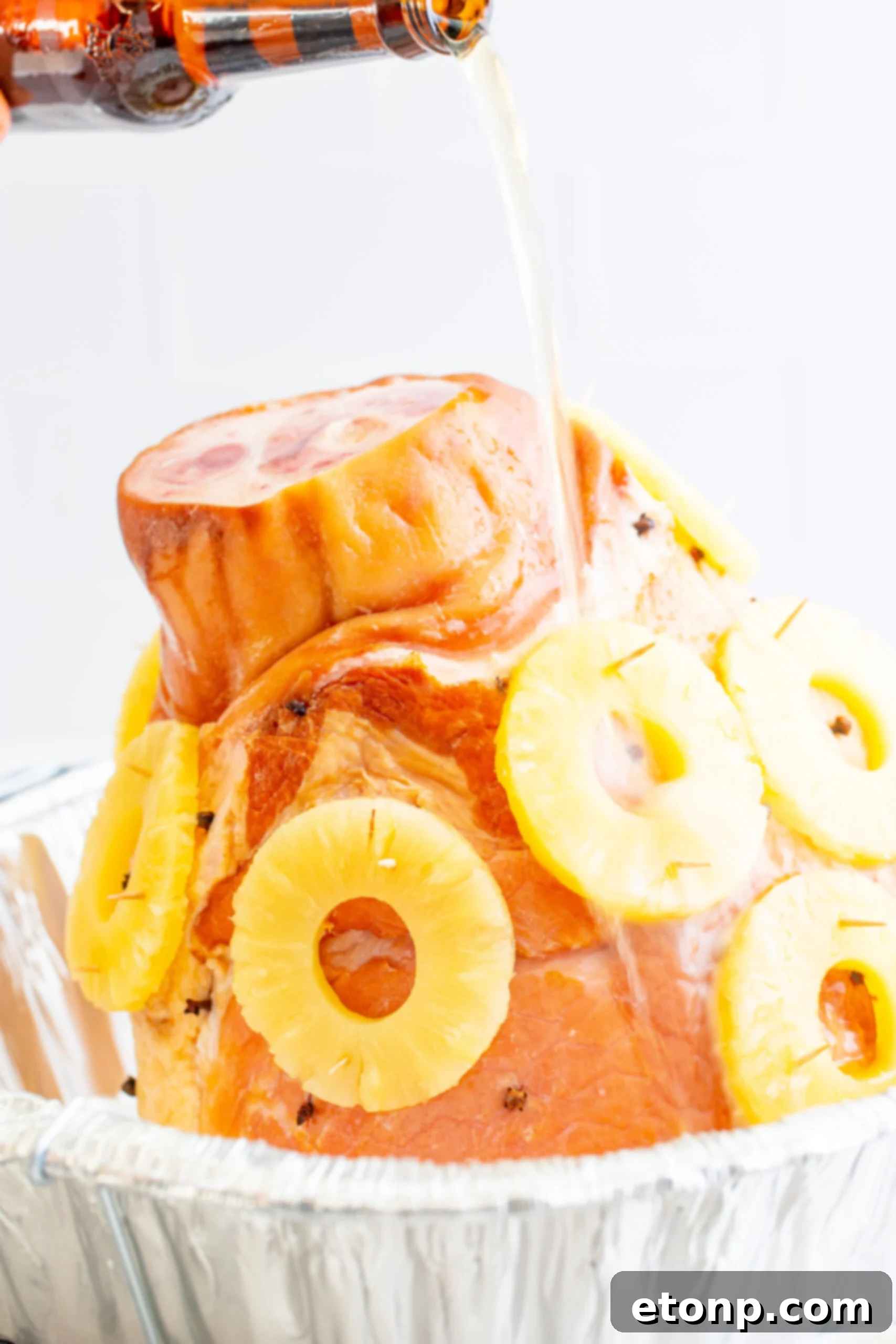
Press whole cloves into the ham all over, especially into the scored diamond patterns. The more cloves you use, the more intense the clove flavor will be, so adjust to your preference. Secure pineapple rings around the ham using toothpicks. Pour the beer and the pineapple juice from the canned pineapple rings over the ham in the baking dish. Cover the entire dish tightly with aluminum foil and place it in the preheated oven.
-
Hams generally cook for about 15 minutes per pound. For a 12-pound ham, this means approximately 3 hours of baking. About 30 minutes before the estimated cooking time is complete, remove the aluminum foil to allow the ham to begin browning and caramelizing.
-
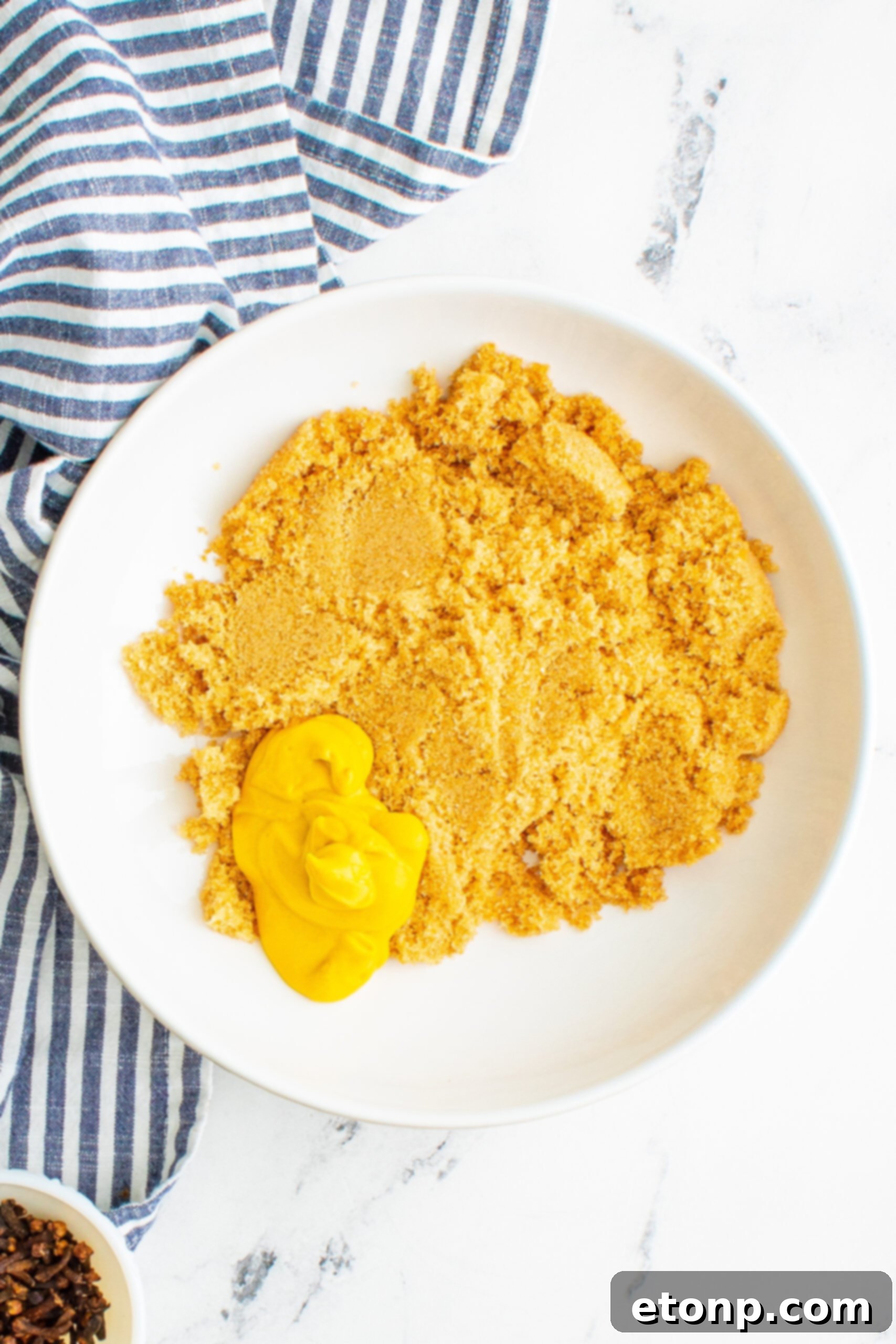
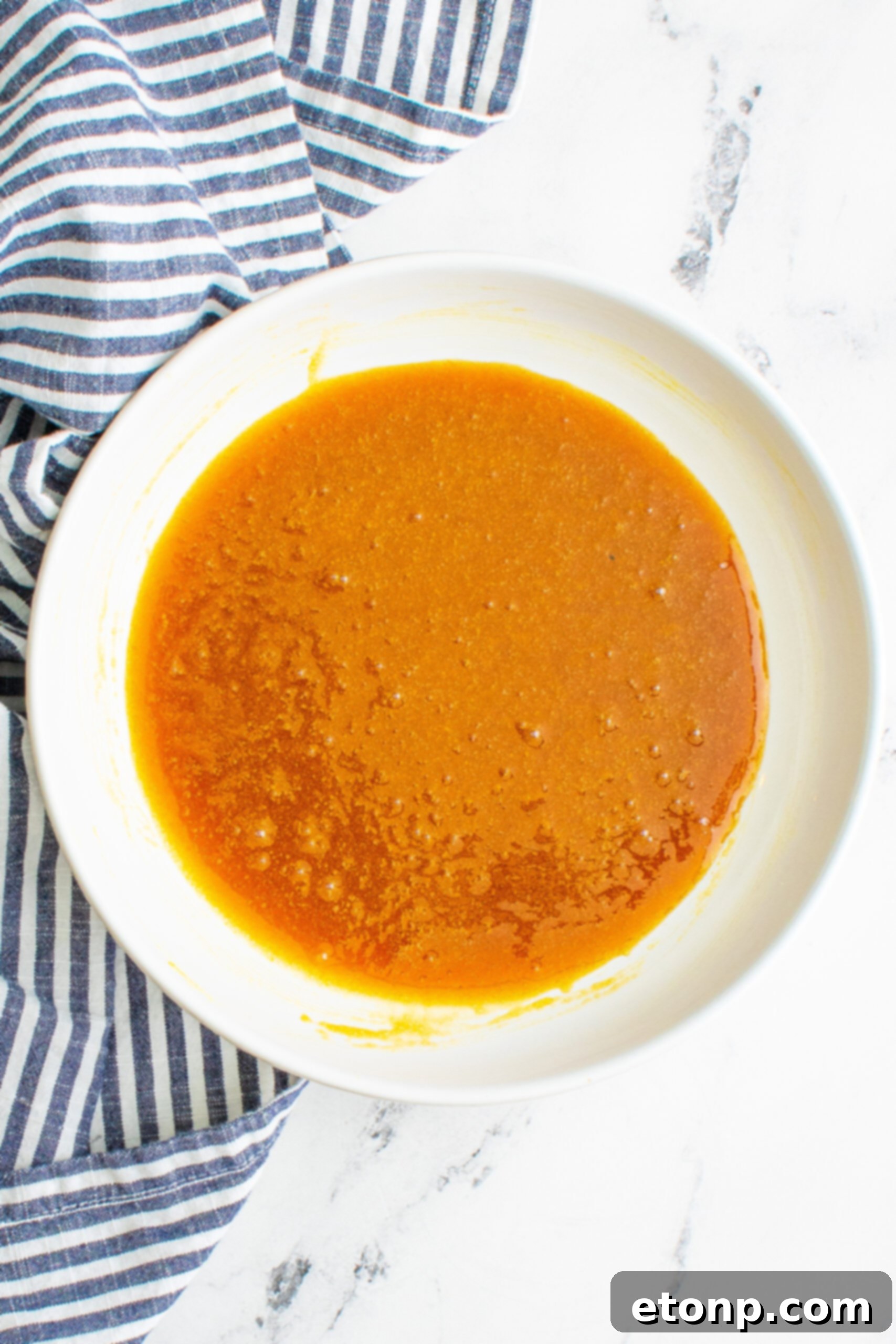
While the ham is browning, prepare the glaze. In a medium-sized bowl, combine the light brown sugar and yellow mustard. Gradually add a little bit of the ham drippings from the baking dish, whisking constantly, until you achieve a brushable consistency. You want the glaze to be thick enough to cling to the ham but still spreadable.
-
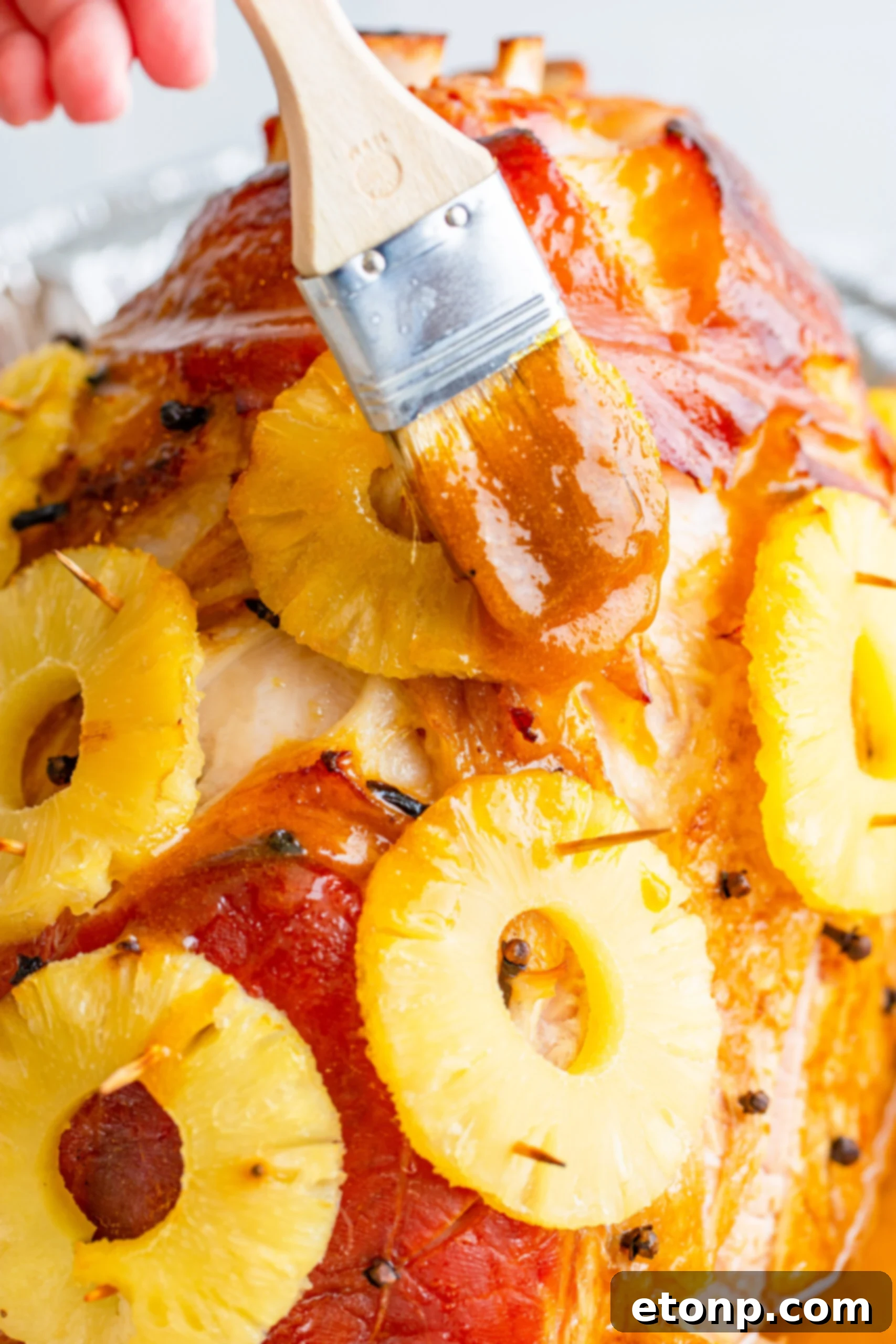
Liberally brush the glaze all over the exposed ham. Don’t be shy – use all of it for maximum flavor and a gorgeous caramelized crust. Return the glazed ham to the oven for another 15-20 minutes, or until the glaze is beautifully caramelized and glistening.
-
Once baked, remove the ham from the oven and let it rest, tented loosely with foil, for at least 30 minutes before slicing. This resting period is crucial for the juices to redistribute, ensuring a tender and moist ham. Before serving, remember to carefully remove all toothpicks and cloves. Enjoy your magnificent Pineapple Baked Ham!
Notes
I personally love to slice the ham and then return the slices to the flavorful drippings in the baking dish to keep them warm and juicy while serving my guests. This infuses the ham even further with incredible flavor.
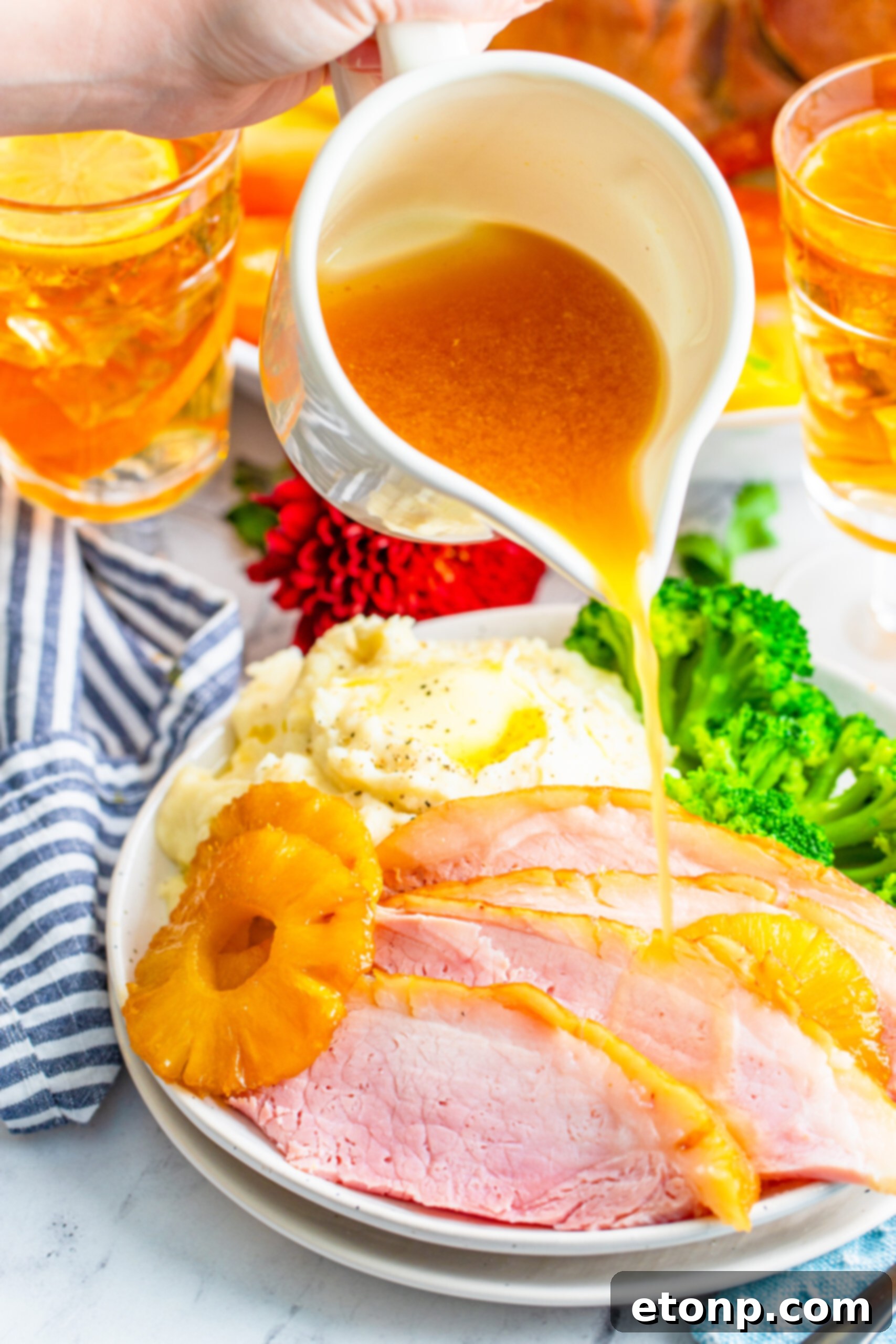
The drippings from the ham also make a wonderful and unexpected gravy! Simply skim off any excess fat from the top, bring the drippings to a simmer on the stovetop, and then whisk in a cornstarch slurry (a mixture of equal parts cornstarch and cold water) until the gravy reaches your desired thickness. This adds another layer of deliciousness to your meal.
Did you make this recipe?
We’d love to see your creations! Share your experience and make sure to follow us on Pinterest for more incredible recipes and culinary inspiration!
📌Pin Recipe
👍Share on Facebook