
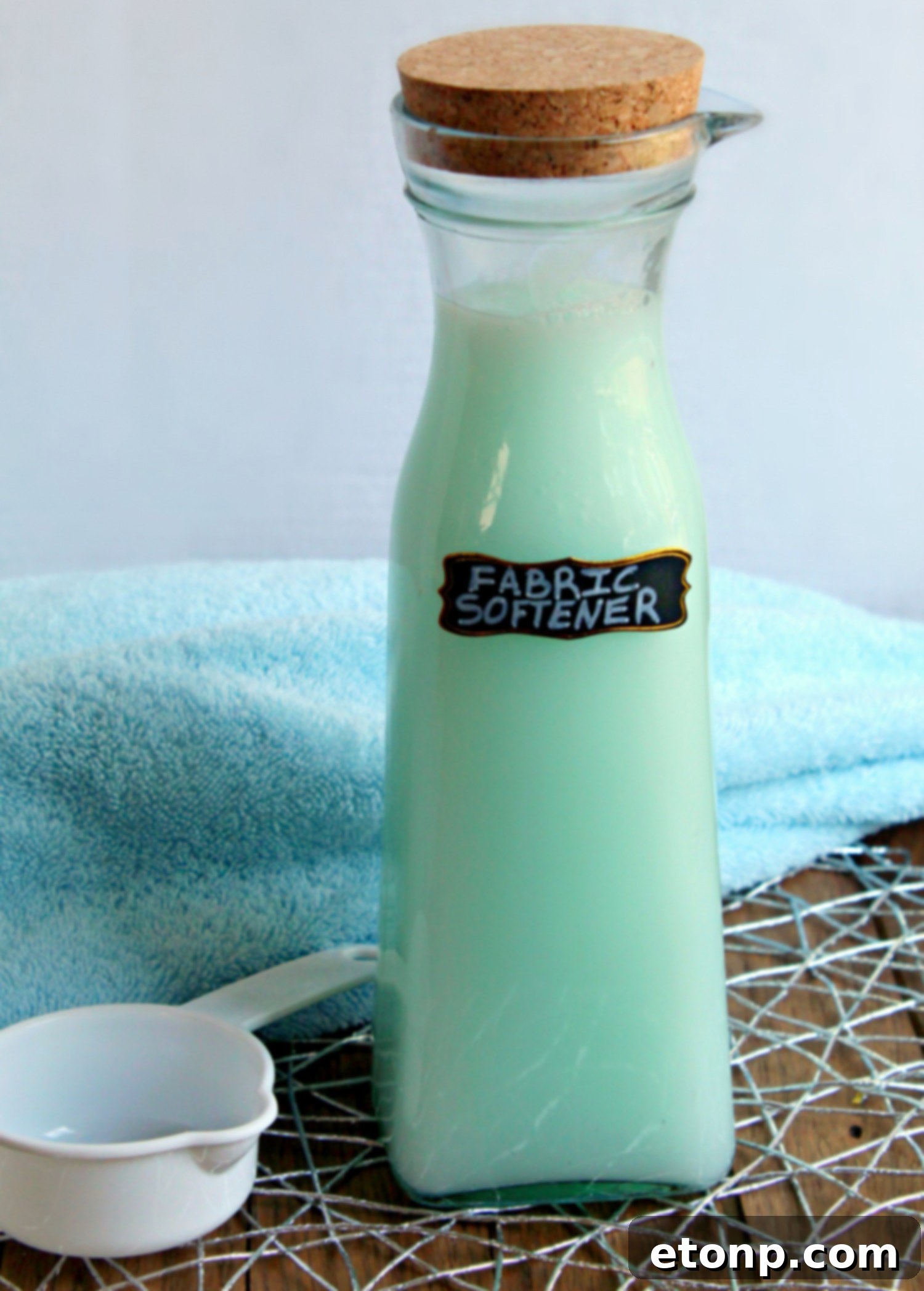
Unlock Softness & Savings: Your Guide to DIY 3-Ingredient Homemade Fabric Softener
Welcome to our exciting new series dedicated to empowering you with practical, homemade solutions for everyday essentials!
We’re thrilled to kick things off by showing you how to create your very own fabric softener using just three simple,
affordable ingredients. Say goodbye to expensive store-bought options and hello to luxuriously soft, wonderfully scented laundry,
all while saving money and reducing your environmental footprint.
This recipe is not only incredibly easy to make but also incredibly effective, delivering fantastic results every time.
It’s just the beginning of a journey into DIY home products; stay tuned for future posts on homemade shampoo,
laundry detergent, DIY bug spray, and more!
Why Go DIY for Your Fabric Softener? The Benefits You Can’t Ignore
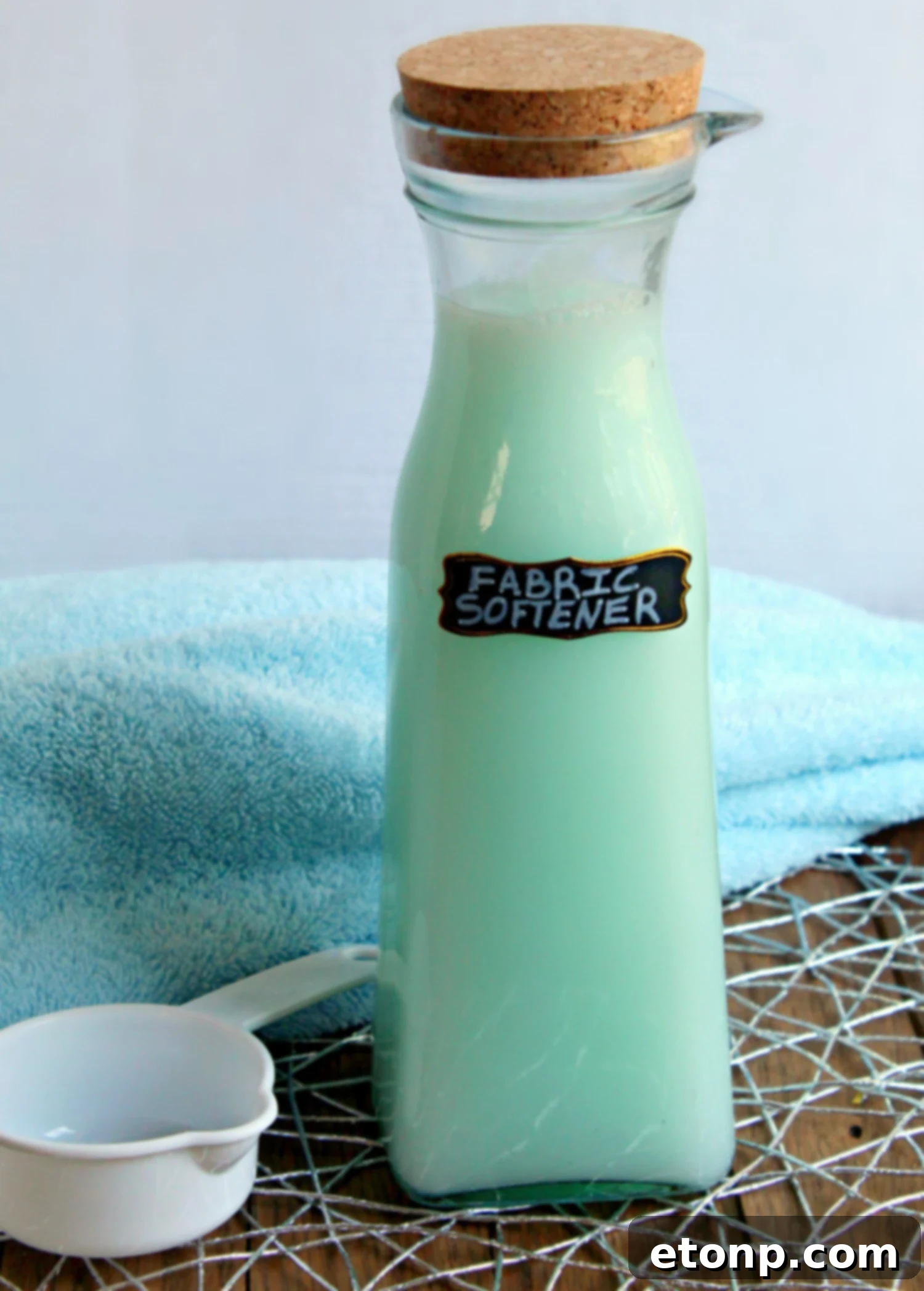
In a world where household expenses seem to constantly rise, discovering ways to save money without compromising quality is a game-changer.
Homemade fabric softener stands out as one of the simplest yet most impactful DIY projects you can undertake.
Here’s why embracing this homemade solution is a smart choice for your wallet, your clothes, and the planet:
Unbeatable Cost Savings
Imagine making a large batch of fabric softener for literally under $5. This isn’t just a fantasy; it’s the reality of this 3-ingredient recipe.
Commercial fabric softeners can be surprisingly expensive, with brand-name bottles quickly adding up to a significant portion of your grocery bill.
By opting for a homemade version, you’re drastically cutting down on your recurring expenses, freeing up your budget for other necessities.
The initial investment in ingredients is minimal, and they often yield multiple batches, offering incredible long-term value.
This small switch can lead to substantial annual savings, making it a truly budget-friendly laundry solution.
Customizable Scents for a Personalized Laundry Experience
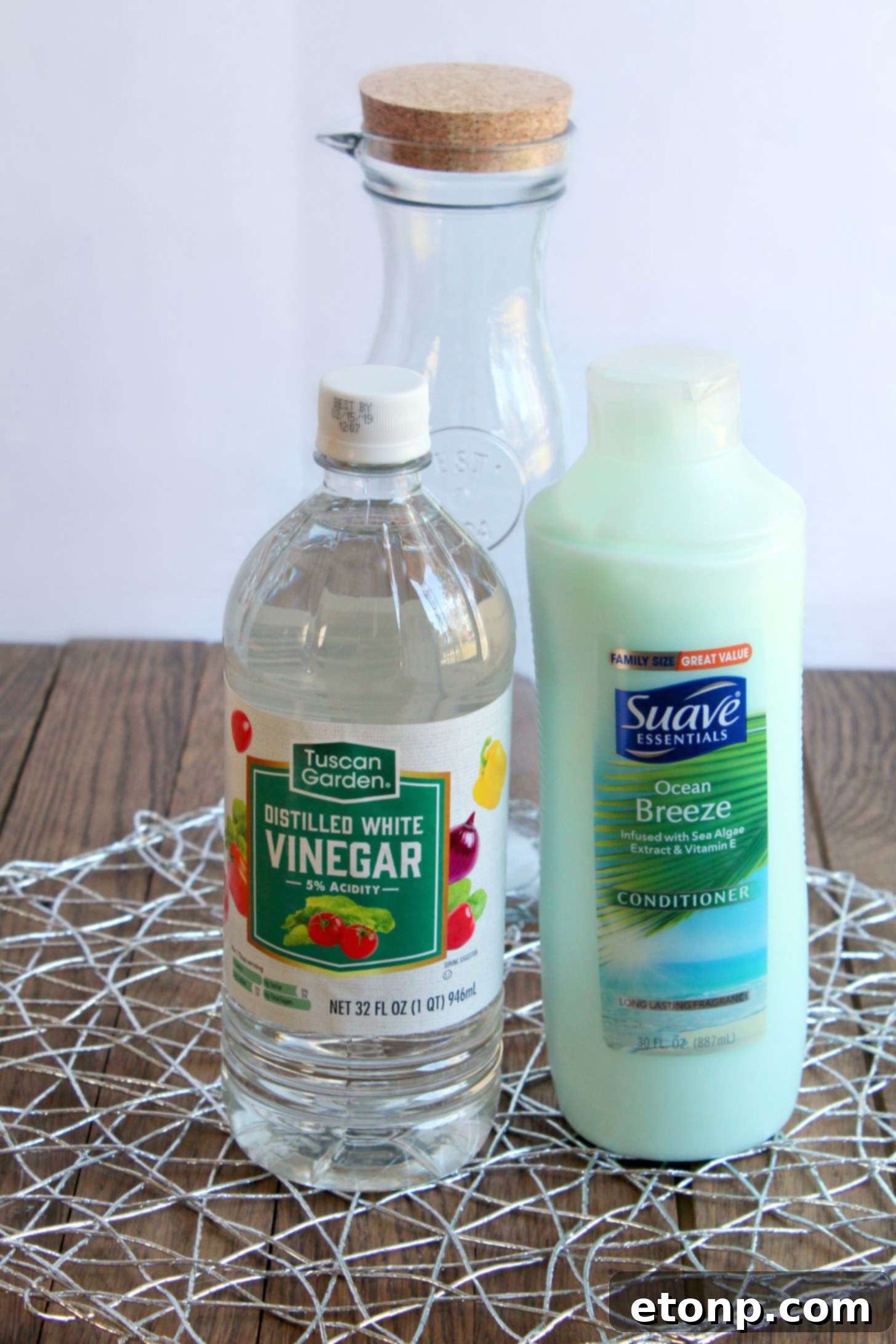
One of the most enjoyable aspects of this DIY fabric softener is the complete control you have over the scent.
You can choose any hair conditioner you like, which means an almost endless array of fragrances is at your fingertips.
From refreshing ocean breeze, soothing lavender, or a vibrant strawberry, to sophisticated vanilla or a classic fresh linen scent – the choice is yours.
This personal touch ensures your clothes not only feel incredibly soft but also carry a fragrance you genuinely love,
transforming laundry day into a more pleasant and aromatic experience. You can even switch up scents with each batch!
Effective Softness and Long-Lasting Freshness
Don’t let the simplicity of this recipe fool you; this homemade fabric softener truly works wonders.
It leaves your clothes feeling ultra-soft to the touch, often comparable to, or even exceeding, the softness provided by expensive commercial brands.
Beyond just softness, it effectively helps reduce static cling, a common nuisance, and adds a delightful, long-lasting freshness that permeates your entire wardrobe.
You’ll distinctly notice the difference in your towels, sheets, and everyday garments, making them more comfortable and enjoyable to use.
Reduced Chemical Exposure and Positive Environmental Impact
Many commercial fabric softeners contain a cocktail of synthetic chemicals, dyes, and artificial fragrances that can be harsh on sensitive skin,
trigger allergies, and contribute to indoor air pollution. By making your own, you gain full transparency and control over the ingredients,
allowing you to choose gentler, more natural options. Furthermore, reusing an old container for your homemade softener
significantly reduces plastic waste, making it an incredibly eco-conscious choice that benefits both your family’s health and our planet.
The 3 Magic Ingredients Explained for Natural Laundry Softness
This incredibly effective and economical fabric softener relies on just three common household items. Let’s take a closer look at what makes each ingredient so special and why they work together seamlessly:
1. Hair Conditioner (Your Scent & Softening Agent)
That’s right, regular hair conditioner! The same ingredients that work wonders to smooth, soften, and detangle your hair are equally effective on fabric fibers.
Conditioners contain cationic surfactants, which are positively charged molecules that coat the negatively charged fabric fibers. This coating makes the fibers feel
smoother and softer, significantly reducing friction and static cling. The beauty here is that you can pick any budget-friendly conditioner you like –
from a basic floral to an exotic fruit blend like strawberry, or even a crisp “Ocean Breeze” as I did for this batch. The choice of conditioner directly impacts the final fragrance of your laundry,
allowing for endless customization possibilities. It doesn’t need to be an expensive, high-end conditioner to be effective.
2. White Vinegar (The Unsung Hero of Natural Laundry)
White vinegar might seem counterintuitive for something meant to smell good and soften clothes, but trust us, it’s an absolute laundry miracle worker!
Vinegar, an acidic solution, acts as a natural fabric softener by breaking down alkaline detergent residue and mineral deposits (from hard water) that can make clothes feel stiff and rough.
It also serves as an excellent natural deodorizer, neutralizing unpleasant odors like sweat, mildew, and pet smells. Beyond softening and deodorizing,
vinegar helps brighten whites, prevent lint buildup, and further reduce static cling. Crucially, the vinegar smell completely dissipates during the rinse and drying cycles,
leaving behind only the fresh scent of your chosen conditioner and truly clean laundry. It’s safe for all washing machines, including high-efficiency (HE) models, and septic systems.
3. Warm Water (The Blending Agent)
Warm water is a simple yet essential component for creating a smooth, well-mixed fabric softener. It helps to dissolve the conditioner evenly and combine it thoroughly with the vinegar.
This ensures a consistent product that will dispense properly in your washing machine’s dispenser and spread evenly throughout your laundry during the rinse cycle.
Using warm water helps prevent any clumping or separation of the conditioner, resulting in a perfectly blended softener ready for use.
Easy Step-by-Step Instructions: Making Your Homemade Fabric Softener
Ready to make your own budget-friendly, effective fabric softener? It’s truly as simple as gathering your ingredients and stirring them together!
3-Ingredient DIY Homemade Fabric Softener Recipe
Ingredients:
- 2 cups of your favorite scented hair conditioner
- 3 cups white vinegar
- 6 cups warm water
Instructions:
-
Gather Your Tools: Before you begin, gather all necessary equipment. You’ll need a large mixing bowl or a pitcher (at least 12-cup capacity), a whisk or sturdy spoon, and an empty, clean container (such as a repurposed fabric softener bottle or a large plastic jug) for storing your finished product. Ensure your container has a tight-fitting lid.
-
Combine Ingredients: In your chosen mixing bowl or pitcher, carefully combine the 2 cups of your favorite scented conditioner, 3 cups of distilled white vinegar, and 6 cups of warm water. The warmth of the water is key to achieving a smooth consistency.
-
Mix Thoroughly: Stir the mixture vigorously with your whisk or spoon until all ingredients are completely well combined and the conditioner is fully dissolved. Continue stirring until you achieve a smooth, consistent liquid with no visible lumps or streaks of conditioner. This might take a few minutes, but thorough mixing ensures an effective product.
-
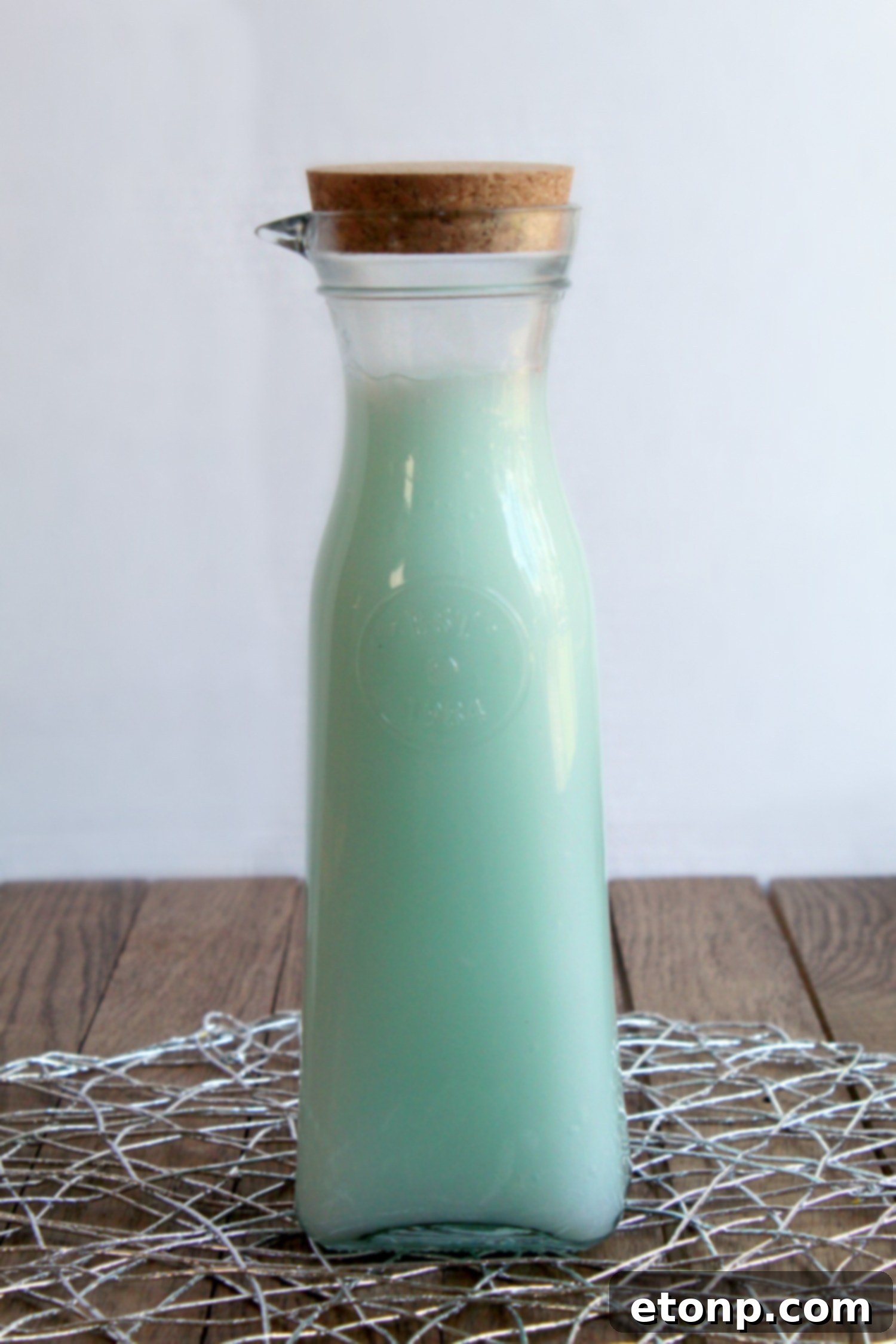
Pour and Store: Carefully pour your freshly made homemade fabric softener into your empty storage container. Use a funnel if necessary to prevent spills. Cap the container tightly to maintain freshness. This recipe yields a generous amount, typically enough for many loads of laundry, offering excellent value.
TO USE:
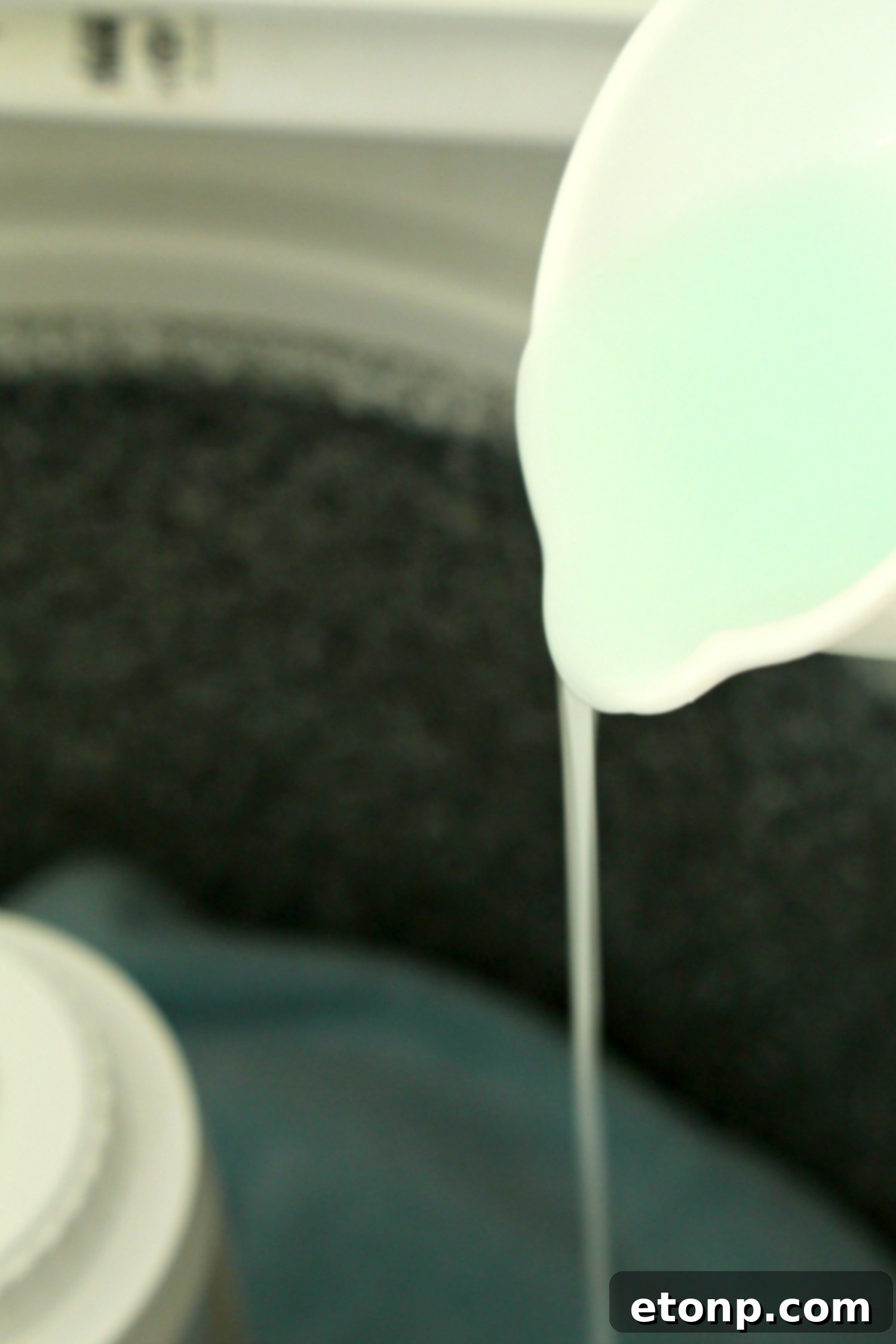
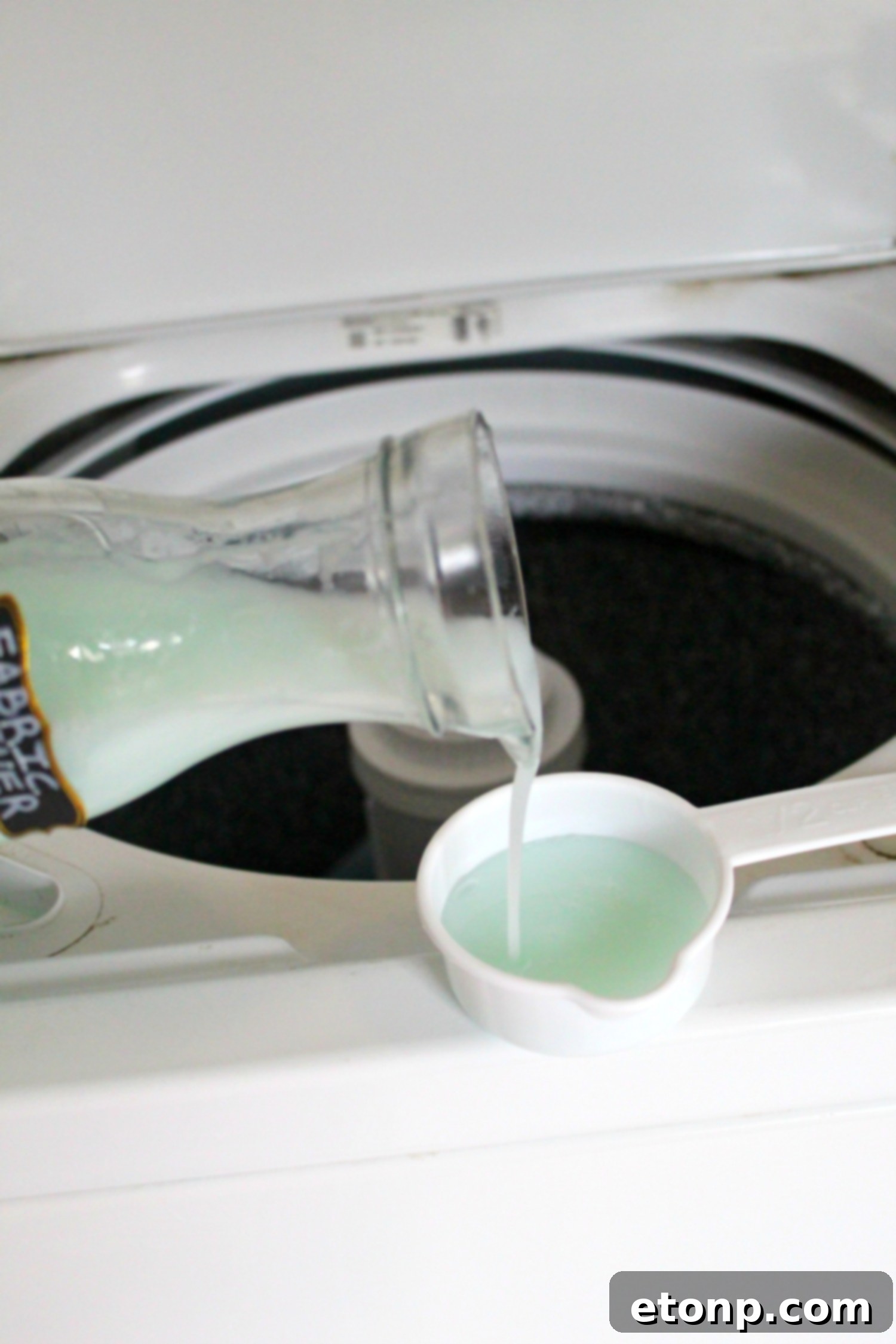
For each load of laundry, add 1/2 cup to 1 cup of the homemade fabric softener to your washing machine’s designated fabric softener dispenser. The exact amount can be adjusted based on the size of your laundry load and your desired level of softness. For standard loads, 1/2 cup is usually sufficient, while larger loads or those requiring extra softness might benefit from a full cup. If your washing machine does not have a fabric softener dispenser, simply add the mixture directly to the wash water during the final rinse cycle.
Tips for the Best Laundry Experience with Your DIY Softener
To ensure your homemade fabric softener works its magic consistently and provides the best results for your laundry, consider these helpful tips:
- Shake Before Use: Since this is a natural, emulsified mixture, some slight separation of ingredients can occur over time. Give your container a good shake or stir before each use to ensure the components are re-emulsified and distributed evenly, guaranteeing consistent performance.
- Optimal Storage: Store your homemade fabric softener in a cool, dark place, away from direct sunlight or extreme temperatures. An opaque plastic bottle (like a repurposed store-bought softener bottle) is ideal as it protects the ingredients from light degradation. When stored properly, your batch can typically last for several months (3-6 months).
- Experiment with Scents and Essential Oils: Don’t be afraid to try different conditioners! Each one offers a unique fragrance profile. If you prefer to use an unscented, hypoallergenic conditioner, you can easily add 10-20 drops of your favorite pure essential oil (such as lavender for relaxation, lemon for a fresh clean, or eucalyptus for invigoration) to the mix for a natural and customizable fragrance boost.
- Adjusting Consistency: If you find your softener mixture seems too thick, you can gradually add a little more warm water (1/4 to 1/2 cup at a time) and stir well until you achieve your desired consistency. Conversely, if it feels too thin, you might slightly reduce the amount of water in your next batch.
- For Tough Odors or Extra Softness: For particularly stubborn odors (like pet smells, gym clothes, or mildew) or if you desire an extra boost of softness, consider adding an additional 1/2 cup of white vinegar directly to the wash drum during the main wash cycle, in addition to using your homemade softener in the rinse cycle.
- Label Your Bottle: Always label your homemade products clearly with their contents and the date they were made. This helps with proper storage and knowing when it’s time to whip up a new batch.
Frequently Asked Questions About Homemade Fabric Softener
New to DIY laundry solutions? Here are some common questions and their answers to help you feel confident about making the switch:
- Q: Will my clothes smell like vinegar?
A: Absolutely not! This is one of the most common concerns, but rest assured, the acetic acid in white vinegar completely evaporates during the wash and rinse cycles, especially with the heat of the dryer. What you’ll be left with is only the lovely fragrance of your chosen conditioner and beautifully clean, fresh laundry. - Q: Is this homemade fabric softener safe for all washing machines, including HE models?
A: Yes, this homemade fabric softener is perfectly safe for both standard and high-efficiency (HE) washing machines. The ingredients are gentle, non-corrosive, and won’t harm your machine’s components, plumbing, or septic system. - Q: How long does the homemade fabric softener last once made?
A: When stored in a sealed container in a cool, dark place, your homemade fabric softener can maintain its efficacy for several months, typically between 3 to 6 months. If you notice any significant changes in its smell, color, or consistency, it might be an indication that it’s time to prepare a fresh batch. - Q: Can I use apple cider vinegar instead of white vinegar?
A: While apple cider vinegar has similar acidic properties, white vinegar is strongly preferred for laundry purposes. Apple cider vinegar is darker and, in some cases, might leave a faint residue or even a slight discoloration on very light fabrics. White vinegar is colorless and guarantees no such issues. - Q: What about using it on dark clothes? Will it leave marks or lighten them?
A: No, this homemade softener is generally safe for all colors, including dark clothes. Both the conditioner and vinegar are designed to dissolve and rinse away cleanly, without leaving any marks, stains, or causing any lightening of fabric dyes. As a general best practice for any new laundry product, if you have a very delicate or precious item, it’s always wise to test it on an inconspicuous area first. - Q: Can I add it directly to the wash drum with the detergent?
A: It’s best practice to add your fabric softener to your machine’s dedicated fabric softener dispenser, which releases it during the rinse cycle. If your machine doesn’t have a dispenser, you can manually add it to the wash water during the rinse cycle. Avoid adding it directly to the drum at the very beginning of the wash cycle with your detergent, as it can be washed away too soon and lose its effectiveness.
Ready to Transform Your Laundry Routine?
Embracing homemade fabric softener is a small change that yields significant and noticeable benefits – from substantial cost savings and positive environmental advantages to the sheer joy of customized, beautifully soft, and fresh-smelling laundry. It’s a powerful testament to how simple, common ingredients can combine to create exceptionally effective results for your home.
We wholeheartedly encourage you to try this incredibly easy DIY project and experience the remarkable difference for yourself. Don’t hesitate to share your favorite conditioner scents or any personal tips in the comments below, and let’s continue to build a vibrant community of smart, sustainable, and savvy homemakers!