

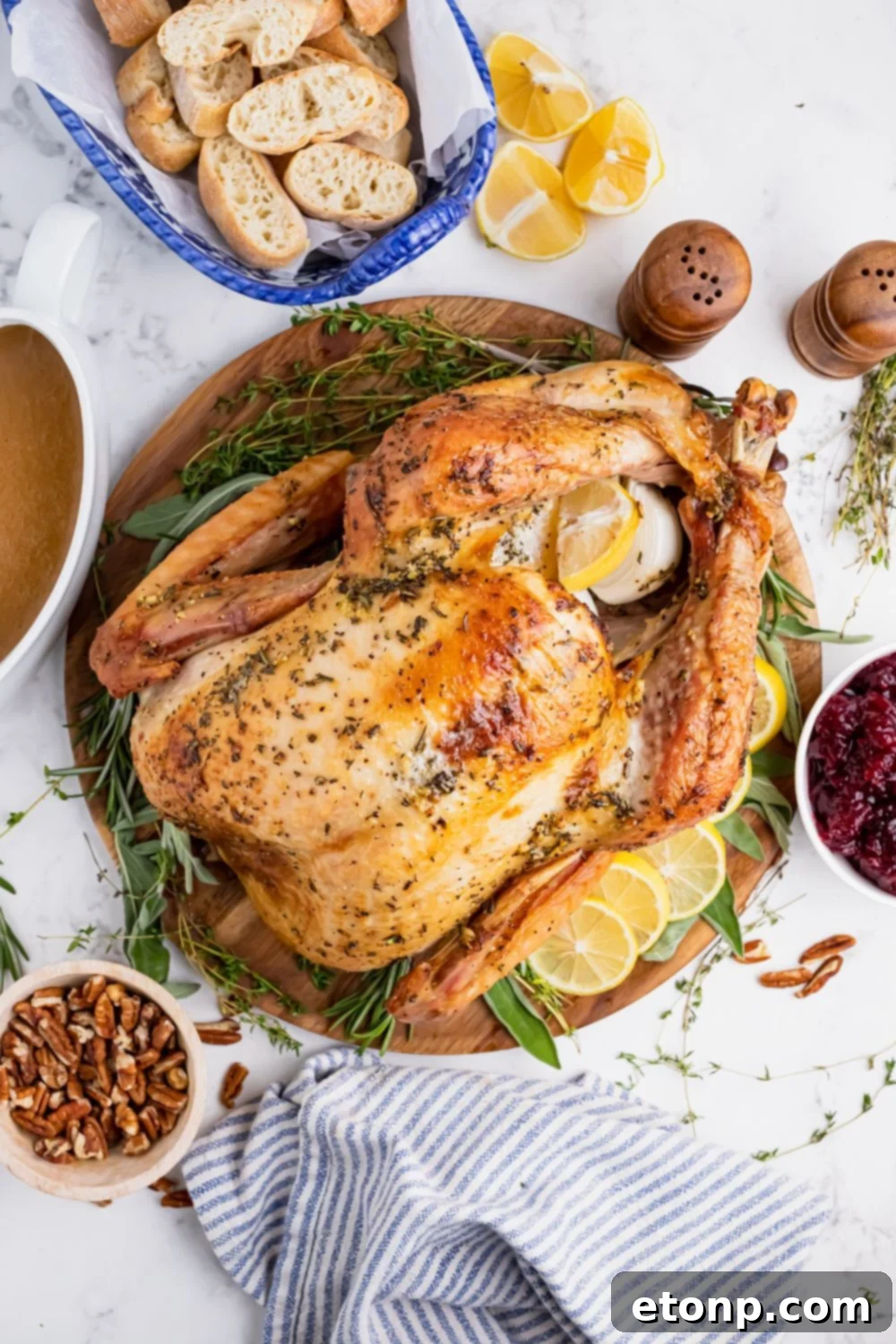
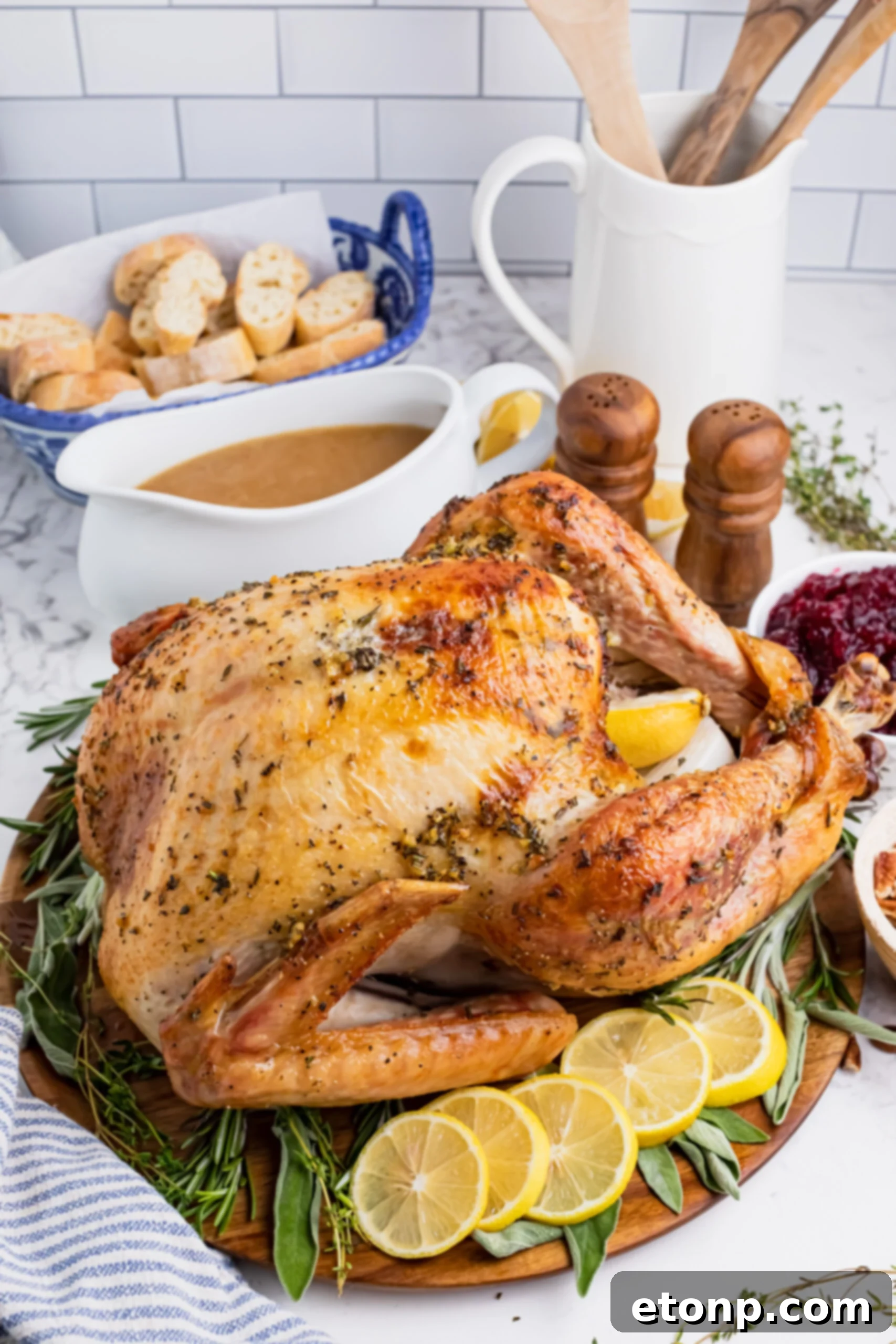
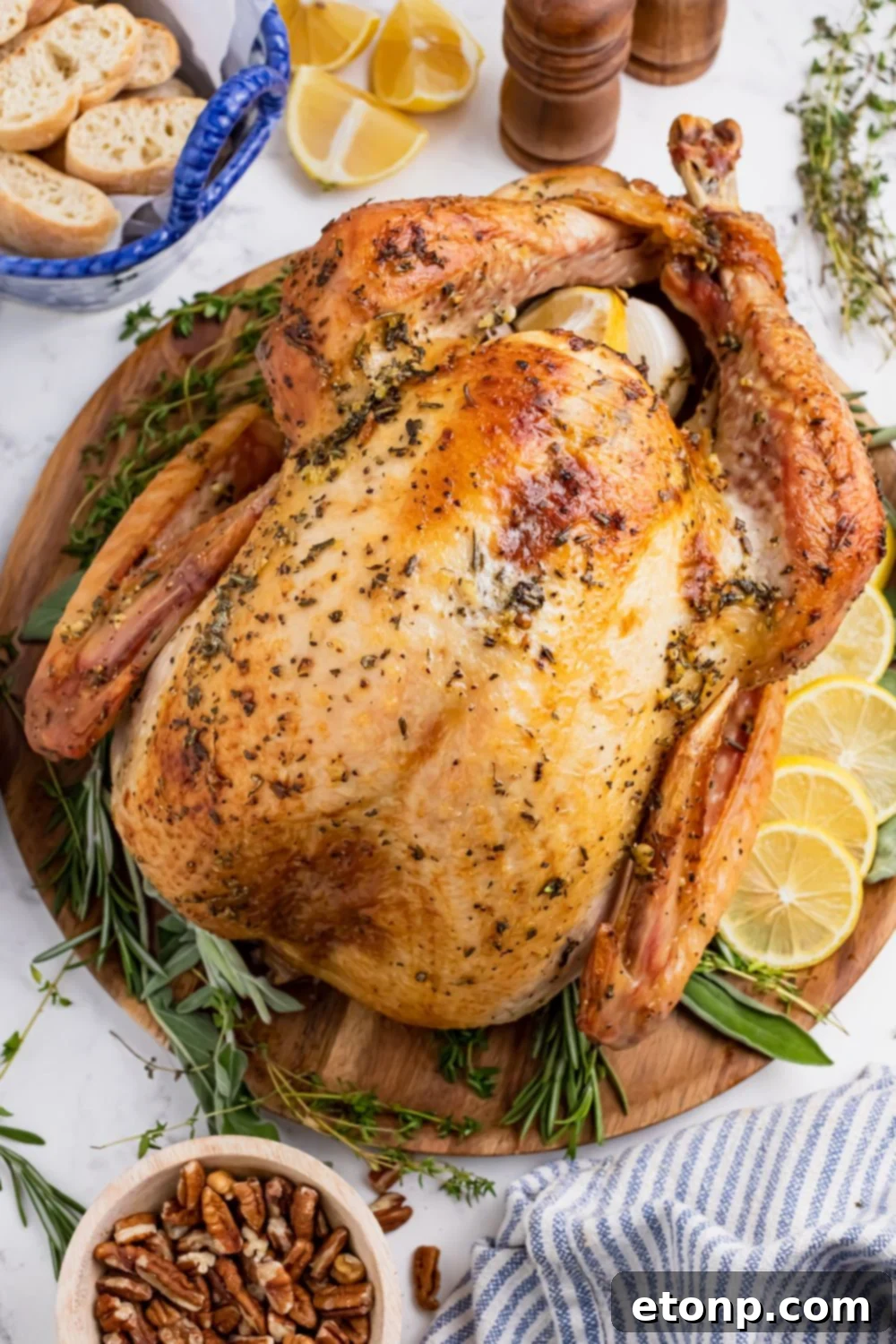
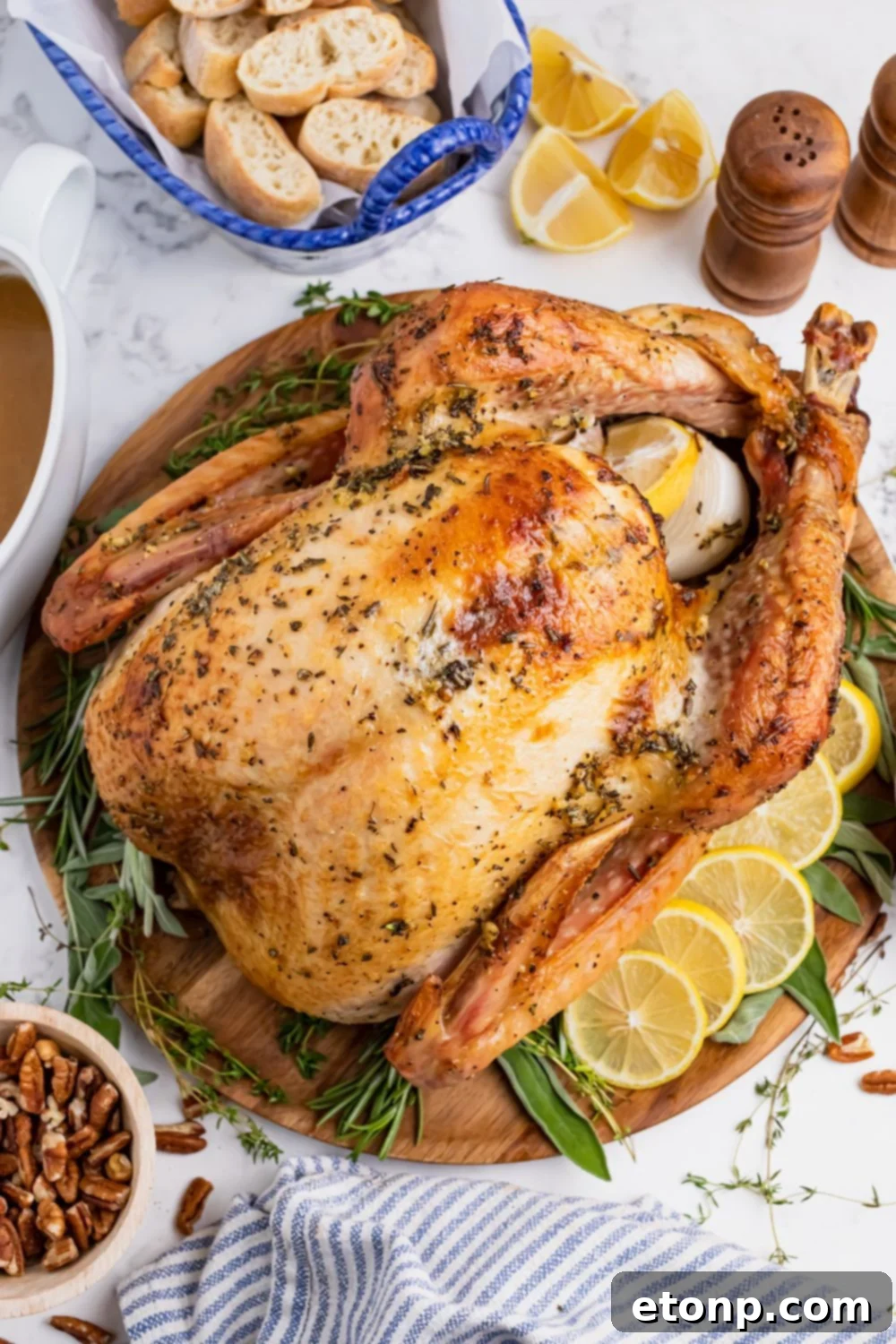
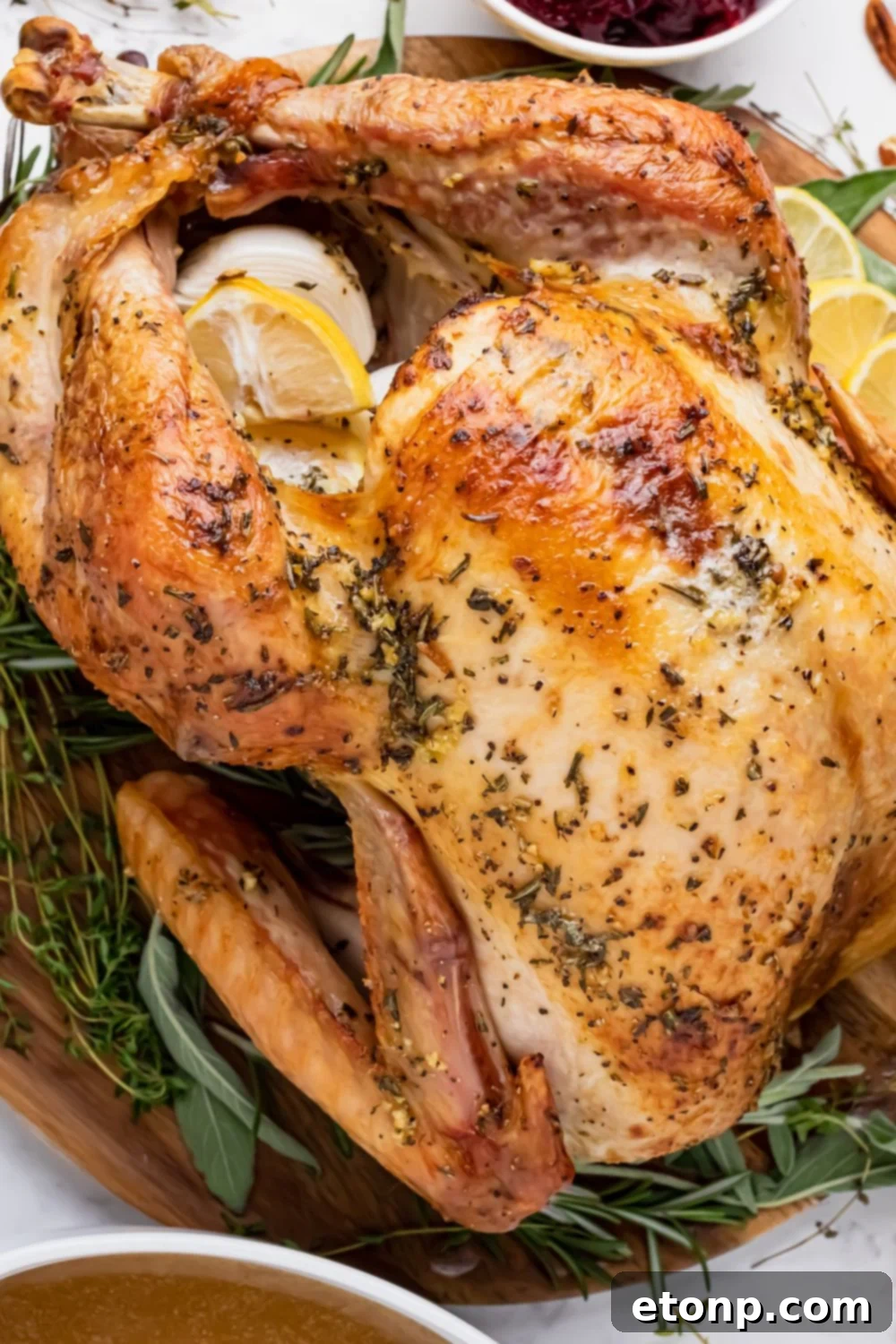
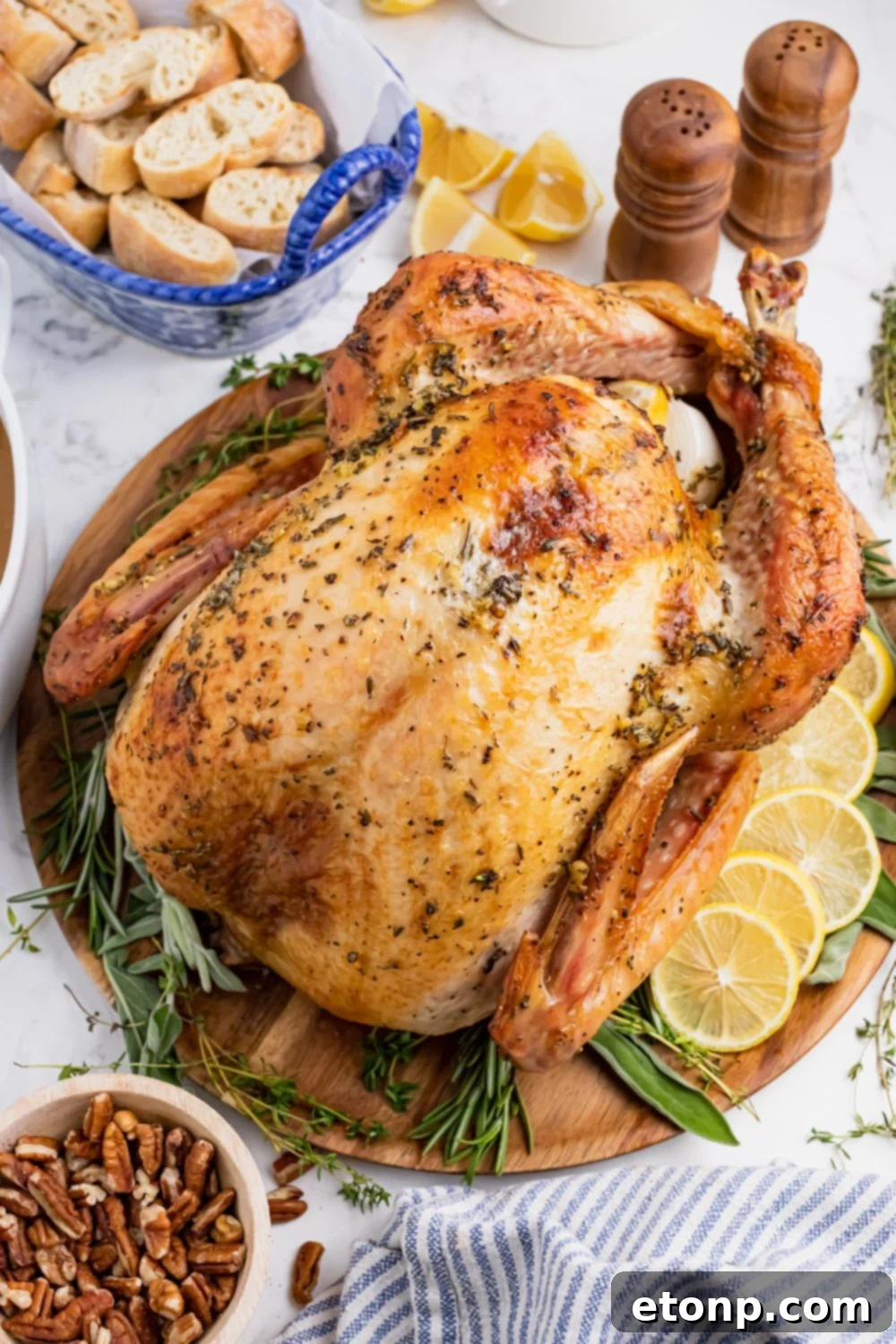
Welcome to the ultimate guide for crafting the most succulent and flavorful roast turkey you’ve ever tasted! Forget dry, bland poultry; this recipe promises a bird so juicy and aromatic, it will become the undisputed centerpiece of your holiday feast or any special gathering. We’re talking about a majestic roast turkey, lavishly seasoned with a fragrant blend of rosemary, thyme, and sage, infused with zesty lemon and sweet onions, and then generously smothered in a rich garlic herb butter. The result? A truly unforgettable culinary experience where every single bite bursts with incredible flavor and tender, moist meat, right down to the typically drier white meat sections. Get ready to impress your family and friends with a show-stopping turkey that’s as delightful to carve as it is to devour.
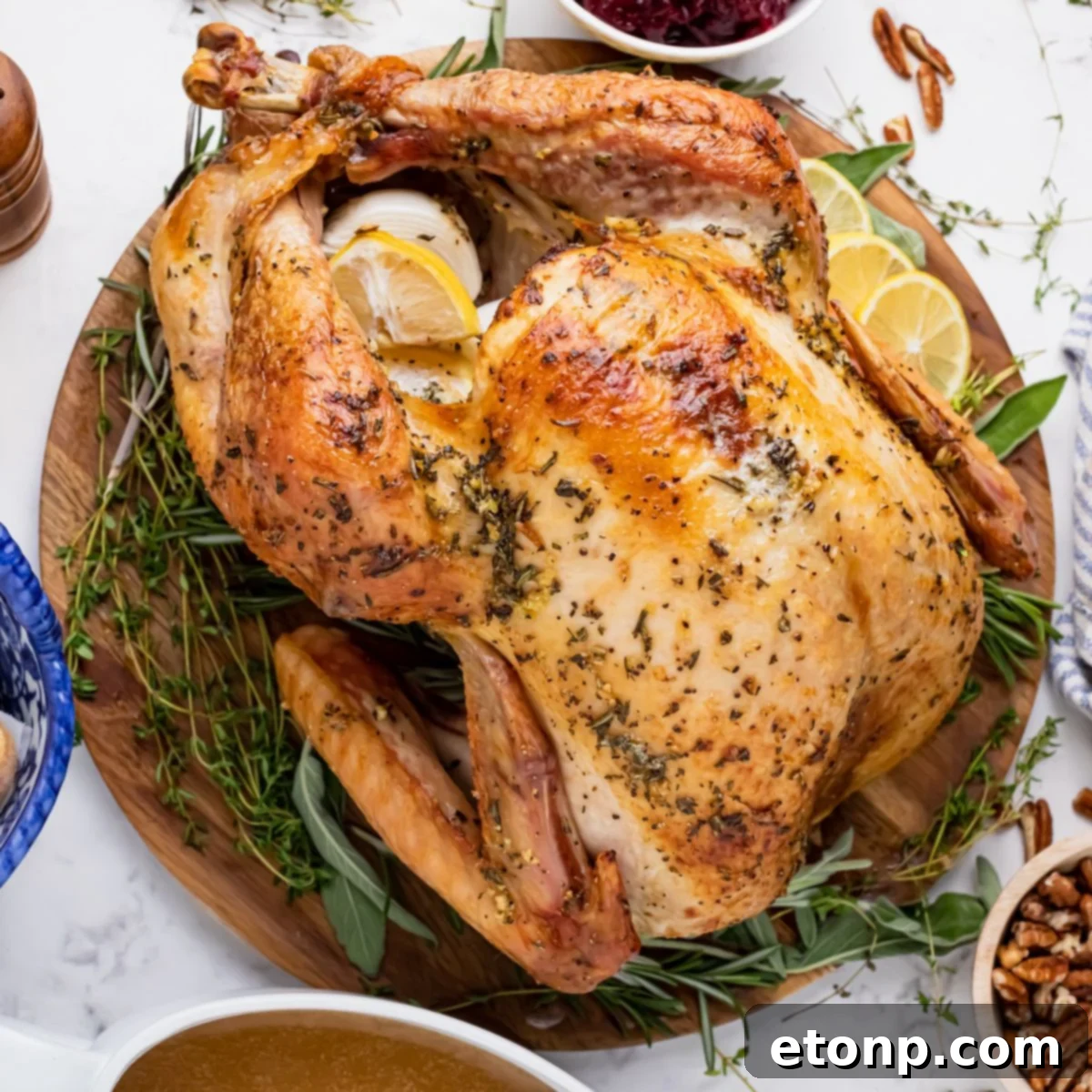
What truly sets this turkey apart is its unparalleled juiciness and depth of flavor. Even the notoriously challenging white meat achieves a tenderness and moisture level that will surprise and delight. This isn’t just a recipe; it’s a reliable method for achieving turkey perfection every time. Whether you’re planning an elaborate Thanksgiving or Christmas dinner, or simply wish to elevate a family weeknight meal, this roasted turkey recipe is versatile enough to satisfy any occasion and any crowd. Prepare to receive rave reviews and requests for the recipe!
The Ultimate Garlic Herb Butter Roast Turkey Recipe
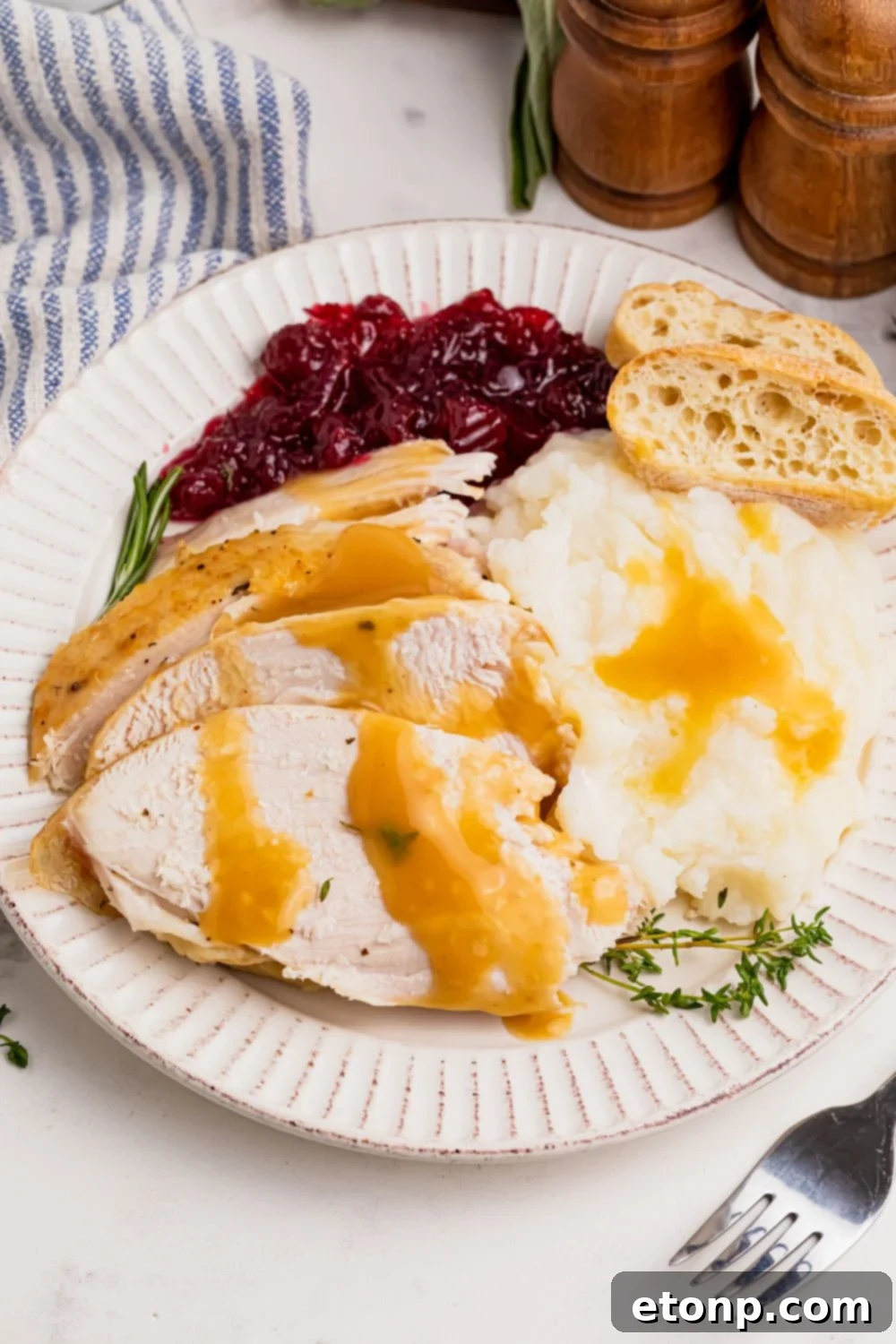
A perfectly roasted turkey deserves equally exceptional accompaniments. Elevate your meal by pairing this succulent bird with classic side dishes that complement its rich flavors beautifully. Consider serving it alongside creamy loaded mashed potatoes, a vibrant dish of buttery green beans, or perhaps a comforting pan of homemade baked mac and cheese. These options are not just fantastic on their own, but they also create a harmonious balance with the savory turkey, ensuring a truly memorable dining experience. Don’t hesitate to explore other holiday favorites or personal preferences; the possibilities for delicious pairings are endless!
Why This Garlic Herb Butter Turkey Will Be Your New Go-To Recipe
- **Unmatched Flavor and Moisture:** This is not just a classic roast turkey; it’s a bird elevated by a generous application of fresh herbs and garlic butter, meticulously worked under and over the skin. This technique ensures every inch of the meat is deeply flavored and incredibly moist, preventing any dryness, especially in the white meat.
- **Simple, Accessible Ingredients:** You won’t need to hunt for exotic items. All the ingredients for this sensational turkey are readily available at your local grocery store, making preparation straightforward and stress-free.
- **Perfect for Any Occasion:** Whether you’re planning a grand holiday feast for Thanksgiving or Christmas, or simply want an impressive yet easy main course for a family dinner or special weekend meal, this versatile turkey fits the bill perfectly.
- **Guaranteed Juiciness:** With our step-by-step guidance and clever tips, you’ll carve a turkey that’s exceptionally juicy and tender, delighting everyone at the table and ensuring no dry bites are left behind.
- **Beginner-Friendly with Pro Results:** Our detailed, easy-to-follow directions walk you through every stage of the roasting process. Even if you’re a novice in the kitchen, you’ll feel confident creating a beautifully roasted turkey that looks and tastes like it came from a professional chef. Experienced cooks will appreciate the reliable method for consistent perfection.
Essential Ingredients for Your Perfect Roast Turkey
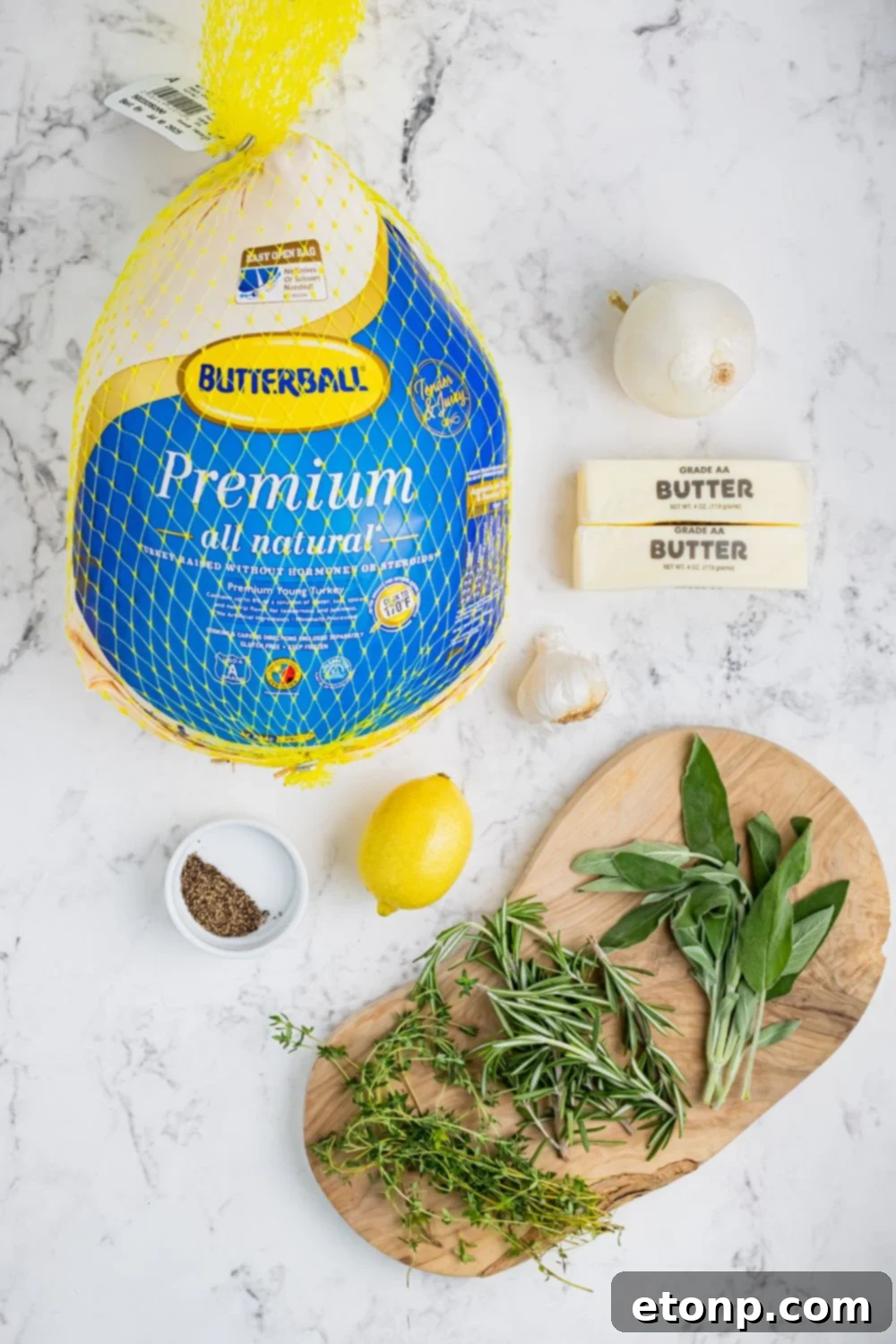
Crafting a truly spectacular roast turkey starts with selecting the right ingredients. Here’s a detailed look at what you’ll need and why each component is crucial for achieving the best results:
Turkey: Opt for a whole turkey, ideally in the 10-12 pound range for a manageable cooking time and tender results. This size is perfect for feeding a gathering of 8-10 people with some leftovers. If you choose a larger turkey, remember to scale up the quantities of herbs, butter, and stuffing ingredients accordingly to ensure adequate flavor and moisture distribution throughout the bird.
Fresh Herbs: The aromatic foundation of this recipe lies in a trio of fresh rosemary, thyme, and sage. These classic poultry herbs are not just for flavoring the herb butter; whole sprigs will also be placed inside the turkey cavity to infuse the meat from within, contributing to a deeply fragrant and savory profile that defines a traditional holiday turkey.
Aromatic Vegetables: Onions and garlic play a dual role here. Quartered onions will be nestled inside the turkey cavity along with the fresh herbs, releasing their sweet, pungent aromas as the turkey roasts. Minced garlic, on the other hand, is a key component of the herb butter, imparting a rich, savory depth that perfectly complements the herbs.
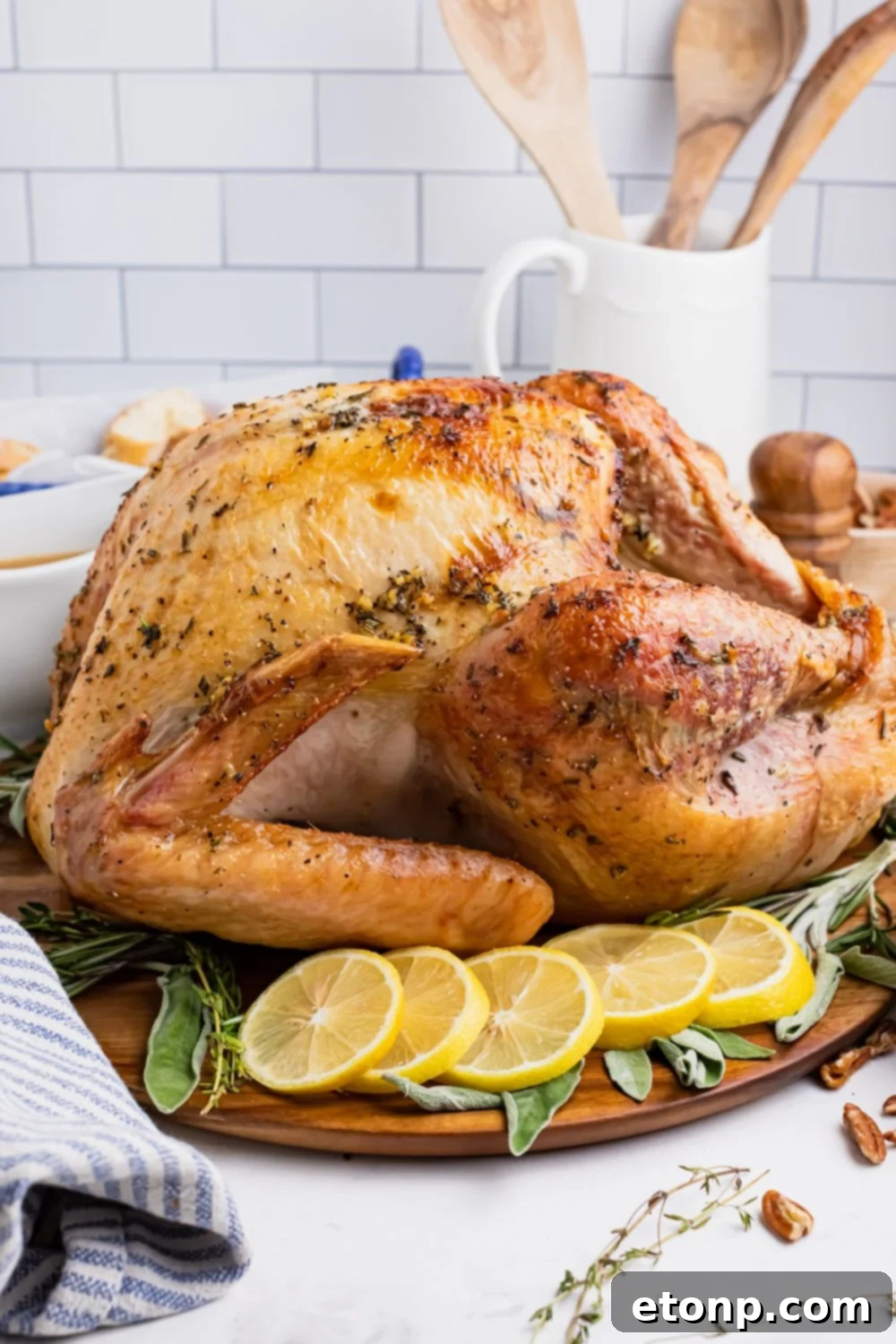
Lemon: Fresh lemon adds a bright, zesty note that cuts through the richness of the turkey and butter. Quarters of lemon will be placed in the cavity for internal flavoring, while lemon zest is incorporated into the herb butter for an extra layer of citrusy brightness. Lemon slices can also serve as an elegant garnish once the turkey is served.
Seasonings: Simple kosher salt and freshly ground black pepper are fundamental. They are not merely added to the herb butter; a good seasoning regimen is applied directly to the turkey skin and inside the cavity, enhancing all the other flavors and helping to achieve that coveted crispy skin.
Unsalted Butter: This is the star of our moisture and flavor strategy. Make sure to use unsalted butter, softened to room temperature. This allows you to control the overall saltiness of the dish and ensures the butter is easily spreadable, allowing it to penetrate under and over the turkey skin for maximum juiciness and a rich, golden-brown crust. Using unsalted butter also highlights the natural flavors of the herbs and turkey.
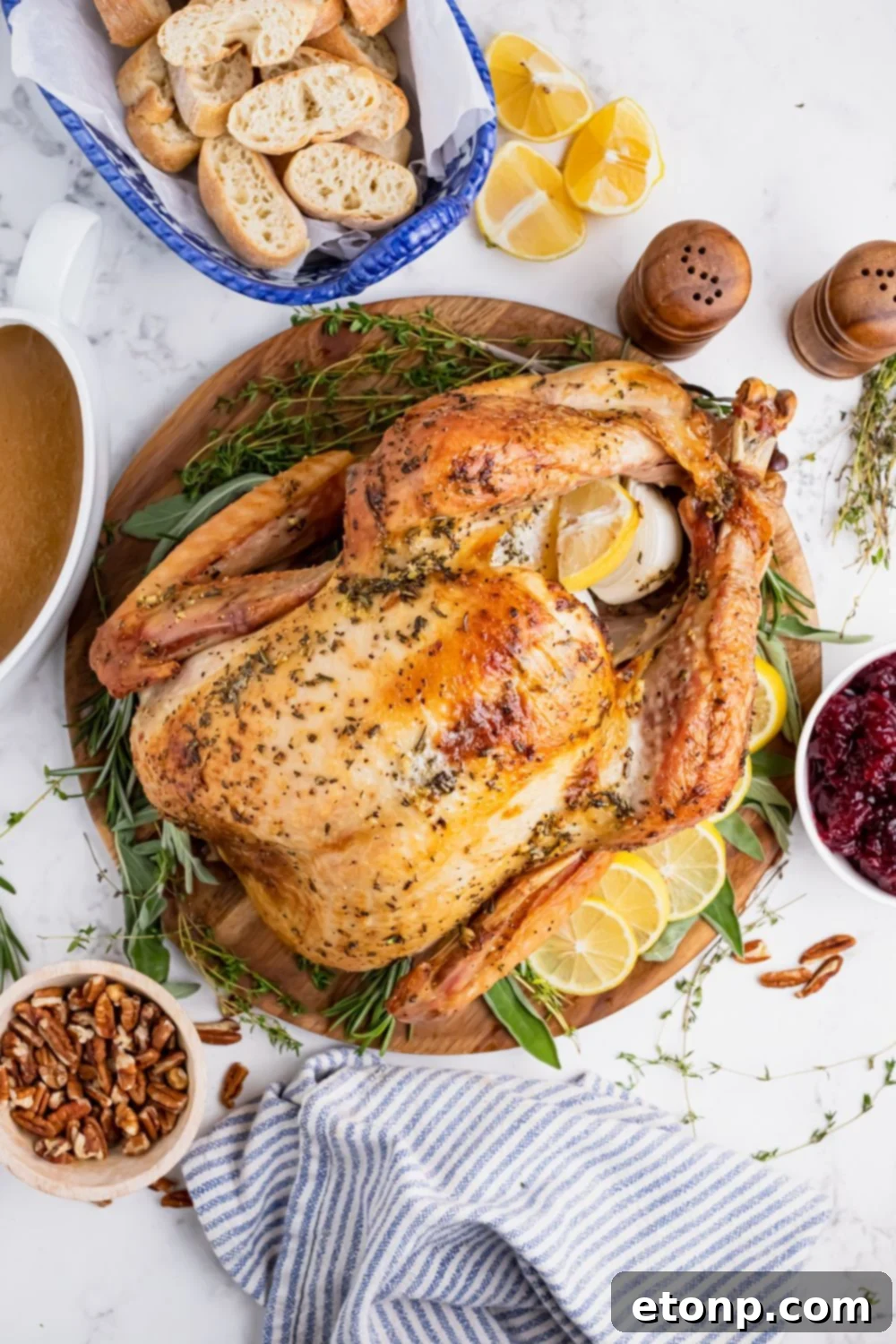
Cranberries (for Garnish): For a final festive touch, fresh, ripe, and plump cranberries can be scattered around the cooked turkey on the platter. Their vibrant red color provides a beautiful contrast to the golden-brown skin, and their slight tartness offers an appealing visual and subtle aromatic accent to your holiday spread.
How Much Turkey Do You Need Per Person?
Planning the right size turkey for your gathering is crucial to ensure everyone gets enough and to account for any desired leftovers. As a general rule of thumb, when preparing a whole turkey, you should aim for approximately 1.5 pounds of turkey per person. This calculation wisely takes into account the weight of bones and other inedible parts of the bird. For instance, if you’re hosting 10 guests, a 15-pound turkey would be a good starting point. If you want ample leftovers for sandwiches, soups, or casseroles, consider increasing that to 1.75 or even 2 pounds per person. Always factor in your guests’ appetites and whether other substantial dishes will be served.
Properly Thawing Your Turkey for Safe and Even Cooking
One of the most critical steps in preparing a whole turkey is ensuring it’s thawed completely and safely before it even touches the oven. Improper thawing can lead to uneven cooking, tough meat, and potential food safety issues. The safest and most recommended method is to thaw your turkey in the refrigerator.
The general guideline for refrigerator thawing is to allow one day of thawing time for every 5 pounds of turkey. To be extra cautious and ensure the turkey is fully thawed to the bone, I often add an additional day to this calculation. For example, a 10-pound turkey would need at least 2 days (48 hours), but I’d plan for 3 days to be safe. A 20-pound turkey would require 4-5 days.
When thawing, always place your turkey on a rimmed baking sheet, a large roasting pan, or a tray. This is essential to catch any drips or condensation that may occur as the turkey thaws, preventing cross-contamination with other foods in your refrigerator and keeping your shelves clean. Once thawed, cook the turkey within 1-2 days.
The Indispensable Tool: Using a Meat Thermometer
A reliable meat thermometer is your absolute best friend when roasting a turkey. It’s the only foolproof way to guarantee that your turkey is cooked through to a safe internal temperature while also preventing overcooking, which is the primary cause of dry turkey. Eyeballing doneness is simply not accurate enough for a bird of this size.
For safe consumption, the turkey must reach an internal temperature of 165 degrees Fahrenheit (74 degrees Celsius). To check this, insert the thermometer into the thickest part of the turkey thigh, avoiding contact with the bone. The bones will conduct heat faster and read a higher temperature, which can give a false sense of security that the meat is done. Additionally, check the thickest part of the breast, also avoiding bones. Once your thermometer reads 160 degrees F (71 degrees C), you can remove the turkey from the oven. Immediately cover it loosely with aluminum foil. This “carryover cooking” process will allow the internal temperature to rise to the safe 165 degrees F as it rests, simultaneously allowing the juices to redistribute throughout the meat.
The Golden Rule: Allow Your Turkey to Rest
After all the effort you’ve put into roasting your turkey, the last thing you want is a dry, tough bird. This is why allowing your turkey to rest is arguably one of the most crucial steps. Once you remove the turkey from the oven, immediately tent it loosely with aluminum foil. Do not slice into it right away! Instead, let it rest undisturbed for a minimum of 15-20 minutes, or even up to 30 minutes for larger birds.
During the roasting process, the juices within the turkey are pushed towards the center by the heat. If you carve the turkey immediately, these juices will simply run out onto your cutting board, leaving you with dry meat. Resting allows the temperature to equalize and the muscle fibers to relax, reabsorbing those delicious juices. This redistribution process is what guarantees a truly moist, tender, and flavorful turkey slice. Patience at this stage will be richly rewarded with a perfectly juicy bird.
Expert Tips for Prepping Your Turkey Like a Pro
Achieving a perfectly roasted turkey involves more than just cooking it. Proper preparation is key to ensuring a tender, flavorful, and beautifully presented bird. Here are some indispensable tips:
Choosing and Using the Right Roasting Pan
A sturdy roasting pan is essential for cooking your turkey. A good roasting pan will have slightly raised sides and, ideally, a rack insert. The rack elevates the turkey, allowing air to circulate evenly around the bird and promoting consistent cooking and crispy skin. More importantly, it allows all the delicious juices and drippings to collect at the bottom of the pan. These drippings are pure gold and can be used to create an incredibly flavorful gravy, elevating your entire meal. Look for a pan that’s large enough to comfortably hold your turkey without touching the sides too much, allowing for good airflow.
Don’t Forget the Neck and Giblets!
Before you begin any other preparation, it is absolutely crucial to check both the neck cavity and the body cavity of your turkey for the neck and giblets (often a small bag containing the heart, liver, and gizzards). Most commercially prepared turkeys will have these tucked inside. Forgetting to remove them can result in an unpleasant surprise during cooking and can affect the turkey’s flavor. Once removed, you can discard them, or if you’re feeling ambitious, use them to make a rich, flavorful gravy or stock, adding another layer of homemade goodness to your meal.
The Secret to Succulence: Coating in Herb Butter
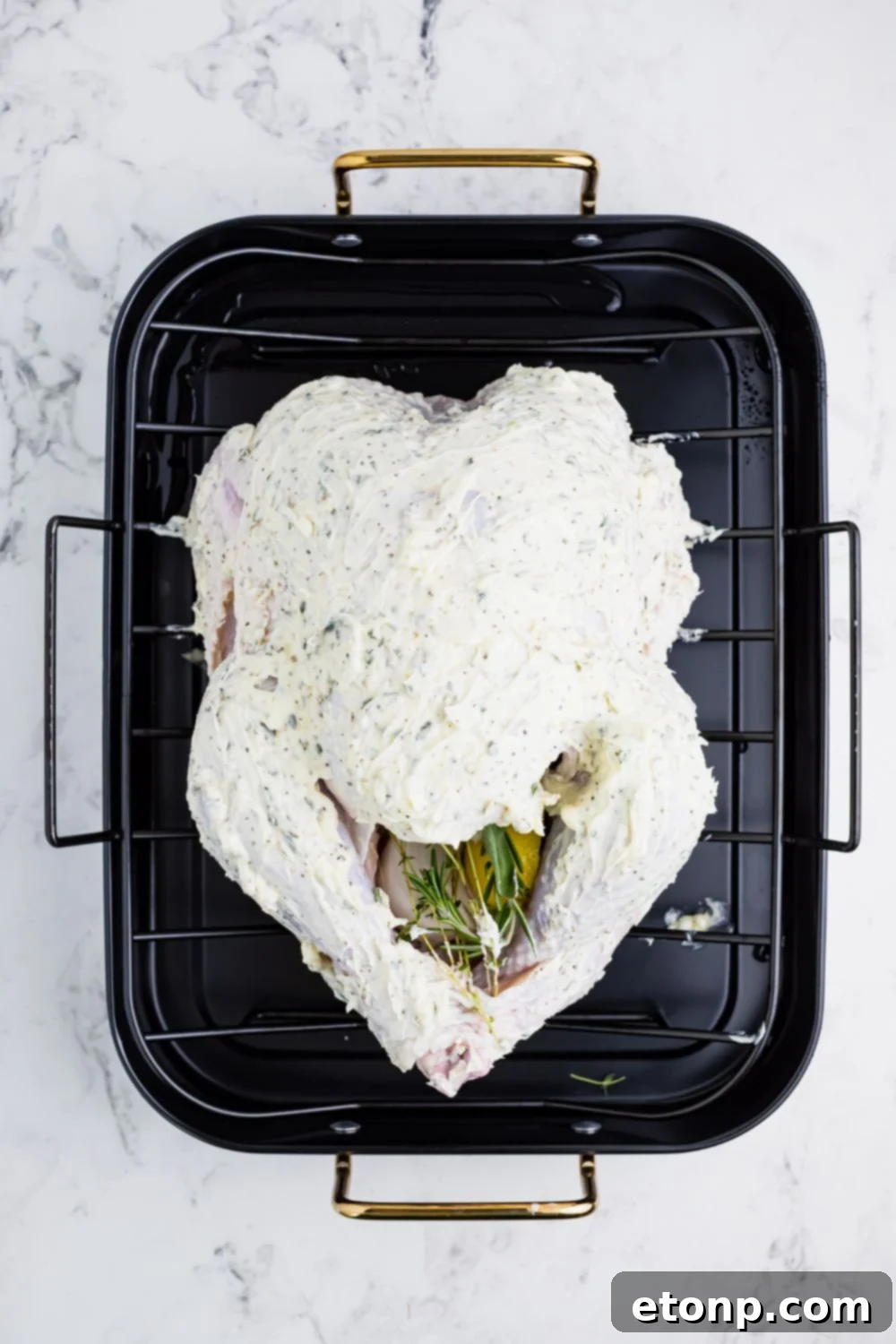
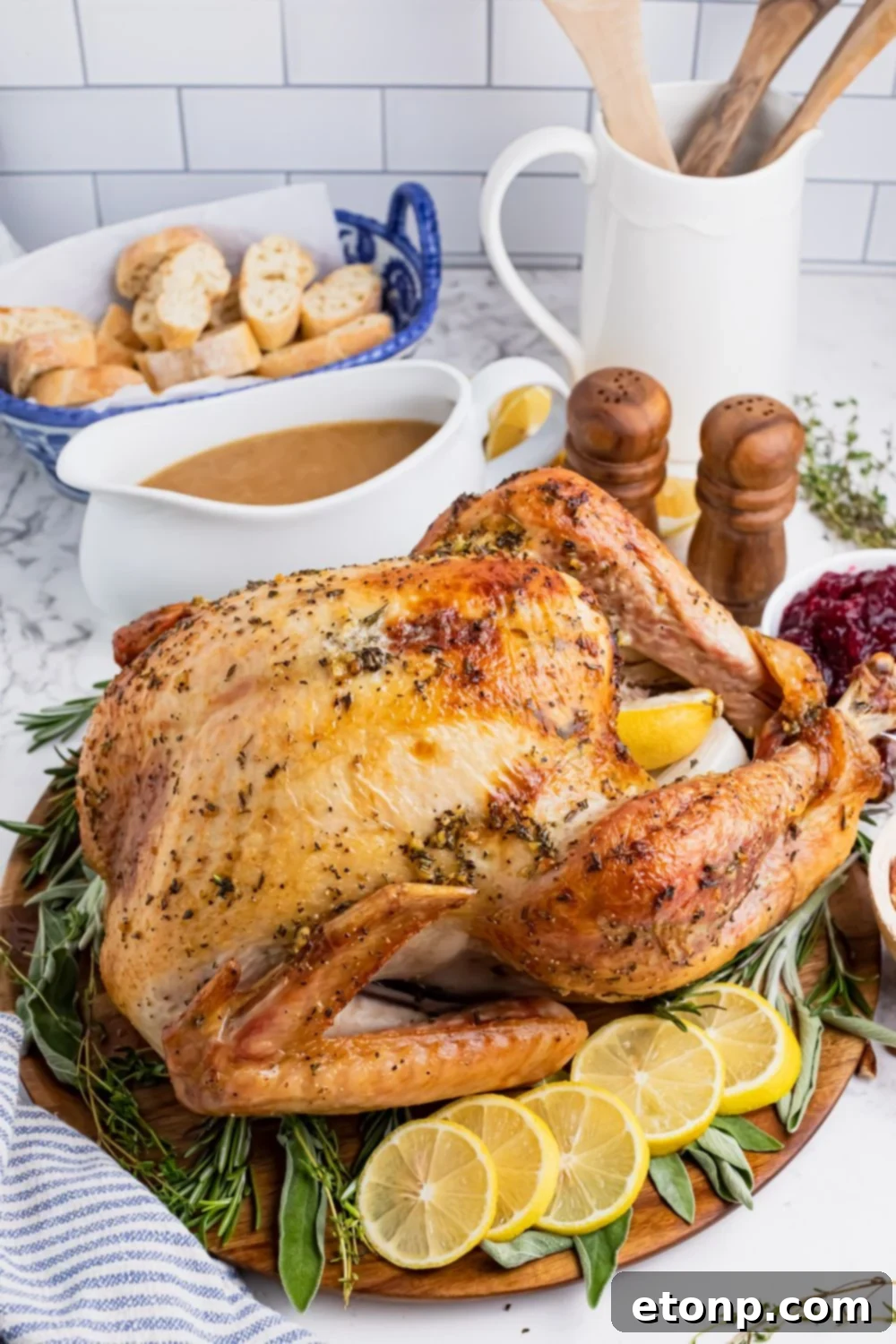
The garlic herb butter is the heart of this recipe’s flavor and moisture. After mixing your softened butter with the finely chopped herbs, minced garlic, lemon zest, salt, and pepper, it’s time to apply it. Don’t be shy! Carefully loosen the skin over the breast and thighs with your fingers, then generously rub about two-thirds of the butter mixture directly onto the meat under the skin. This direct contact infuses the meat with flavor and moisture as it cooks. The remaining butter should be spread evenly over the exterior of the skin. This ensures a beautifully golden, crispy crust and adds even more savory richness to the entire bird, contributing significantly to its overall juiciness and taste.
Trussing Your Turkey for Even Roasting and Presentation
Trussing is a simple technique that involves tying the turkey legs together and tucking the wings underneath the body. Grab some baker’s twine or kitchen-specific cooking string for this step. By tying the legs together, you help the turkey hold its compact shape, which is crucial for promoting more even roasting. This prevents the leg and thigh meat from overcooking before the breast meat is done. Additionally, trussing creates a more aesthetically pleasing, compact bird that looks stunning when presented on your serving platter. It’s a small step that makes a big difference in both cooking performance and visual appeal.
To Rinse or Not to Rinse: A Food Safety Guide
There’s a common misconception that you should rinse a raw turkey before cooking. However, unless your turkey has been brined and needs to have excess salt rinsed off, it is generally recommended *not* to rinse it. Rinsing raw poultry under the tap can inadvertently spread bacteria (like salmonella and campylobacter) around your kitchen sink, countertops, and other surfaces through splashing water. This phenomenon is known as cross-contamination and significantly increases the risk of foodborne illness. Instead of rinsing, simply pat the turkey thoroughly dry with paper towels before seasoning and preparing it. The heat of the oven will kill any surface bacteria during cooking.
Understanding Turkey Cooking Time
While a general guideline for turkey cooking time is approximately 13-15 minutes per pound at 350°F (175°C), this is truly just a starting point. Several factors can influence the actual cooking duration, including the turkey’s initial temperature, whether it’s stuffed or unstuffed, the accuracy of your oven, and even the shape of the bird. Therefore, relying solely on a timer can be risky. The most reliable and safest method to ensure your turkey is perfectly cooked (and not overcooked) is to use a meat thermometer. Continuously monitor the internal temperature, aiming for 160°F (71°C) before removing it from the oven, allowing it to reach 165°F (74°C) during the resting period. Always prioritize the thermometer reading over estimated cooking times.
Mastering the Art of Carving a Turkey
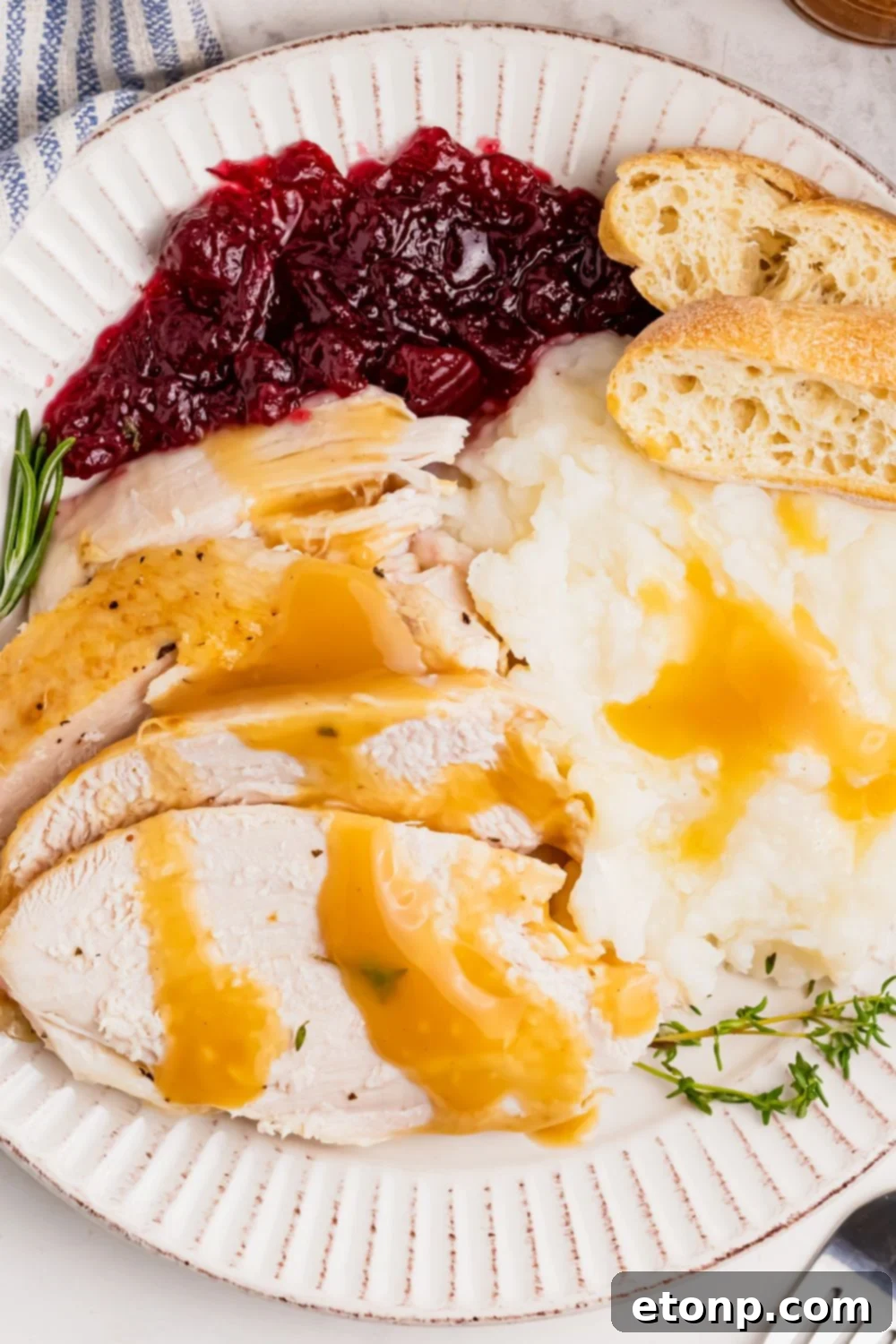
Carving a turkey can seem daunting, but with a few simple techniques, you can expertly slice your bird for a beautiful presentation. Always ensure your knife is sharp and you have a stable cutting board, preferably with a well to catch juices.
- **Locate the Joints:** Begin by finding the natural joints where the turkey legs and wings attach to the body. These are your starting points for carving.
- **Remove the Legs:** Hold the drumstick firmly with a fork or your hand (if cool enough). Using your sharp knife, cut through the skin between the leg and the breast. Push the leg away from the body to expose the joint, then cut through the joint to fully remove the drumstick and thigh portion. Repeat on the other side. You can then separate the drumstick from the thigh by cutting through the joint, and slice the thigh meat off the bone if desired.
- **Carve the Wings:** Similarly, locate the wing joint and cut through it to remove the entire wing. You can serve the wings whole or separate them at the joints.
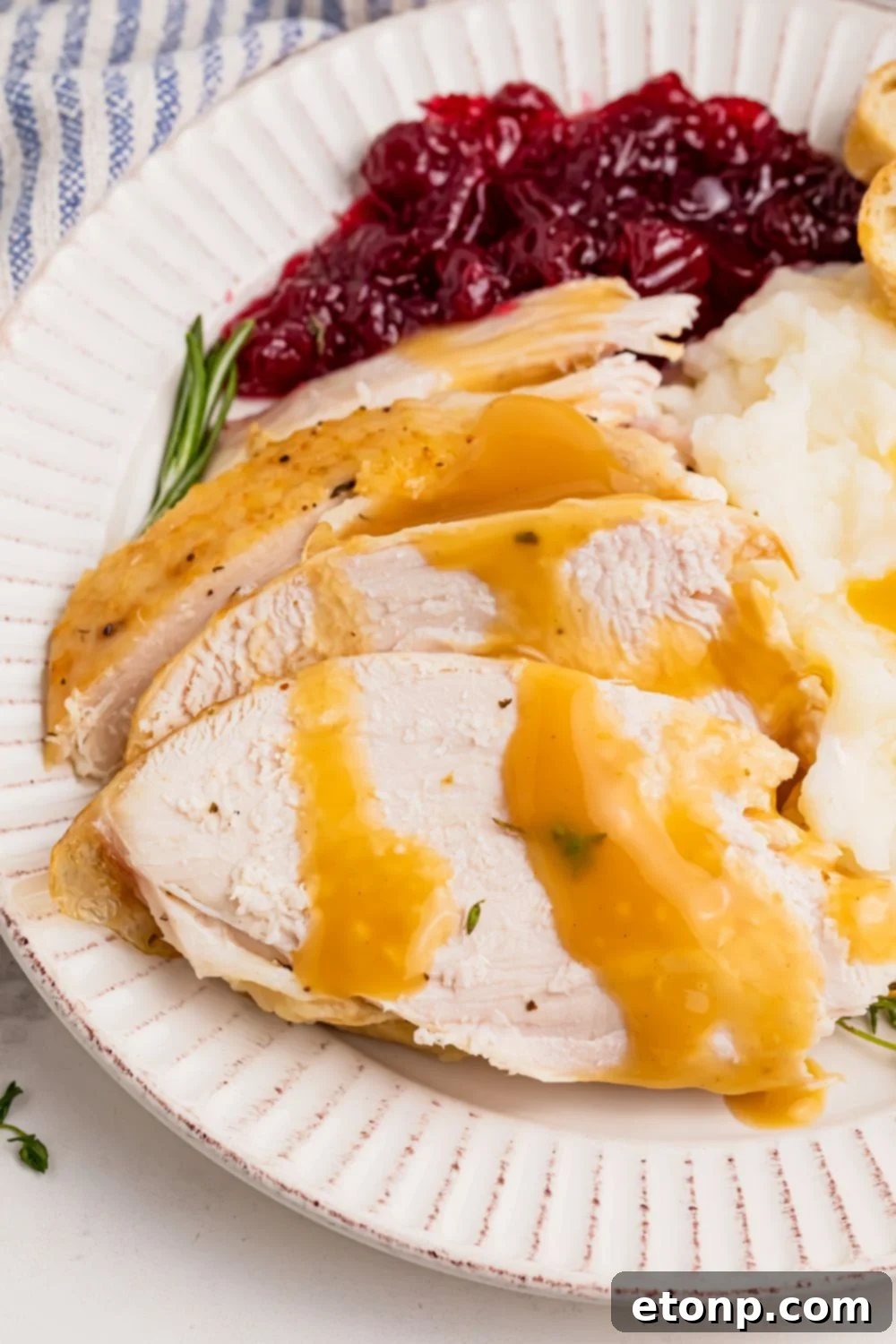
- **Slice the Breast Meat:** To carve the breast, make a horizontal cut across the breastbone, parallel to the cutting board, but be careful not to slice through the bone itself. Then, starting from the top of the breast, make vertical slices downward, working your way towards that initial horizontal cut. This method yields uniform, elegant slices of breast meat. Repeat for the other breast.
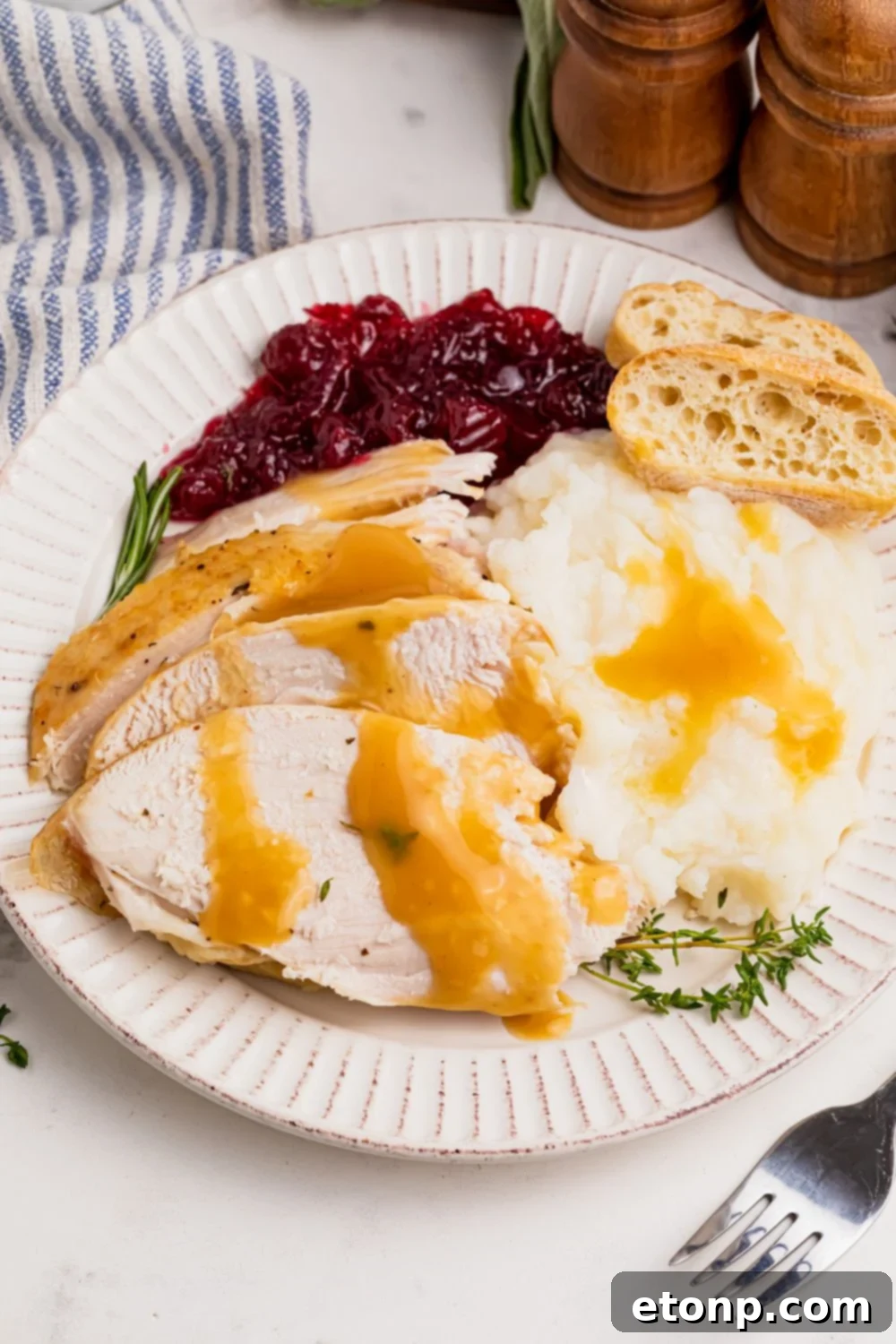
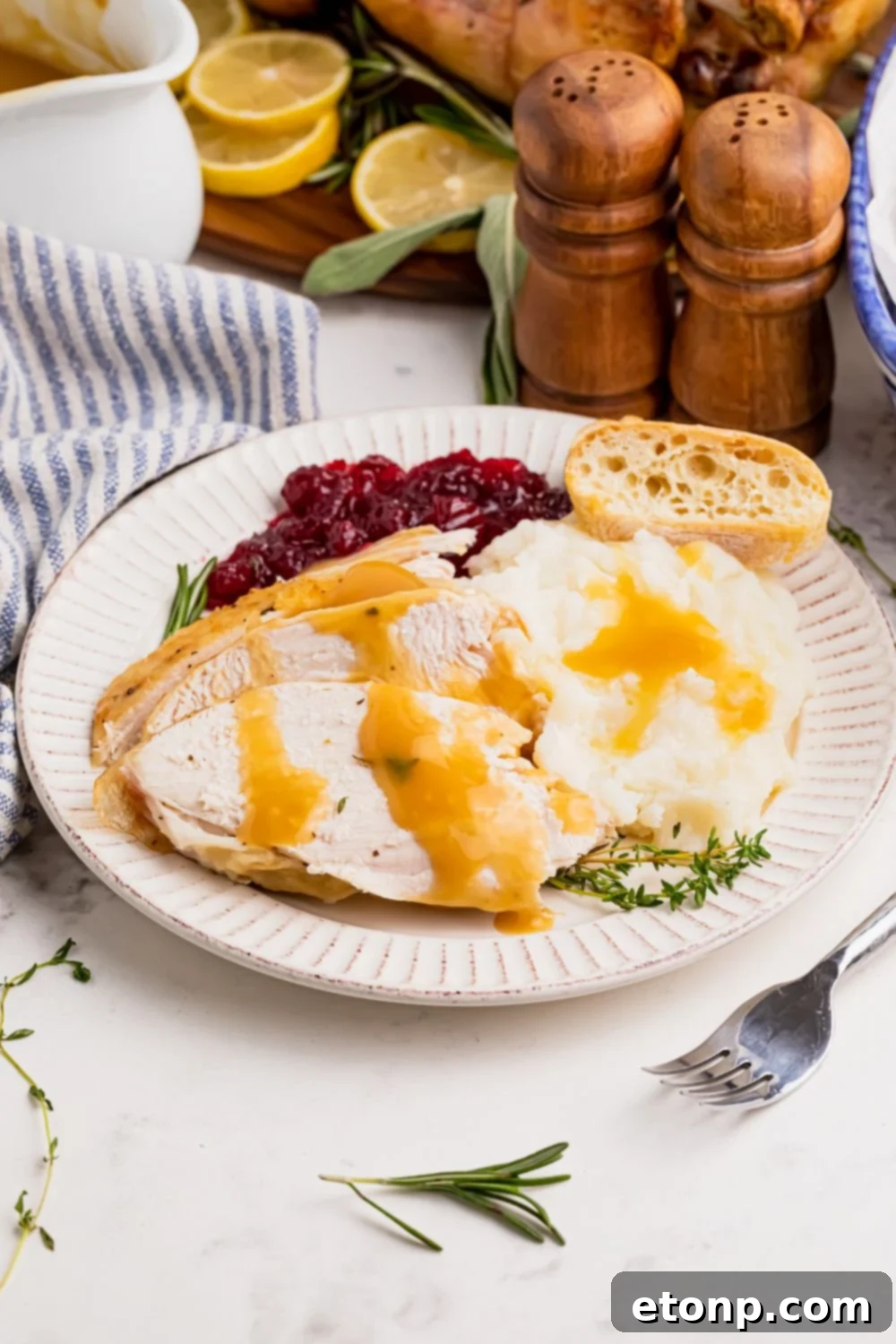
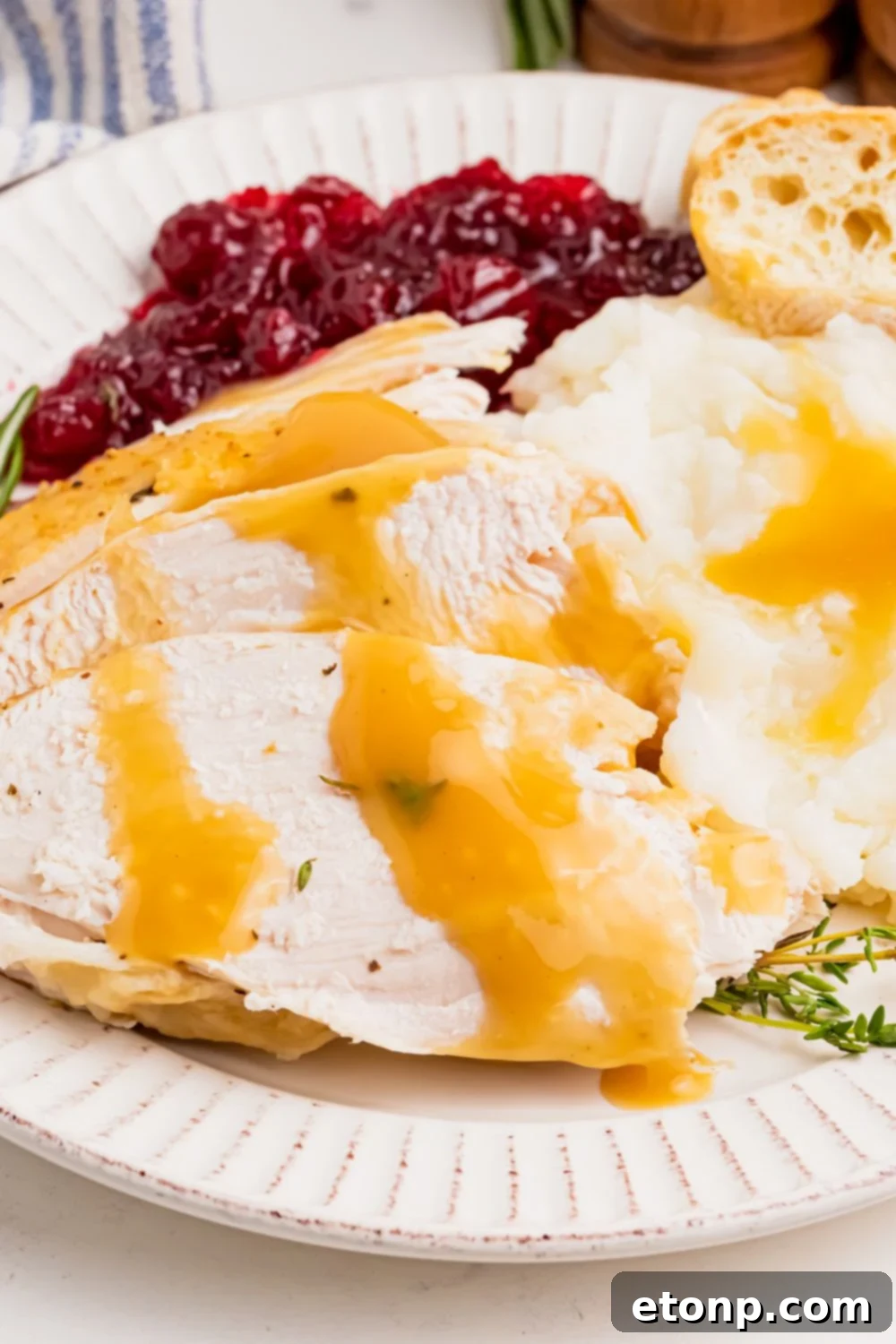
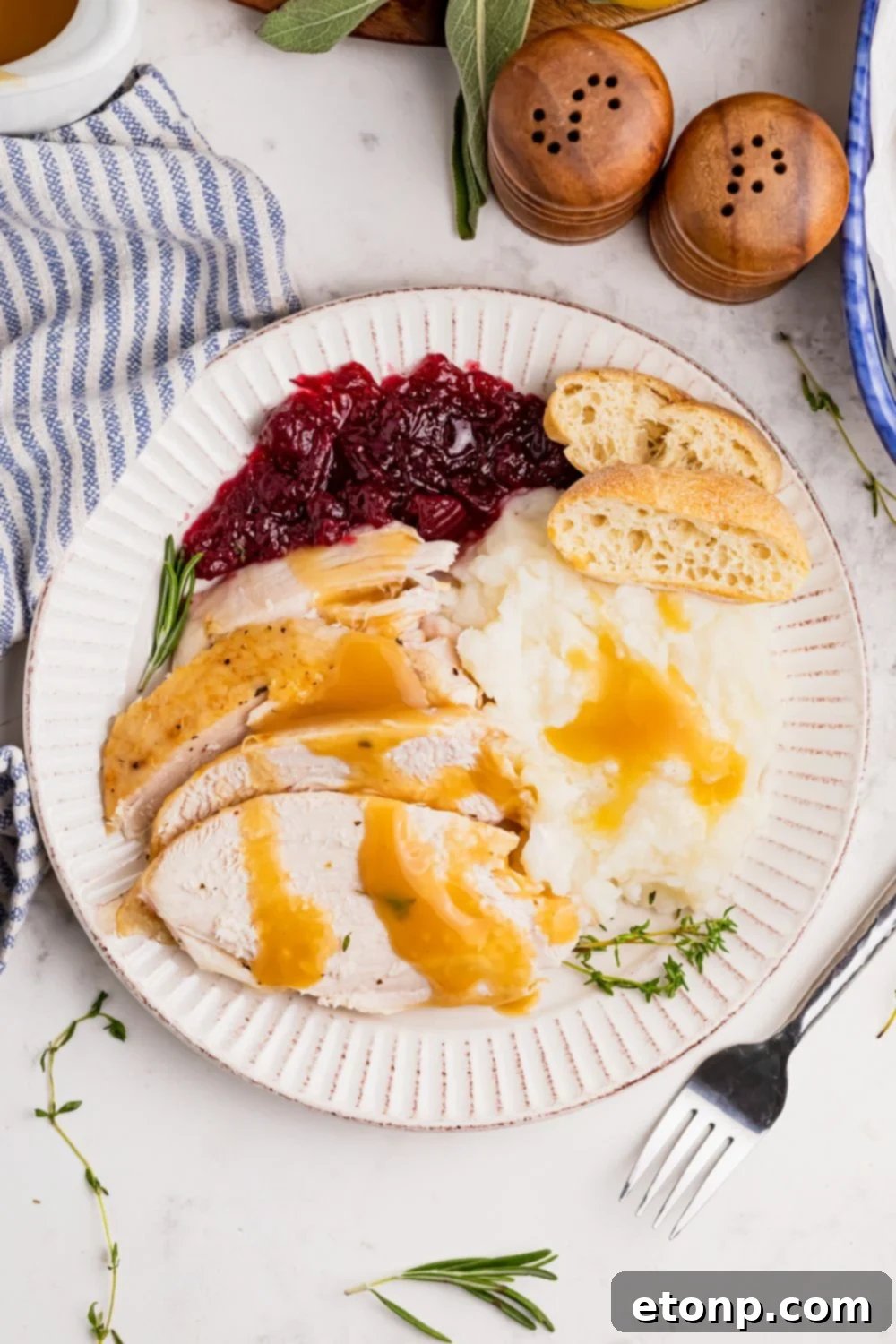
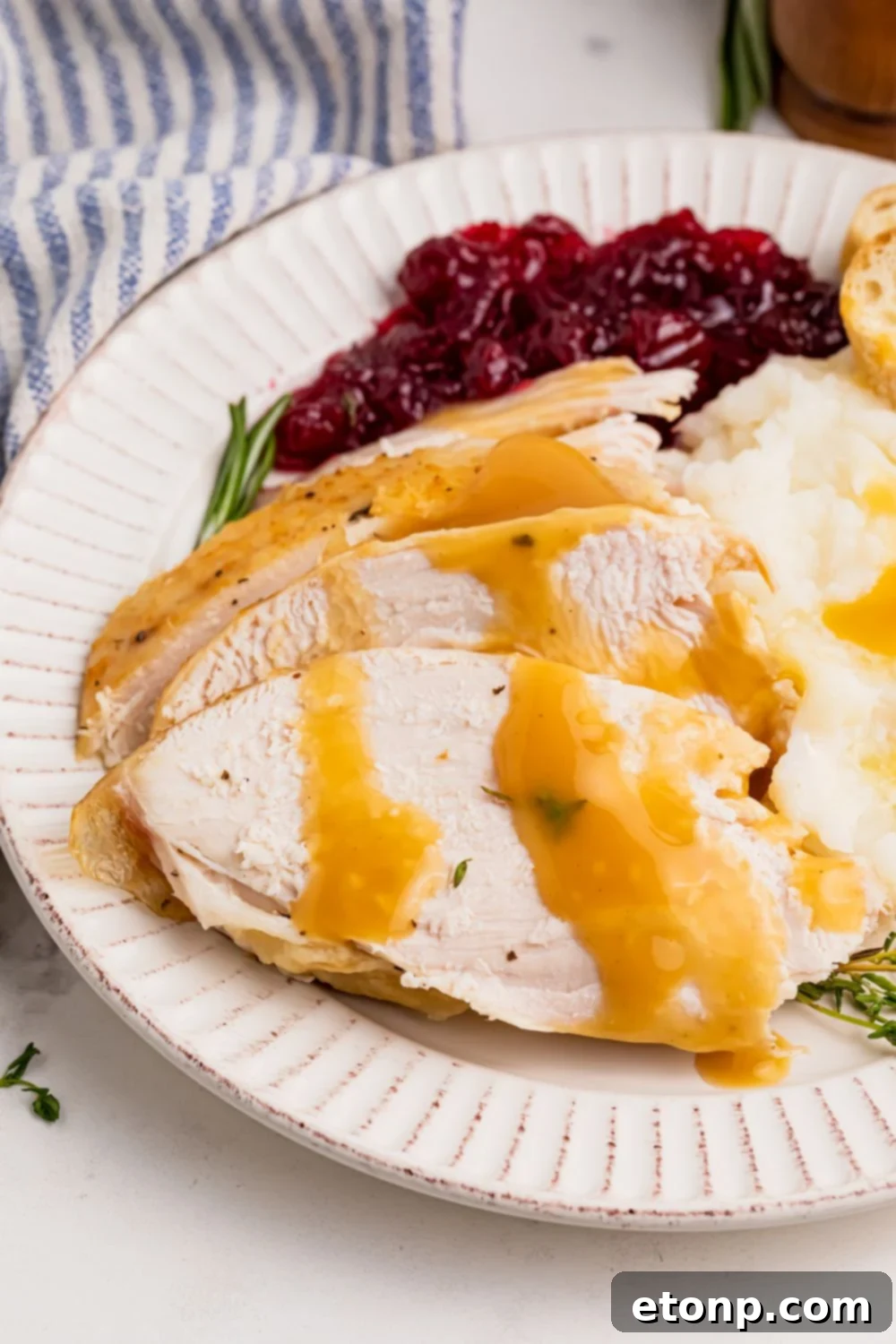
- **Arrange and Garnish:** Once carved, arrange the beautiful slices of turkey meat on a warm serving platter. Garnish with fresh herb sprigs (like rosemary or thyme), vibrant cranberries, and bright lemon slices for a truly stunning presentation that matches the deliciousness of the bird.
How To Store Leftover Turkey Properly
Leftover turkey is a delightful bonus from your feast, but proper storage is essential to keep it safe and delicious. Immediately refrigerate any leftover turkey that won’t be eaten within two hours of cooking. To maximize freshness and prevent bacterial growth, store the carved turkey meat in a sealed, airtight container. When properly refrigerated, leftover turkey will remain fresh and safe to eat for 3-4 days. You can reheat it gently in the microwave or oven until it reaches an internal temperature of 165°F (74°C).
For longer storage, freezing is an excellent option. Place cooled, carved turkey meat into a sealed airtight freezer-safe bag or container. Ensure as much air as possible is removed from bags to prevent freezer burn. Frozen turkey can be safely stored for 5-6 months. When you’re ready to enjoy it, thaw the turkey overnight in the refrigerator or use the defrost setting on your microwave if cooking immediately from frozen. Reheat as directed above.
Common Turkey Roasting FAQs
What creative uses are there for turkey leftovers?
Leftover turkey is incredibly versatile and can be transformed into a myriad of delicious meals, often becoming just as anticipated as the original feast! Beyond simple turkey sandwiches, you can create a creamy turkey salad, perfect for light lunches. Shredded turkey is excellent in comforting casseroles, like a turkey pot pie or a cheesy turkey bake. It’s also a fantastic addition to hearty soups, stews, or even chili. For a quick and satisfying meal, use sliced turkey to make loaded turkey sandwiches with all your favorite toppings, or craft innovative turkey wraps and quesadillas. Don’t forget about turkey tacos or even incorporating it into pasta dishes. The possibilities for repurposing your succulent leftovers are virtually endless, making your efforts last for days!
How can I prevent my roast turkey from drying out?
Preventing a dry turkey is a top priority, and there are several effective techniques to achieve a moist and tender bird. One popular method is basting: every 30-45 minutes, use a baster or spoon to pour the flavorful pan drippings over the turkey. This helps to keep the skin moist and encourages even browning, though its effect on internal moisture is often debated. More importantly, consider lightly “tenting” the breast portion of the turkey with aluminum foil about halfway through the cooking process, or when it starts to get a golden-brown color. This protects the delicate white meat from overcooking and drying out while allowing the darker thigh meat to continue cooking to its proper temperature. Another critical factor is using a meat thermometer and removing the turkey from the oven when it reaches 160°F (71°C) in the thickest part of the thigh and breast, then allowing it to rest and finish cooking to 165°F (74°C) through carryover heat.
Should I stuff the turkey before roasting?
Stuffing a turkey is a classic tradition, but it comes with a few considerations. While you are absolutely welcome to stuff the turkey, it’s important to understand the implications for cooking time and food safety. Stuffing acts as an insulator, significantly increasing the overall cooking time of the turkey. Moreover, for food safety, the stuffing itself must reach an internal temperature of 165°F (74°C). This often means the turkey meat might be overcooked and dry by the time the stuffing is safely done. Therefore, if you stuff your turkey, you might primarily be doing so for the aromatic flavoring it imparts to the bird, rather than for consuming the stuffing directly from the cavity. Many chefs recommend cooking stuffing separately in a casserole dish. If you choose to stuff, ensure the stuffing is loosely packed to allow for heat circulation, and always use a meat thermometer to check both the turkey meat and the stuffing’s internal temperatures.
More Delicious Holiday Recipes to Complete Your Feast
- Savory Turkey Stuffing Roll-Ups
- Festive Christmas Cranberry Pound Cake
- Creamy Slow Cooker Cheesy Corn
Garlic Herb Butter Roast Turkey
Ingredients
For the turkey:
- 1 10-12 lb whole turkey
- 1 whole white onion peeled and quartered
- 1 lemon quartered
- 2 fresh rosemary sprigs
- 3-4 fresh thyme sprigs
- 2 sprigs fresh sage
- Extra fresh herb sprigs cranberries and lemons, for garnish
For the herb butter:
- ¾ cup unsalted butter softened to room temperature
- 1 tablespoon rosemary leaves finely chopped
- 1 tablespoon fresh thyme leaves
- 1 tablespoon fresh sage finely chopped
- 4 garlic cloves minced
- 1 teaspoon lemon zest
- 1 teaspoon kosher salt
- ½ teaspoon ground black pepper
Instructions
For the turkey:
-
Adjust your oven rack to a lower position, ensuring there’s enough space for the turkey, and preheat the oven to 350°F (175°C). Place a sturdy rack into a large roasting pan.
-
Carefully remove the turkey neck and giblets from both the main cavity and the neck cavity of the turkey. These are usually found in a small bag.
-
Thoroughly pat the entire turkey, including inside the cavities, dry with paper towels. A dry skin promotes crispier results. Place the prepared turkey onto your roasting rack in the pan.
-
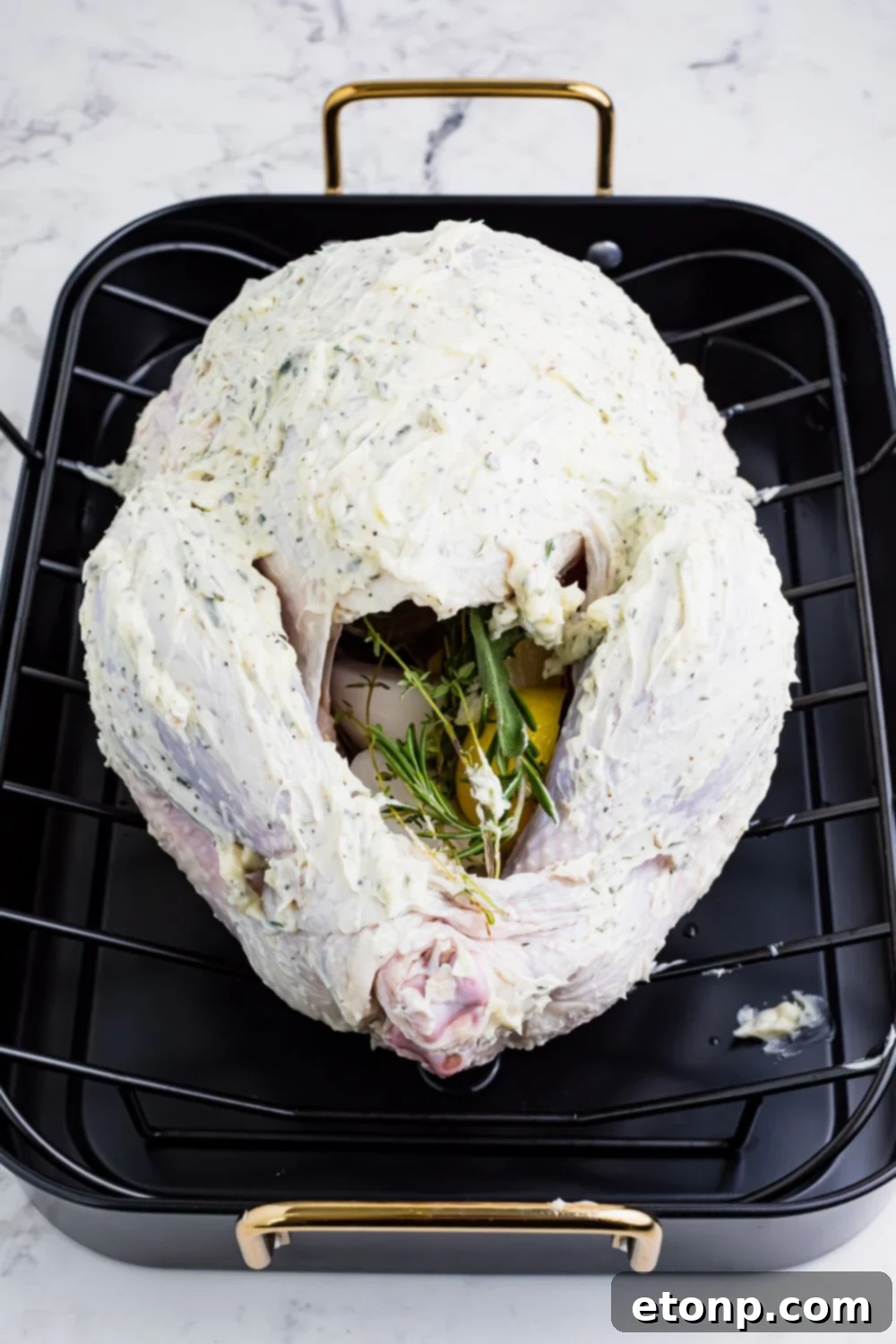
Place the quartered onion, lemon, and fresh herb sprigs (rosemary, thyme, sage) inside the main cavity of the turkey. This will infuse the bird with aromatic flavors as it cooks.
For the Butter & Roasting
-
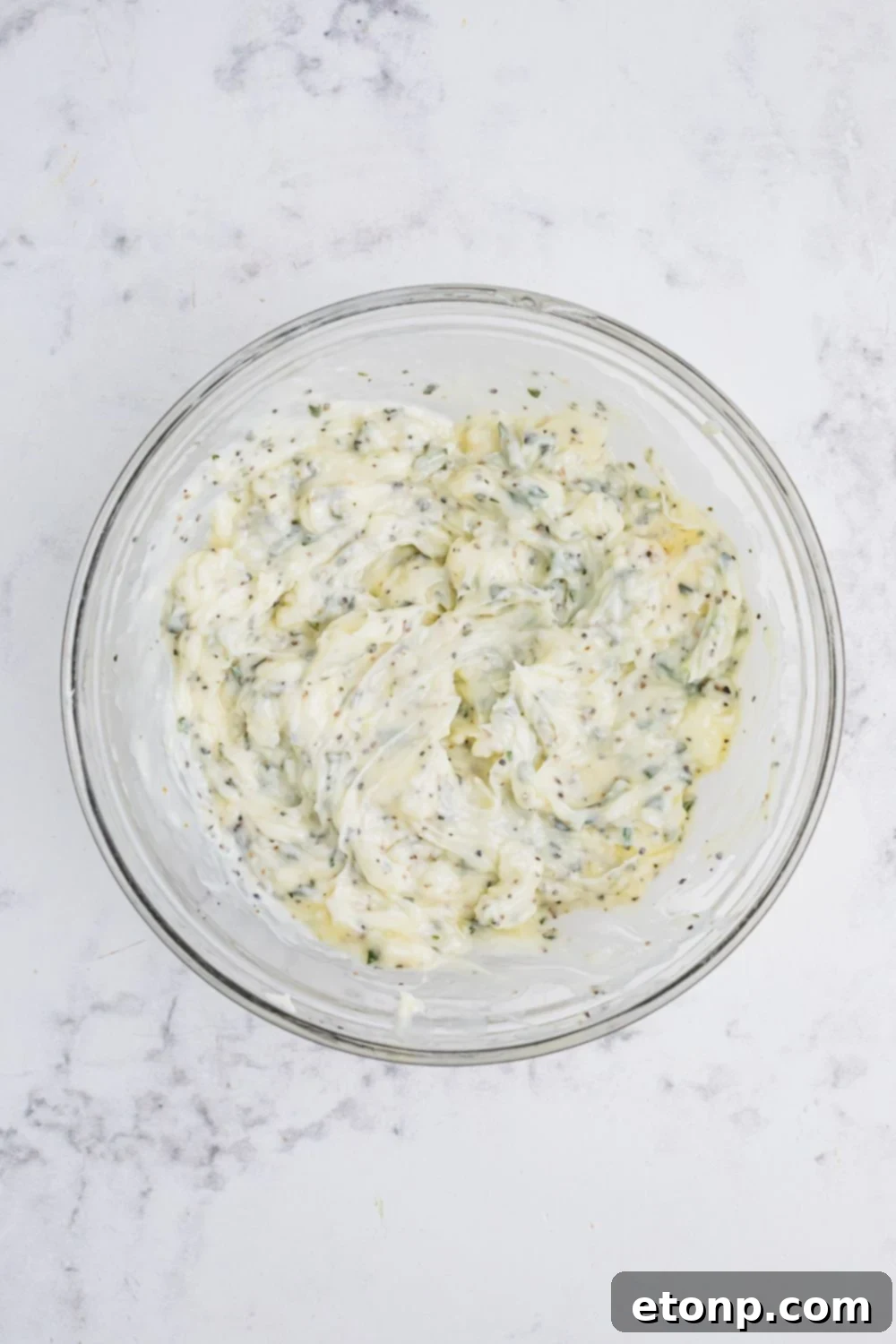
In a small bowl, combine the softened unsalted butter with the finely chopped rosemary, thyme, and sage, minced garlic, lemon zest, kosher salt, and ground black pepper. Mix thoroughly until all ingredients are well incorporated and the butter is aromatic.
-
Gently loosen the turkey skin over the breast and thighs using your fingers. Rub about two-thirds of the herb butter mixture directly under the skin, spreading it as evenly as possible. Then, rub the remaining butter mixture all over the exterior of the turkey skin, ensuring the entire bird is coated.
-
Using kitchen twine, tie the turkey legs together to help the bird maintain its shape and promote even cooking. Alternatively, you can pull a piece of the turkey’s skin over the legs if it’s large enough and tuck it underneath.
-
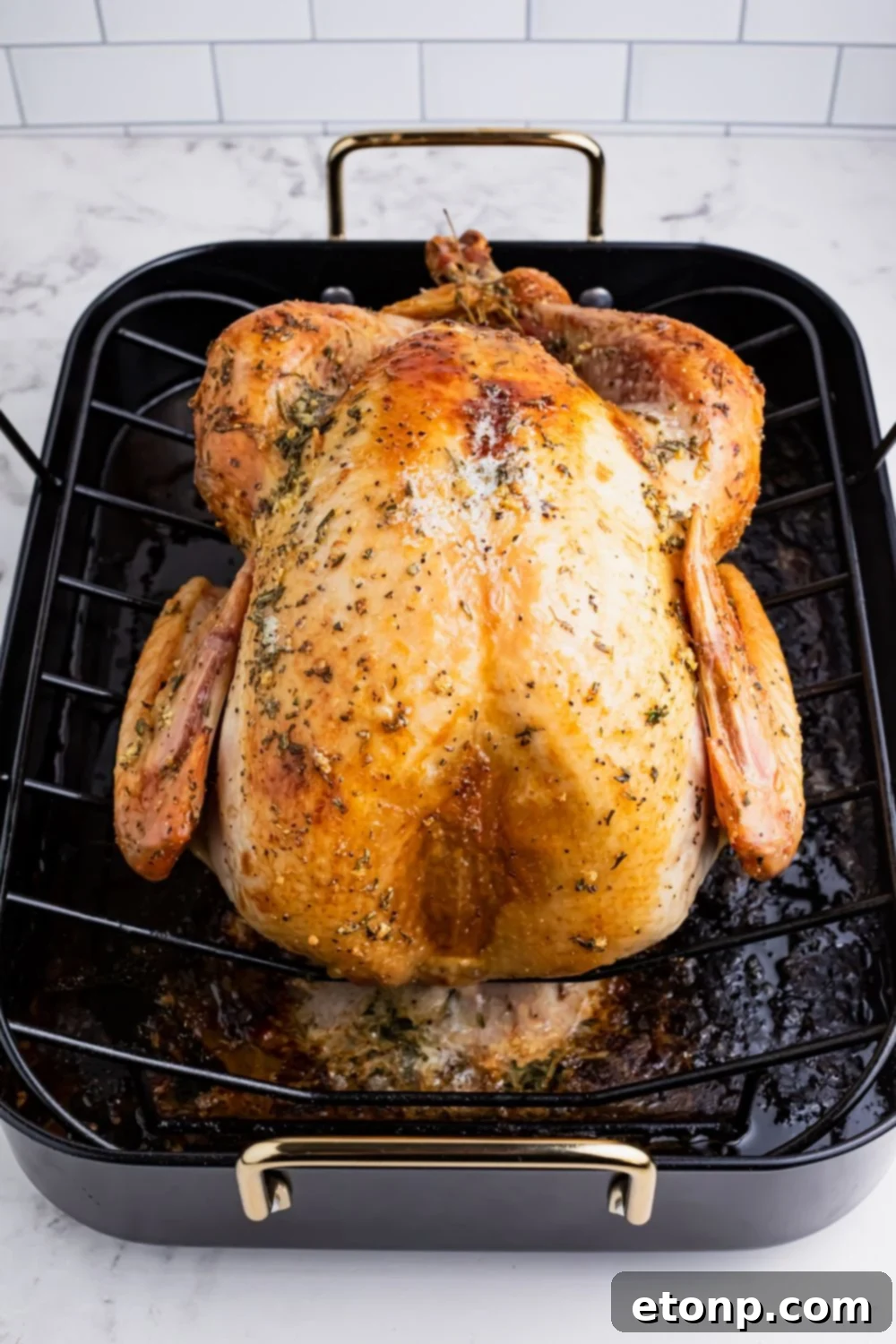
Roast the turkey uncovered in the preheated oven for approximately 13-15 minutes per pound. Baste the turkey with the pan drippings every 30-45 minutes to encourage a golden-brown skin. Continue roasting until a meat thermometer inserted into the thickest part of the turkey thigh (without touching bone) registers 160°F (71°C).
-
Once the turkey reaches 160°F, carefully remove it from the oven. Tent the turkey loosely with a piece of aluminum foil to seal in the juices and allow for carryover cooking. Let the turkey rest for 15-20 minutes before carving. This crucial resting period ensures a moist and tender bird. Discard the herbs, onion, and lemon from the turkey cavity before carving.
-
After resting, carve the turkey into desired slices and serve warm. Enjoy your perfectly roasted, flavorful turkey!
Did you make this recipe?
Make sure to follow on Pinterest for more recipes!
Pin Recipe
Share on Facebook